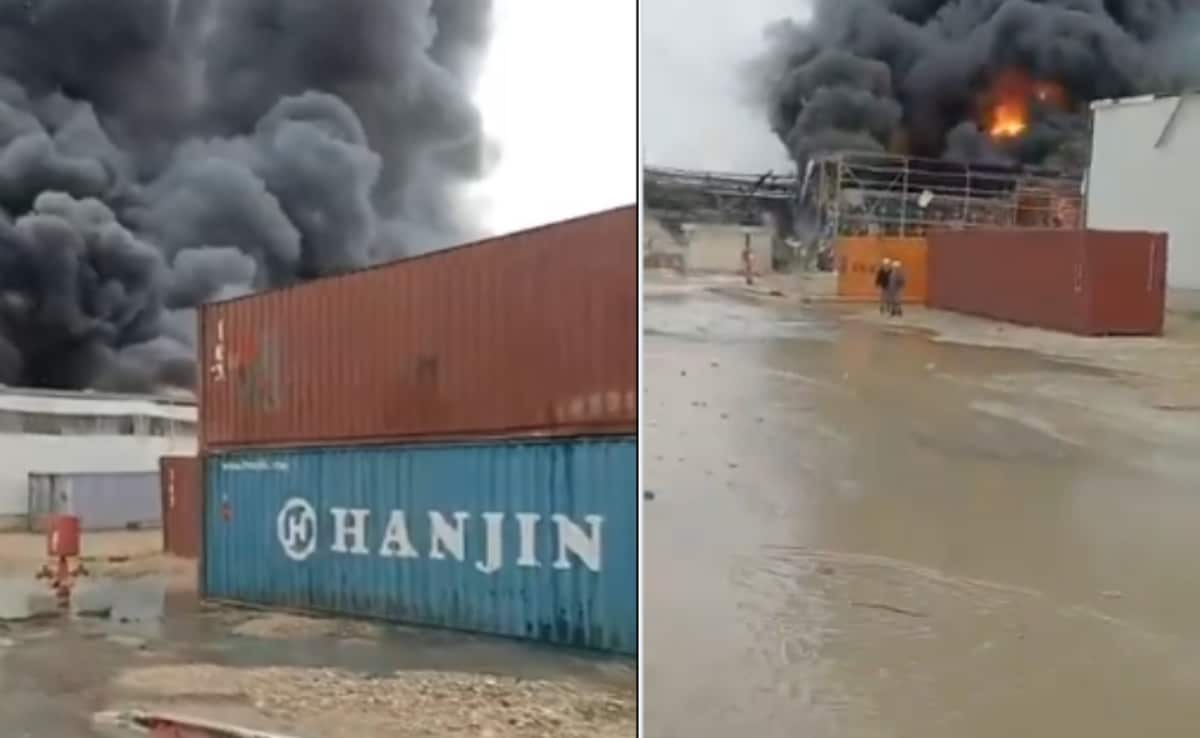
An Iranian missile's shrapnel struck a pesticide tank in Neot Hovav, an industrial zone ~12 km from Beersheba that houses more than 40 factories, triggering a hazardous materials fire, at least one injury and evacuations. Israeli forces reported five waves of missiles fired from Iran and interceptions; police said the blaze was caused by a munition impact or interception debris. The site is near Dimona and ~13 km from the Shimon Peres Atomic Research Centre, raising elevated regional security and environmental contamination risks and potential disruption to local chemical/industrial supply chains and operations.
This incident is a concentrated, physical supply‑chain shock with asymmetric downstream exposure: a handful of specialty chemical and environmental‑tech producers in a compact industrial park feed global niches (pharma intermediates, specialty polymers, waste‑treatment inputs). Even a localized 10–20% reduction in throughput for 2–8 weeks will force customers to tap secondary suppliers, increase lead times by 2–6 weeks, and trigger short‑term premium pricing for niche SKUs where switching costs and qualified supplier lists are high.
Second‑order economics are financial rather than strictly operational. Expect rapid repricing of industrial property and business‑interruption risk for Israeli and proximate regional assets — insurers and reinsurers will demand higher rates or exclusions within 1–3 months, which translates into immediate margin pressure for exposed exporters and 25–75bp spread widening on subordinated/SME credit in the region if the security situation persists.
Beneficiaries in the 1–12 month window are security/defense vendors, hazardous‑materials remediation specialists, and logistics firms that provide rapid rerouting and storage; losers are mid‑cap specialty chemical exporters, industrial REITs with tenant concentration in at‑risk zones, and any OEMs that cannot rapidly qualify alternate suppliers. Inventory policies will change: expect major buyers to target 45–90 day buffer stocks vs current ~30 day norms, increasing working capital requirements and accelerating reshoring/nearshoring conversations.
Catalysts to watch: (1) evidence of contamination levels and remediation timelines (days–weeks); (2) insurance/reinsurance commentary and premium filings (weeks–months); (3) military escalation or diplomatic de‑escalation that either broadens the disruption or restores confidence (days–months). A fast containment and insurer back‑stopping of BI claims would compress the opportunity quickly; sustained insecurity moves this from tactical to structural within 3–12 months.
AI-powered research, real-time alerts, and portfolio analytics for institutional investors.
Request DemoOverall Sentiment
strongly negative
Sentiment Score
-0.65
