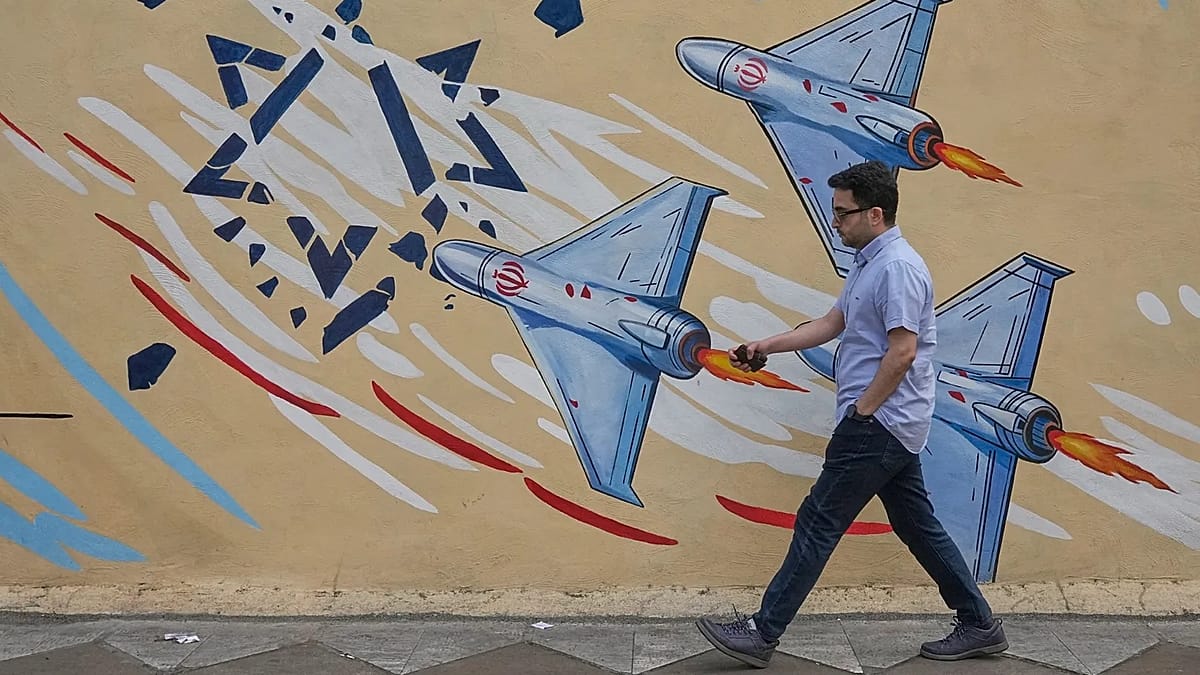
Washington and Tehran are still exchanging proposals to end the conflict, but the talks remain stalled over major U.S. demands, including limiting Iran to one nuclear site and transferring highly enriched uranium stockpiles to the U.S. Iran is pressing for sanctions relief, release of frozen assets, and war reparations, while Trump warned that Iran could face renewed hostilities if it does not agree quickly. The risk of escalation remains elevated, with direct implications for regional security and energy flows, including the Strait of Hormuz.
The market should treat this less as a binary peace headline and more as a volatility regime change around three choke points: enrichment, frozen assets, and maritime flow. The most immediate second-order effect is not a full supply shock, but a higher probability of intermittent disruption risk in the Strait of Hormuz and adjacent shipping lanes, which can lift prompt crude and product premiums even if outright volumes do not fall materially. That tends to benefit integrated energy, tanker insurance proxies, and Gulf-side infrastructure less than US LNG/export infrastructure, because the market pays for optionality on disruption, not just realized scarcity.
The sanctions angle is underappreciated: if negotiations stall, the US can tighten naval, financial, and export-control pressure without needing a major kinetic escalation, which would hit non-US regional intermediaries first. That typically widens spreads for entities exposed to Iranian trade settlement, reinsurance, and commodity financing, while leaving direct US producers comparatively insulated. A key second-order loser is global manufacturing and transport, where even a modest risk premium in crude and freight raises input costs and compresses margins before headline CPI fully reflects it.
The catalyst path is asymmetric over the next 1-3 weeks: one hawkish statement or any incident at sea can reprice near-dated energy vol sharply higher, but a credible mediation breakthrough would unwind that premium quickly. The bigger medium-term risk is that both sides are overplaying maximalist demands, making an interim ceasefire extension more likely than a durable settlement; that keeps tail risk alive without resolving it. In that environment, upside in energy is better expressed through options than cash equity because the market can fade headline-driven spikes once no physical disruption follows.
Contrarian view: consensus may be too focused on the nuclear headline and not enough on the fact that both sides appear to be negotiating from positions that preserve leverage. That argues for a prolonged, unstable ceasefire rather than immediate escalation or resolution, which is bearish for volatility sellers and bullish for owning convexity. The move is probably underdone in shipping, defense, and energy-vol structures, but overdone if expressed as outright beta longs without event protection.
AI-powered research, real-time alerts, and portfolio analytics for institutional investors.
Request DemoOverall Sentiment
strongly negative
Sentiment Score
-0.68
