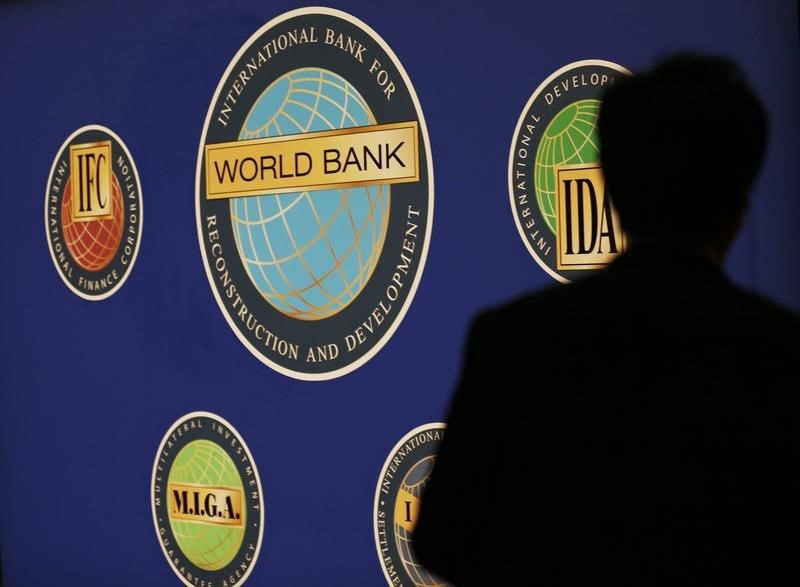
World Bank chief economist Indermit Gill will retire at the end of August, and the bank will begin the process of naming a successor. Gill, appointed in 2022, was credited with advancing debt transparency, sustainability, and restructuring efforts for low- and middle-income countries, alongside research on climate resilience and public finance. The announcement is largely administrative and is unlikely to have meaningful market impact.
The near-term market read-through is not about the personnel change itself, but about where policy credibility is being concentrated: debt transparency, restructuring, and climate finance are now being managed by a less institutionally stable World Bank bench. That matters for EM risk premia because these are the exact areas that determine how quickly capital can recycle back into frontier and low-income sovereigns after shocks. The second-order effect is a modest tailwind for private capital and multilateral-adjacent financiers that can step into the information gap, while weaker credits may see financing conditions stay tighter for longer. The broader macro implication is that the Bank’s research agenda has been reinforcing a more interventionist policy mix in EMs — industrial policy, climate resilience, and public finance. If that intellectual center of gravity slows, sovereigns with fragile external balances may lose a subtle but important source of narrative support when they are pricing new issuance. That is marginally negative for EM sovereign spreads over a 3- to 12-month horizon, especially for names that rely on transparency upgrades or debt reprofiling to keep market access. For the equity angle, the article is mostly a distraction, but the structured flow signal around AI still matters: NVDA remains the highest-conviction beneficiary, while SMCI and APP are more sentiment-sensitive and likely to react harder to any rotation in the AI complex. The contrarian view is that the AI trade is increasingly crowded; incremental upside now depends more on accelerating capex and sustained order revisions than on narrative alone. Any wobble in hyperscaler spend or export controls would hit the high-beta AI peripherals first, not NVDA immediately.
AI-powered research, real-time alerts, and portfolio analytics for institutional investors.
Request DemoOverall Sentiment
neutral
Sentiment Score
0.05
Ticker Sentiment
