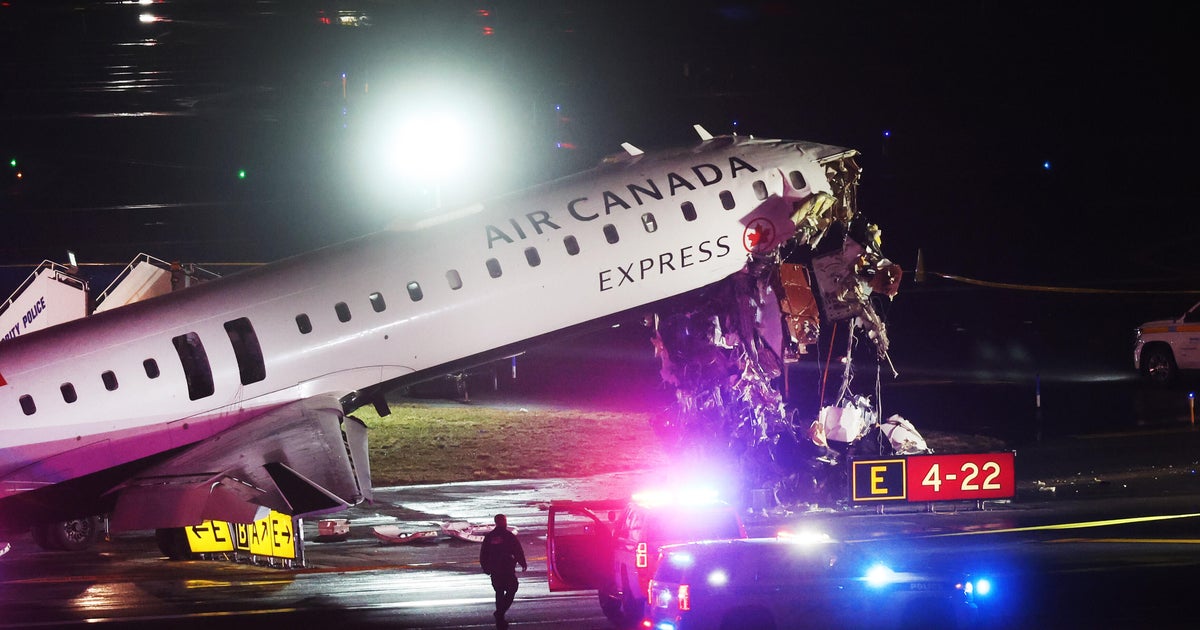
Two pilots were killed and 41 people were taken to hospitals after an arriving Air Canada Express CRJ900 (Flight 8646 operated by Jazz Aviation) collided with a Port Authority fire‑and‑rescue vehicle at LaGuardia; the aircraft had 72 passengers and four crew. LaGuardia was closed and the FAA issued a ground stop; the NTSB has launched a go team and expects an investigation of 12–18 months focused on ATC communications and possible controller error. Expect short‑term disruption to LaGuardia operations, potential localized share movements for the airlines/operators involved, and regulatory/investigative scrutiny of tower procedures and rescue vehicle protocols.
This incident will create a multi-horizon shock: an immediate operational and sentiment hit (days–weeks) followed by sustained legal, regulatory and insurance impacts (months–18+ months). Expect near-term volume and yield disruption at LaGuardia and any carrier with visible exposure to the route network; that amplifies volatility for AC.TO given its regional partner structure, while larger US incumbents face idiosyncratic but smaller balance-sheet exposure.
Regulatory and procedural changes are the highest-probability second-order outcome: FAA/Port Authority directives to mandate additional tower staffing, revised ARFF runway-crossing procedures, and potentially stricter crew/vehicle communications will raise operating costs and delay throughput at slot-constrained airports like LGA; estimate a 3–6% EBITDA hit to airport concession revenue and incremental OPEX for carriers operating high-frequency short-haul legs in the first 6–12 months. Litigation and insurer reaction create tail risk — wrongful-death suits against the operator and indemnity fights with the lessor/operator could produce multi-quarter earnings volatility for AC.TO/Jazz and concentrated one-off reserves.
Market reaction will be asymmetric: AC.TO should trade with higher implied volatility and larger drawdowns versus U.S. carriers; UAL will be pulled down by sector risk-off but lacks the direct legal vector. NTSB timelines (12–18 months for full report, preliminary findings in weeks) provide discrete catalysts for re-pricing; watch for FAA emergency rules within 30–90 days that would be immediate operational catalysts.
AI-powered research, real-time alerts, and portfolio analytics for institutional investors.
Request DemoOverall Sentiment
strongly negative
Sentiment Score
-0.75
Ticker Sentiment
