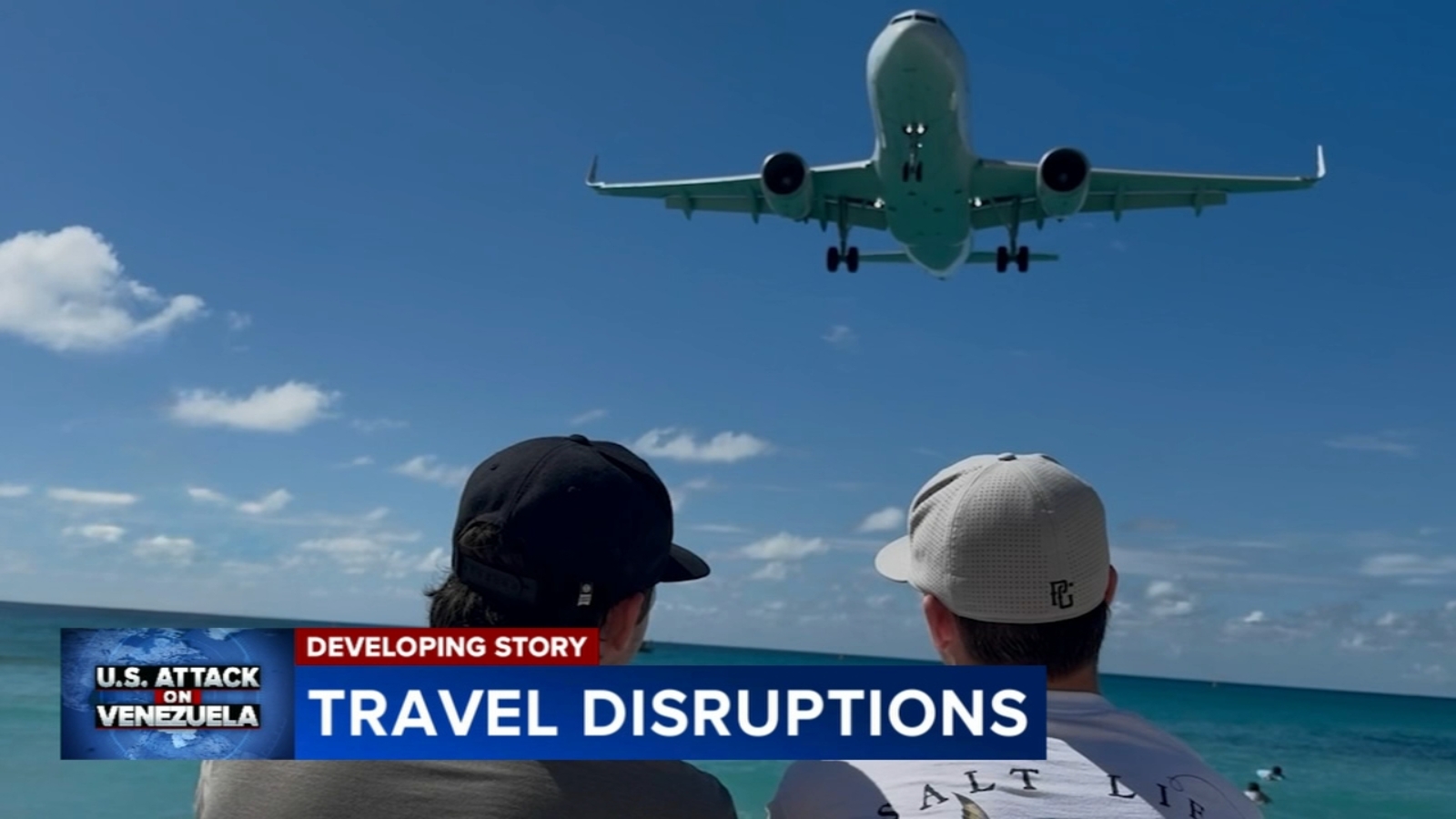
Flight cancellations tied to a recent operation in Venezuela have stranded several Philadelphia-area families across the Caribbean—notably in Saint Martin and Aruba—forcing rebookings, extended stays and disruptions including delayed surgeries and missed civic obligations. American Airlines reported adding roughly 5,000 seats, extra flights and larger aircraft to repatriate passengers; the episode highlights operational fragility in regional air services but carries minimal direct market-moving implications beyond near-term travel-sector costs and customer-service disruptions.
Market structure: Short-term winners are large, networked legacy carriers (e.g., AAL) and charter operators with spare capacity to pick up disrupted passengers; losers are small leisure-focused carriers and island economies that face booking cancellations and higher operating re-accommodation costs. Expect transient upward pressure on short-haul fares and ancillary revenue for 1–4 weeks as capacity is rebalanced, while airline unit costs tick higher via passenger-care and irregular ops costs of ~1–3% of weekly revenue for affected routes.
Risk assessment: Tail risks include escalation of Venezuela-related operations or broader airspace closures that could extend disruptions >30 days, push jet-fuel logistics constraints, and widen airline credit spreads by 50–150bp for weaker issuers; regulatory actions (DOT fines, increased passenger compensation rules) could raise industry OPEX structurally. Immediate window (days) is operational chaos; short-term (weeks) sees yield/fare repricing; long-term (quarters) only material if conflicts disrupt oil supply or sustained routing changes occur.
Trade implications: Favor liquidity/scale over niche leisure names — allocate tactical capital to airlines with diversified networks and balance sheets that can monetize added seat capacity (AAL). Use options to express asymmetric views: buy 3-month 5% OTM AAL calls to capture a quick rebound in fares/earnings revisions while selling near-term calls if IV spikes. Rotate 1–3% into defense primes (e.g., LMT) as a geopolitical hedge if tensions persist beyond 60 days.
Contrarian angles: The market may underprice upside in legacy carriers’ yields as constrained capacity briefly allows >2% margin recovery on routes; conversely, adding seats (as AAL did with 5,000 seats) could be perceived as cost-incurring but actually preserves PR and loyalty revenue — mispriced for nimble carriers. Historical parallels (hurricane-driven Caribbean disruptions) show recovery within 2–6 weeks; the largest error would be treating this as a multi-quarter demand shock rather than a routing/scheduling shock.
AI-powered research, real-time alerts, and portfolio analytics for institutional investors.
Request DemoOverall Sentiment
mildly negative
Sentiment Score
-0.25
Ticker Sentiment
