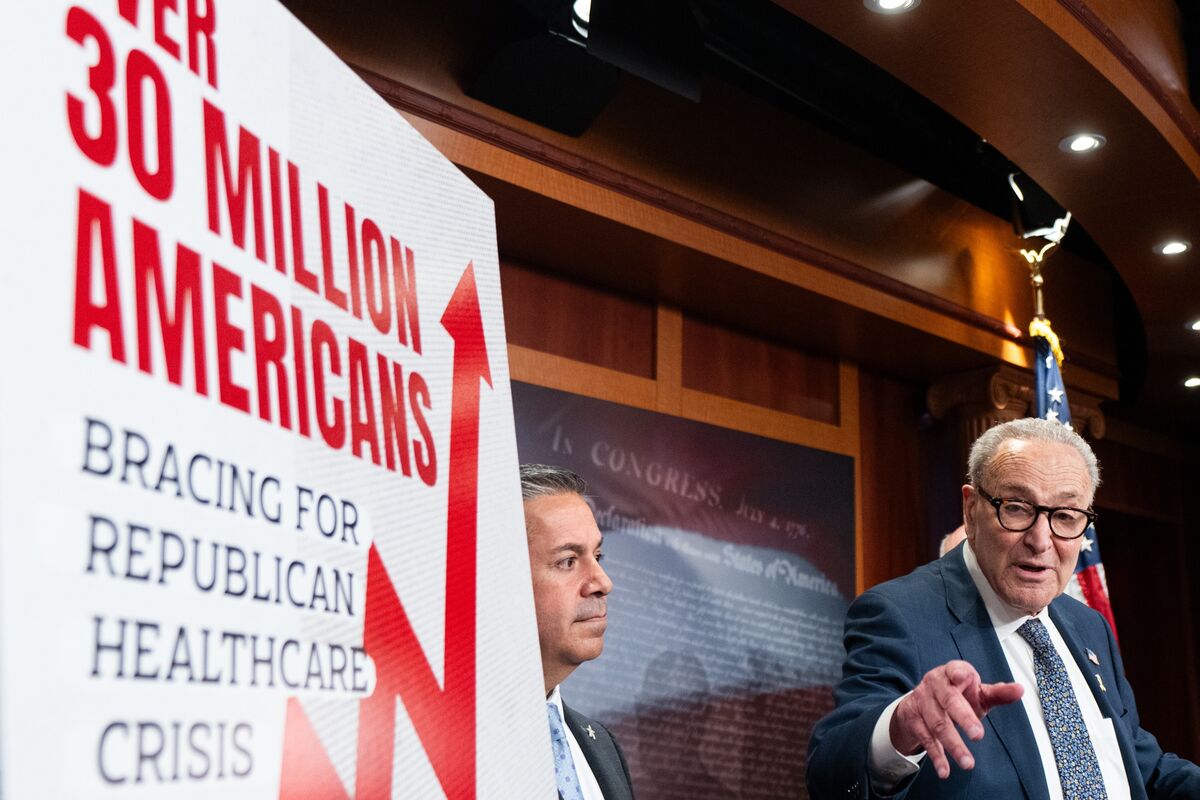
With a year-end deadline looming, Congress has not coalesced around a plan to avert a likely spike in Affordable Care Act premiums, putting insurance costs at risk for more than 20 million Americans. Multiple proposals have been floated but none have the votes to pass, creating policy uncertainty that could pressure health insurers' revenue and pricing dynamics, increase potential federal subsidy costs if a last-minute fix is enacted, and inject near-term political and regulatory risk into healthcare equities.
Market structure: The immediate winners are large vertically integrated managed-care insurers (UNH, CVS, CI) if Congress extends subsidies or enacts stopgap funding—stability in premiums preserves enrollment for ~20M members and protects revenue; losers are regional insurers and hospital systems (HCA, CYH) exposed to uncompensated care if coverage lapses. Pricing power shifts toward national payors who can reprice risk pools and re-negotiate provider rates; smaller carriers could cede share if premium volatility forces exits in some state markets.
Risk assessment: Tail risks include an abrupt legislative failure leading to a mid-January premium spike and enrollment shock (high-impact within 30–90 days), or conversely a broad fiscal package that expands subsidies and increases deficit issuance (impact on 2s/10s and credit spreads over 6–18 months). Hidden dependencies: state-level insurer decisions (rate filings) and CMS guidance can amplify effects independent of Congress. Catalysts: key procedural votes, CBO score release, and state rate approvals—watch 2–6 week windows.
Trade implications: Tactical long on large-cap managed care (UNH, CVS) ahead of likely political pressure to act; hedges through puts on regional insurers (CNA-equivalents, HUM). Options: buy 3-month 25-delta puts on HUM/CI as a tail hedge and sell short-dated calls or iron-condors on UNH if IV >40% to finance positioning. Rotate 2–4% portfolio weight from hospital REITs/ops (HCA, WELL) into PBMs/managed care.
Contrarian angles: Consensus underestimates political will to avoid visible premium pain—probability of some stopgap is >60%, making short-dated put-buying on large insurers potentially overpriced. Conversely, if markets price in a bipartisan fix (>75%), insurers may be overbought; the mispricing window is the 7–14 days bracketing procedural votes. Historical parallel: 2017–18 ACA skirmishes caused 15–30% swings in small insurers; expect similar dispersion among regionals now.
AI-powered research, real-time alerts, and portfolio analytics for institutional investors.
Request DemoOverall Sentiment
moderately negative
Sentiment Score
-0.30
