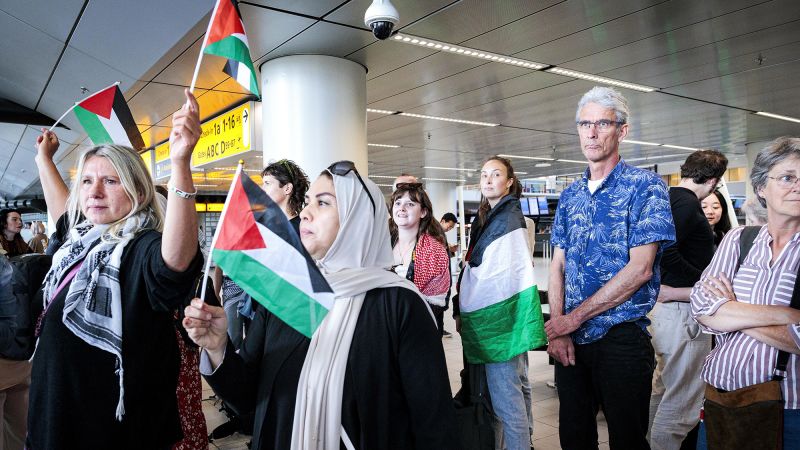
Thousands of international activists are converging on the Egyptian border with Gaza to protest the Israeli blockade, prompting a delicate balancing act for Egypt, which is mediating between Hamas and Israel. The "Global March to Gaza" aims to deliver aid and raise awareness, but Egypt is wary of the conflict spilling over its borders and has emphasized the need for permits, with reports of some activists facing delays and deportations upon arrival. Israel has warned Egypt to prevent demonstrators from approaching the border, raising tensions in the region as international pressure mounts to ease the humanitarian crisis in Gaza.
A significant geopolitical event is unfolding as approximately 6,000 international activists, including 4,000 from over 80 countries and an additional 2,000 from Tunisia, are converging on Egypt for a "Global March to Gaza." The stated aim is to protest and symbolically break the Israeli blockade of Gaza, which organizers assert has pushed the territory towards famine, by marching to the Egyptian side of the Rafah border crossing. This mobilization, featuring high-profile figures like Nkosi Zwelivelile Mandela and former US diplomat Hala Rharrit, occurs as Israel's war in Gaza enters its 21st month and follows Israel's March 2nd imposition of a full humanitarian blockade that lasted 11 weeks, with only a trickle of aid permitted since late May, deemed insufficient by humanitarian organizations. The protest places Egypt in a challenging diplomatic position, attempting to balance its role as a key mediator between Hamas and Israel, its ties with the US, and domestic public sentiment against the war's impact on Gaza's civilians. Cairo has expressed wariness of the conflict spilling into its territory, keeping its side of the Rafah crossing closed to Palestinians and mandating permits for activists, with reports indicating 170 individuals faced delays or deportation at Cairo airport. Israel, through Defense Minister Israel Katz, has explicitly warned Egypt to prevent demonstrators from nearing the border, citing security risks to IDF soldiers and vowing not to allow provocations or entry into Gaza. This situation is underscored by recent events, such as the Israeli interception of the "Madleen" aid ship and detention of activists including Greta Thunberg and Rima Hassan. The associated signals indicate a "strongly negative" sentiment (-0.7) and a "pessimistic" tone, reflecting the severe humanitarian concerns and potential for increased regional instability, though the immediate broader market impact is assessed as relatively low (0.35).
AI-powered research, real-time alerts, and portfolio analytics for institutional investors.
Request DemoOverall Sentiment
strongly negative
Sentiment Score
-0.70
