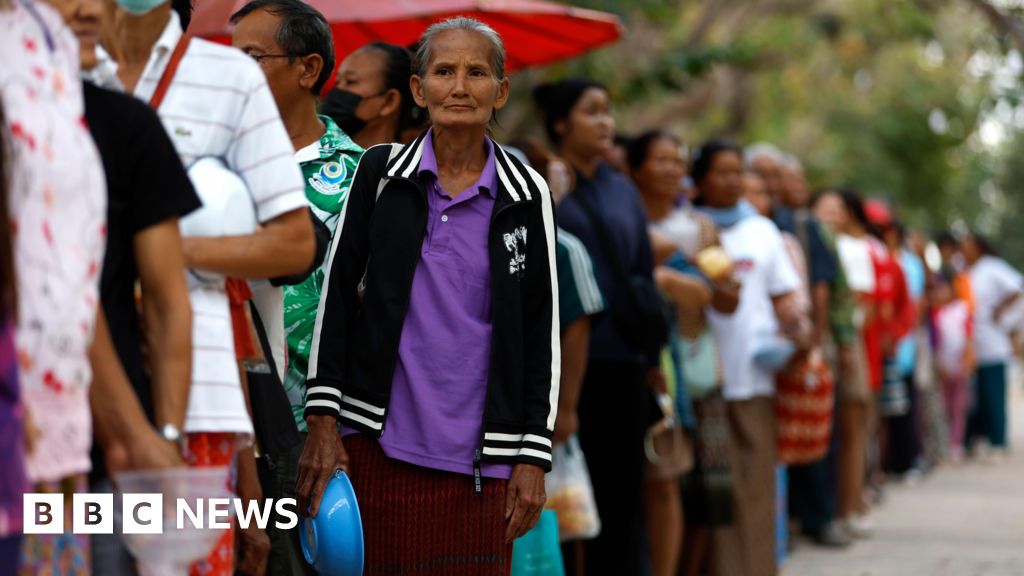
ASEAN diplomats will meet in Kuala Lumpur to press for revival of a July-brokered ceasefire after renewed Thailand-Cambodia border clashes since 8 December have killed at least 41 people and displaced nearly one million. The talks, the first between the two countries since the resumption of fighting, come amid artillery exchanges and Thai air strikes; Malaysia, the US and China are all involved in mediation while Thailand insists on a Cambodian declaration of ceasefire before substantive negotiations.
Market structure: Short-term winners are safe-haven assets (gold, JPY, USD) and global defense primes (RTX, LMT) as governments signal higher procurement; losers are Thai/Cambodian tourism, border-localized supply chains, and Thai sovereign credit which will see spread widening vs. IG benchmarks. Cross-asset: expect USD/THB up 1-4% intraday, SET index weakness of 3-8% in initial shock, 10y Thai yields +15–50bp if fighting persists; oil impact is negligible unless conflict broadens, while gold could gap +2–4%.
Risk assessment: Tail risks include escalation to wider military engagement or a China/US proxy standoff — low probability (<5%) but would spike EM FX stress and regional CDS; immediate (days) volatility risk for EM FX/equities, short-term (weeks) potential for tourist revenue loss of 5–15% vs prior quarter, long-term (12–24 months) likely reallocation of defense budgets (+5–15% yoy). Hidden dependencies: ASEAN diplomatic cohesion and simultaneous US/China mediation can quickly reverse markets; casualty/displacement milestones (>50 deaths or >1M displaced) are binary catalysts.
Trade implications: Tactical positions: buy 3-month gold exposure (GLD or futures) sized 1–2% portfolio and hedge with a 2% OTM call spread; take small tactical long positions in RTX/LMT (1% each) for 6–12 months with 10% stop-loss; short Thailand/tourism exposure via 3-month ATM puts on iShares MSCI Thailand ETF (THD) sized 1–2% or short AOT.BK equivalents. Options: buy 3-month puts on THD (strike ~5% OTM) and buy USD/THB one-week risk reversals if THB breaks -1% intraday; exit/trim on a clear ceasefire within 72 hours or after a 10–15% move in either direction.
Contrarian angles: Consensus may overstate permanence — ASEAN/US/China pressure makes a ceasefire likely within 1–3 weeks, so initial capital flight could be overdone and create 15–30% buying opportunities in Thai consumer/tourism names if ceasefire holds. Historical parallel: 2011 border flare-ups produced 3–6 month recoveries in equities once diplomacy resumed. Unintended consequence: accelerated regional tourism share gains for Vietnam/Philippines; consider selective buys there on any relative weakness.
AI-powered research, real-time alerts, and portfolio analytics for institutional investors.
Request DemoOverall Sentiment
moderately negative
Sentiment Score
-0.35
