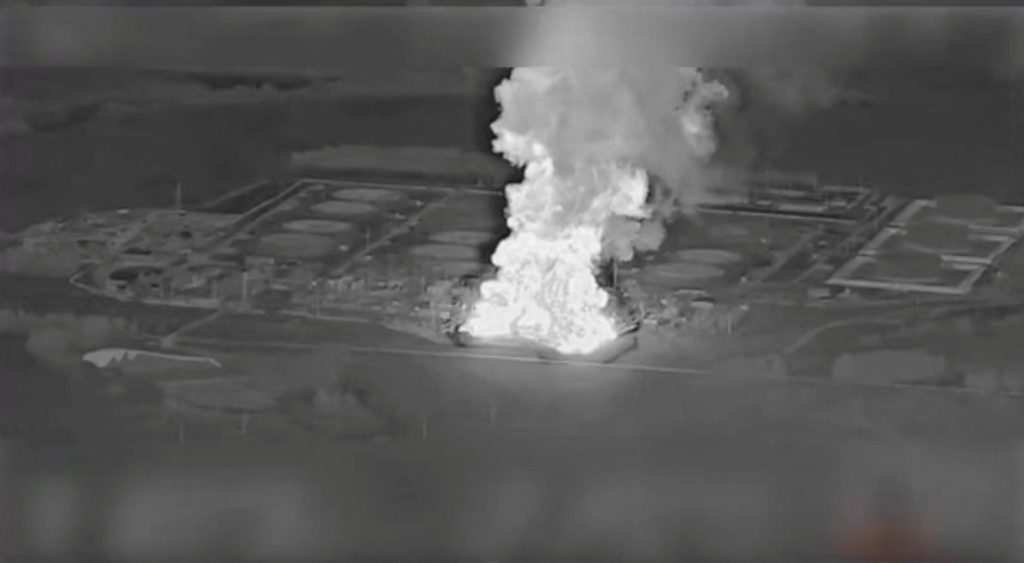
The conflict between Russia and Ukraine has intensified with both nations increasingly targeting each other's energy infrastructure. Recent Russian attacks left over 100,000 Ukrainians without power, while Ukraine's drone strikes have disrupted an estimated 13-20% of Russia's refinery capacity, causing domestic fuel shortages and rationing. This escalation, marked by Ukraine's deployment of more advanced, long-range drones and persistent attacks, signals a deepening economic dimension to the war, posing continued risks to global energy markets and supply chain stability.
The Russia-Ukraine war has entered a more intensified phase of economic attrition, characterized by reciprocal attacks on critical energy infrastructure. Ukrainian drone strikes have reportedly disabled between 13% and 20% of Russia's refining capacity, a significant disruption that has led to domestic fuel shortages, price spikes, and rationing inside Russia. This reflects a strategic evolution in Ukraine's capabilities, leveraging more numerous and advanced long-range drones for persistent attacks aimed at crippling facilities, as noted by former Gazprom strategist Sergey Vakulenko. Concurrently, Russian attacks continue to target Ukraine's power grid, recently leaving over 100,000 people without electricity and underscoring the ongoing vulnerability of its civilian infrastructure. The high market impact score of 0.7 signals that this escalation poses a material risk to global energy market stability, specifically for refined products, introducing significant short-term price volatility irrespective of crude oil price movements.
AI-powered research, real-time alerts, and portfolio analytics for institutional investors.
Request DemoOverall Sentiment
strongly negative
Sentiment Score
-0.75
