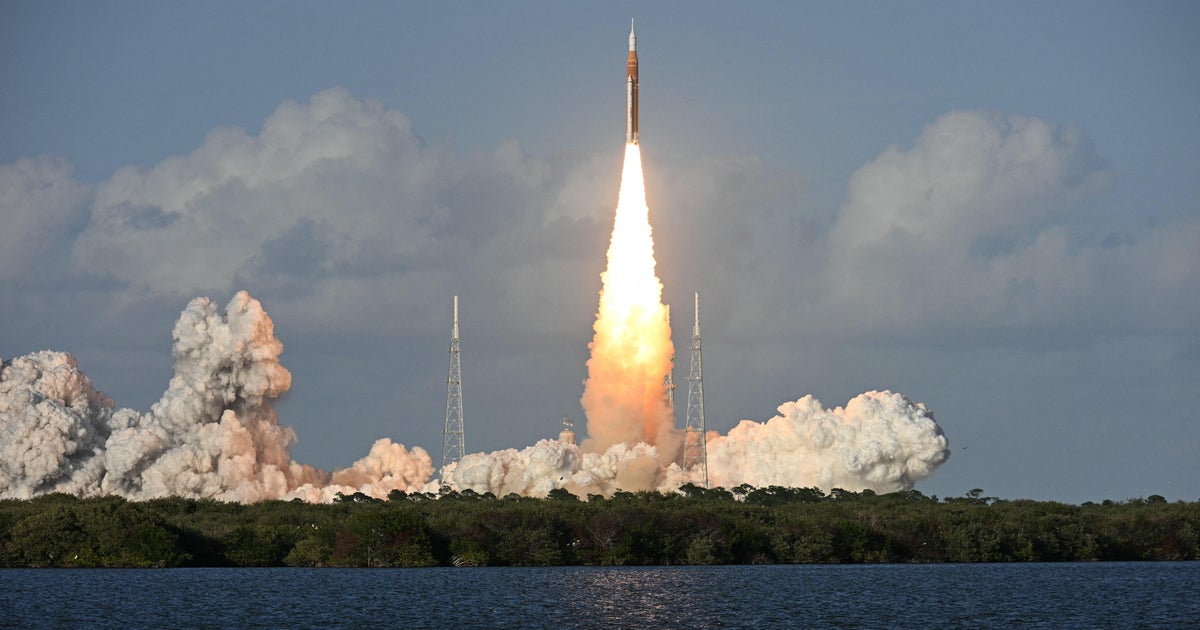
Artemis II successfully launched at 6:35 p.m. EDT on April 1, 2026, sending four astronauts on a ~9.5‑day lunar flyby expected to reach a record 252,000 miles from Earth; the ICPS completed burns raising orbit apogee to 43,760 miles. Multiple pre‑launch and early‑flight anomalies (flight termination system verification, a temporary communications loss, a launch abort battery temperature sensor reading, and a controller issue with the onboard toilet) were resolved or under investigation and were not deemed mission‑critical; solar arrays deployed and core stage/boosters separated as planned. Market impact is limited and concentrated on aerospace/defense suppliers and contractors, with overall positive operational confirmation but continued test‑flight risk.
The Artemis II flight acts as a credibility inflection for a multi-decade government-funded lunar program; the immediate second‑order winners are primes and industrial suppliers that own specialized, hard‑to‑replicate capabilities (cryogenic LH2 handling, legacy RS‑25 engine workstreams, launch‑range integration). Expect program cadence talk to convert into multi‑year backlog that is lumpy but high‑margin for select suppliers — not a broad cyclical uplift for the entire aerospace sector.
Operational snags (flight‑termination console workarounds, sensor anomalies, tight hatch tolerances) highlight a structural bottleneck: heritage hardware and human‑intensive launch ops, not commodity manufacturing, are the marginal constraint. That favors contractors with on‑site integration teams and waivers expertise over high‑volume aircraft OEMs; it also raises leverage for niche service providers (range ops, cryogenics installers) to negotiate higher margins on follow‑on work.
Tail risks are political and binary: a major anomaly or a high‑profile program delay could trigger near‑term appropriation scrutiny and pause new awards, compressing revenue recognition over 6–18 months. Conversely, a clean operational cadence through the next 2 missions materially de‑risk budget optics and could accelerate contract awards and sub‑tier M&A, concentrating value in a handful of execution‑capable suppliers rather than across the sector.
AI-powered research, real-time alerts, and portfolio analytics for institutional investors.
Request DemoOverall Sentiment
moderately positive
Sentiment Score
0.30
Ticker Sentiment
