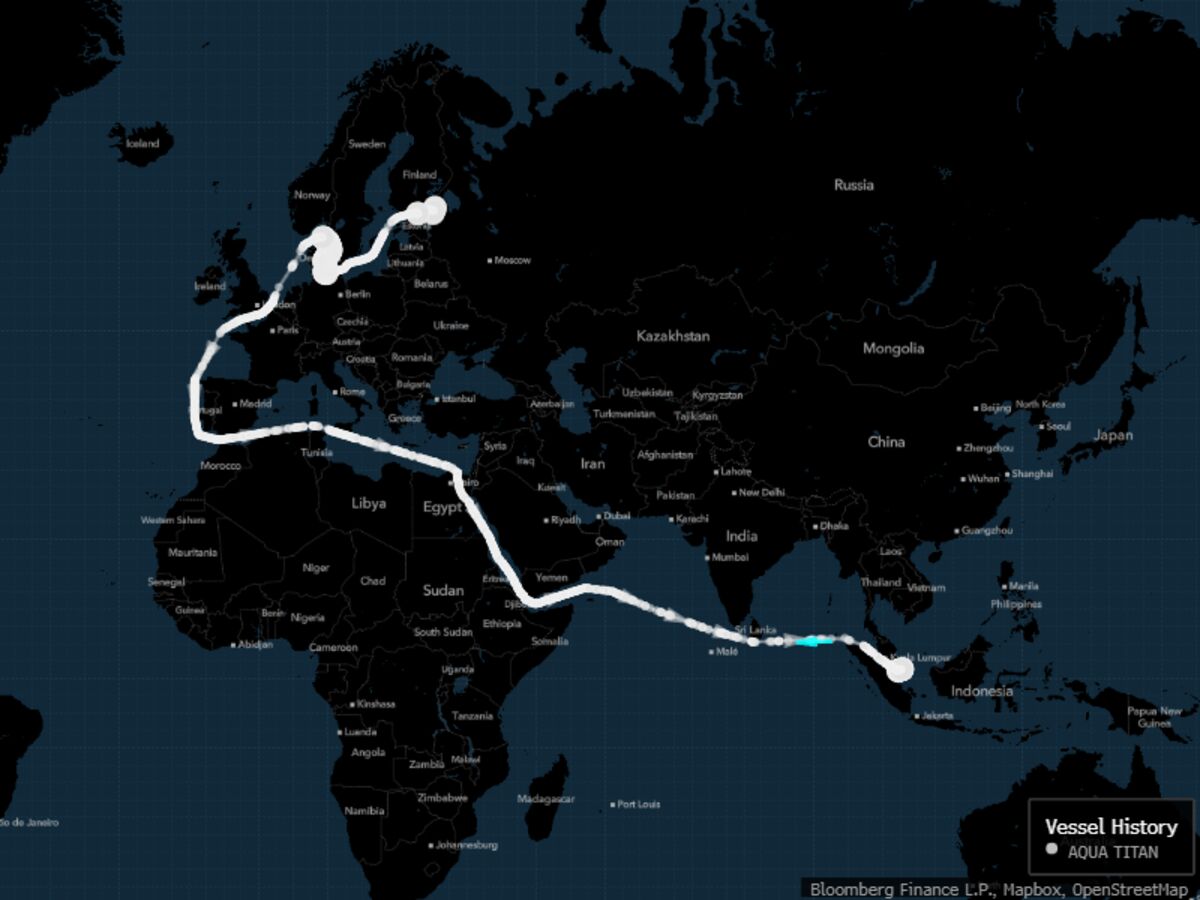
A Russian Aframax tanker, Aqua Titan, carrying Urals crude loaded in late January has diverted from its original destination of Rizhao, China and is now heading to New Mangalore, India with an ETA of March 21. The reroute follows U.S. approval for India to temporarily increase purchases from Russia and reflects New Delhi's stepped-up imports, shifting regional crude flows and potentially tightening supply available to Chinese refiners in the near term.
India taking incremental barrels from Russia creates an outsized margin tailwind for Indian refiners because they (a) have the complex capacity to process heavier Urals-type grades and (b) can buy at a persistent discount to Brent. If the Urals discount stays in the $8–$15/bbl range and India allocates an incremental 0.5–1.0 mbd to these barrels, that implies an incremental refinery margin pool on the order of $45–$450m/month being reallocated to Indian refiners rather than to Chinese counterparts, concentrated in the next 1–3 quarters as physical flows re-route and storage cycles reset. A second-order logistical effect is the maritime freight and regional storage impulse: longer or alternative routing to India lifts spot Aframax/Suezmax demand in the Indo-Pacific, tightens availability of modern insured tonnage for other buyers, and increases short-term bunker consumption at Indian ports. Expect freight and short-term storage spreads to widen over weeks to a couple of months, benefiting owners of versatile tankers and commercial storage providers while compressing netback for marginal cargoes. Principal near-term reversal risks are policy (US temporary waivers being rolled back or new secondary-sanctions enforcement), China outbidding India on price or credits, and a sudden narrowing of the Urals discount if Russian logistics expand (e.g., new pipeline flows or insurance normalization) — any of which could re-route barrels within 30–90 days. Over 6–12 months, the base-case is sticky: India’s refinery economics plus existing logistics make it the marginal buyer for discounted Russian heavy crude until alternatives (policy, extra Chinese demand, or larger Russian outlets) materialize. Contrarian check: the market may underprice the freight and refining conversion costs that offset some of the headline margin gains — cheap crude doesn’t translate 1:1 to EPS if ton-mile inflation and incremental blending costs rise. Conversely, the move could be underdone on the macro side: sustained cheaper feedstock for India improves its current-account trajectory and fiscal optionality, supporting INR and broader India equity outperformance over the next 6–12 months.
AI-powered research, real-time alerts, and portfolio analytics for institutional investors.
Request DemoOverall Sentiment
neutral
Sentiment Score
0.00
