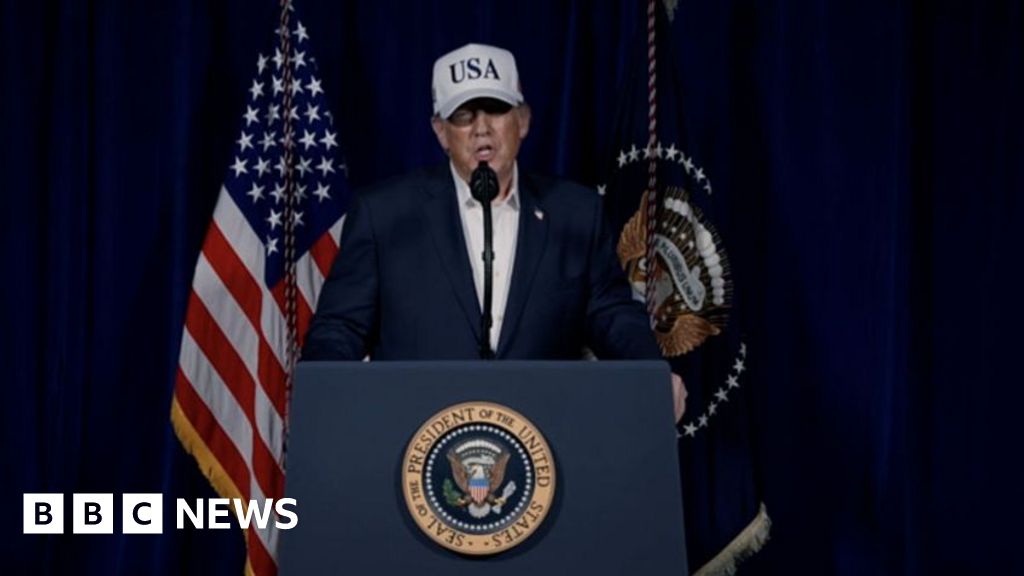
President Trump announced a large-scale military operation dubbed 'Operation Epic Fury' against Iran, framing the strikes as necessary to eliminate 'imminent threats' and explicitly calling for regime change; the action was undertaken without formal congressional authorization. The escalation raises meaningful risks of US casualties, a wider regional war and domestic political fallout ahead of the midterms — likely prompting risk-off flows, higher defense and safe-haven asset demand and potential volatility in energy and regional markets.
Market structure: Immediate winners are large-cap defense primes (LMT, RTX, NOC, GD) and energy producers (XOM, CVX, XLE) as governments reprice security risk and energy risk premia; losers include commercial airlines (JETS, AAL, DAL), regional EM assets and insurers (marine/war-risk). Expect defense order backlog and margin tailwinds over 3–24 months while oil risk-premium can drive Brent +$10–$30 within weeks if shipping routes are threatened.
Risk assessment: Tail risks include escalation to a wider regional war (Brent > $120/bbl, insurance spikes, USD safe-haven rally) and US casualties prompting political backlash that reverses support for sustained action; probability low–medium but impact extreme. Timeline: days = volatility spike and FX flow to USD/Treasuries, weeks–months = commodity and defense re-rating, 12–36 months = structural defense capex and sanctions-driven supply shifts. Hidden dependencies: congressional authorisation, Iranian asymmetric attacks on shipping/energy infrastructure, and Israel’s parallel operations.
Trade implications: Tactical trades should favor convex exposures: buy 3–6 month call spreads on LMT/RTX and 1–3 month Brent/energy calls or XLE longs; hedge with short airline exposure (JETS). Allocate capital in small, scaled tranches (2–4% per theme) and use volatility instruments (straddles on crude or short-dated SPX puts) to monetize fast moves. Trigger-based sizing: add if Brent > $90 or VIX > 25.
Contrarian angles: Consensus may overpay equities in defense and energy if the conflict is contained quickly (1991 Gulf War analogue). Use options to avoid permanent equity exposure; consider opportunistic long cyclicals (semis, industrials) 4–8 weeks after de-escalation if oil retraces >20% from peak. Beware that prolonged conflict could crater EM credit and widen USD/Treasury dislocations, creating secondary market stress opportunities.
AI-powered research, real-time alerts, and portfolio analytics for institutional investors.
Request TrialOverall Sentiment
strongly negative
Sentiment Score
-0.70
