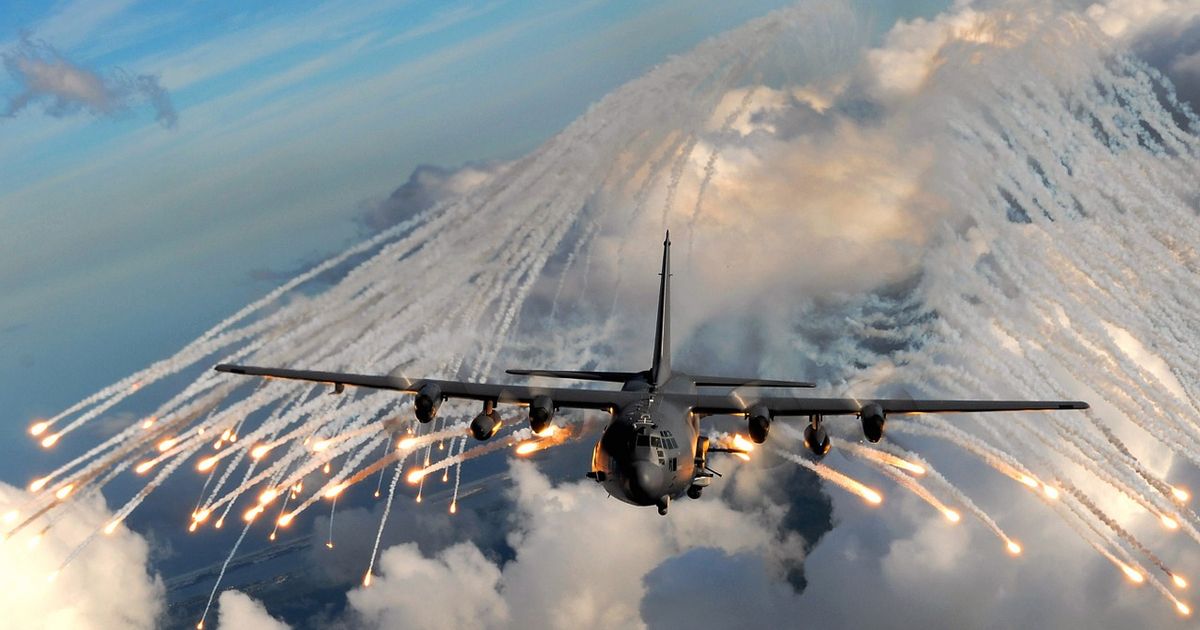
Chemring reiterated an unchanged full-year outlook despite operational disruption at its Kilgore Flares automated Tennessee plant, which is now largely resolved but will see legacy operations retired and a resulting non‑cash impairment. The order book stood at £1.364bn as of 30 Jan 2026 (vs £1.351bn a year earlier) while Q1 order intake fell to £122m from £393m; first-quarter revenues plus the current order book cover about 85% of expected full-year revenue. The group flagged that major investment to expand energetics capacity—funded through existing debt facilities and supported by up to £16m from Norway for a feasibility study—will push net debt higher and shift results weight to the second half; Roke also secured a post-period £22.5m STORM‑related order.
Market structure: Chemring (CHG.L) is caught between structurally rising NATO/allied defence demand and short-run supply disruption; order book £1.364bn and 85% revenue coverage reduce revenue shock risk, but Q1 intake (£122m vs £393m LY) signals lumpy contract timing. Winners are large diversified primes (e.g., BAE Systems BA.L, QinetiQ QQ.L) and specialist capacity-build contractors; small, single-site energetics players risk displacement if Kilgore automation scales successfully. Cross-asset: expect mild credit spread widening for small-cap defence issuers as Chemring debt-funded capex lifts net-debt in H1/H2, modest GBP support on sustained defence spend, and limited commodity impact beyond specialty chemicals for energetics.
Risk assessment: Tail risks include a major safety/regulatory shutdown at Kilgore or >20% capex overrun that pushes net-debt/EBITDA above 3.5x and triggers covenant pressure; probability low-medium but high impact. Immediate (days) risk is a negative share reaction to an impairment recognition; short-term (weeks–months) hinge on H1 operational metrics and order intake; long-term (12–24 months) depends on capex payback and whether expanded capacity captures incremental contracts. Hidden dependencies: single automated site concentration, conditional Norwegian funding (up to £16m), and uncertainty around the UK Defence Investment Plan timing.
Trade implications: Tactical plays—establish a conditional 2–3% long in CHG.L on a >12% post-impairment pullback or after H1 if net-debt/EBITDA ≤3.0x and order coverage stays ≥80%; target 12–24 month return 25–40%, stop-loss 20%. Relative-value: 6–12 month pair trade long BA.L (1.5–2% weight) vs short CHG.L equal notional to exploit execution/capital-structure divergence. Options: buy 3-month CHG.L puts 10% OTM sized to hedge existing exposure or purchase Sep-2026 call spreads to capture re-rating if impairment is fully non-cash and H2 delivery proves strong.
Contrarian angles: The market may over-penalise a non-cash impairment and near-term higher net debt—if impairment crystallises in H1 and H2 backlog conversion holds, CHG could re-rate 30–50% within 12–18 months. Historical parallels: small defence suppliers have recovered post-capex cycle once automated sites stabilize; key mispricing window is post-impairment when headline EPS decline masks cash-flow-backed orderbook. Monitor three catalysts: UK Defence Investment Plan publication (next 3–6 months), H1 results (timing from company), and Norwegian feasibility decision by end-2026 to capture the inflection.
AI-powered research, real-time alerts, and portfolio analytics for institutional investors.
Request DemoOverall Sentiment
mixed
Sentiment Score
-0.05
