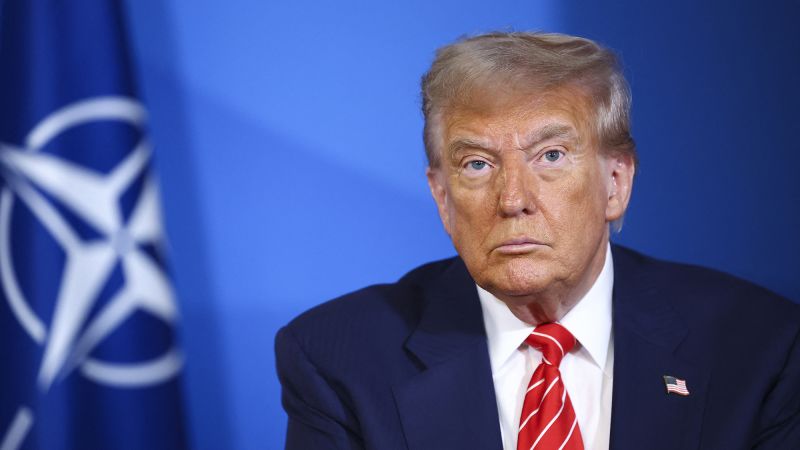
Despite publicly stating he is not looking to provide Ukraine with long-range missiles capable of striking deep into Russia, former President Trump has privately inquired about Ukraine's ability to hit cities like Moscow and St. Petersburg to pressure the Kremlin. These private discussions have prompted follow-up talks among Ukraine, European nations, and the U.S. regarding long-range offensive systems, even as NATO indicates its new aid plan could include all weapon types, with an immediate focus on air defense like Patriot batteries. This dual narrative creates ambiguity around potential future U.S. military aid and its implications for the conflict's escalation and geopolitical risk.
A significant divergence exists between former President Trump's public and private positions on military aid to Ukraine, creating policy uncertainty and elevated geopolitical risk. While publicly stating the U.S. is not looking to provide long-range missiles, private inquiries were made about Ukraine's capacity to strike deep into Russia, specifically mentioning Moscow and St. Petersburg, as a means to pressure the Kremlin. This has catalyzed follow-up discussions with European allies about providing such systems. The current stated priority remains defensive systems, such as Patriot missile batteries, which will be supplied via a NATO plan involving European purchases and subsequent transfers to Ukraine, with U.S. industry likely backfilling these European stockpiles. However, NATO officials have confirmed that their aid framework could include "all kinds of weapons," leaving the door open for offensive capabilities like the previously requested JASSMs. This strategic ambiguity suggests a potential for significant policy shifts, ranging from a focus on defense to a future escalation involving long-range offensive strikes, making the situation highly unpredictable for markets.
AI-powered research, real-time alerts, and portfolio analytics for institutional investors.
Overall Sentiment
Neutral
Sentiment Score
0.00
