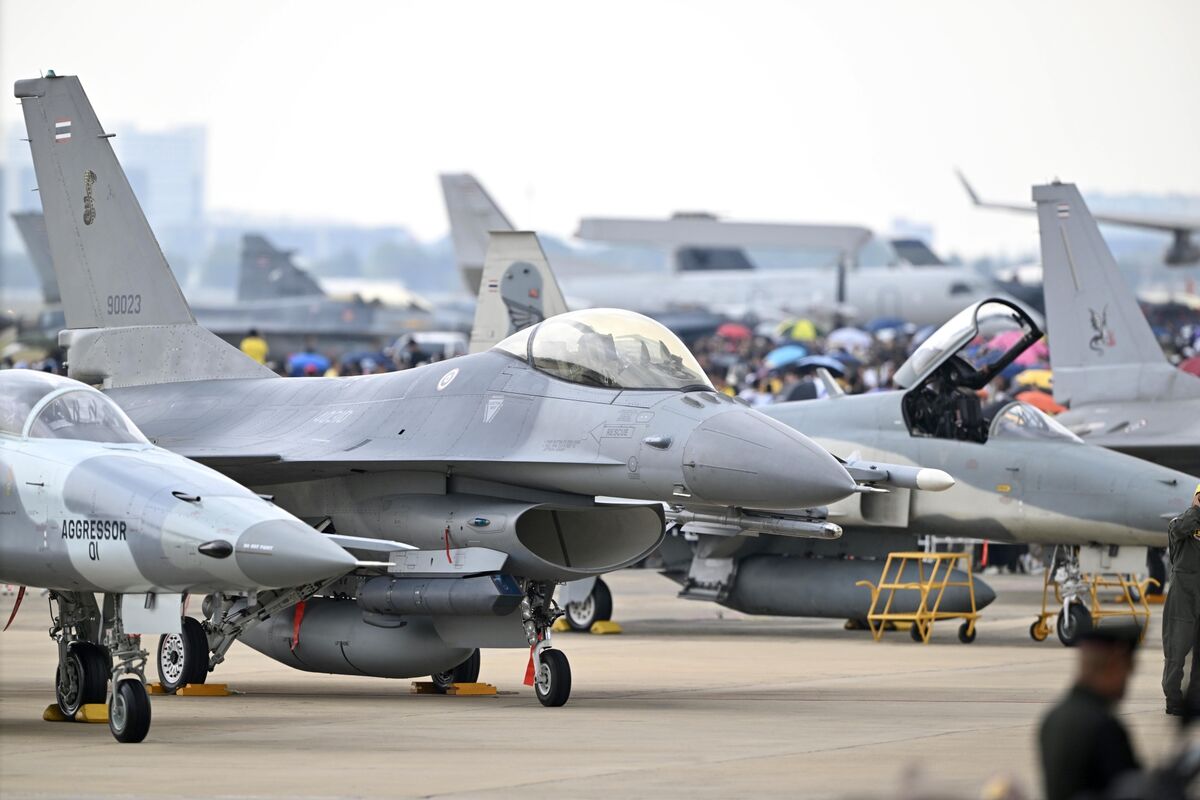
Thailand launched ground and F-16 air strikes on Cambodian military sites after Cambodian forces opened fire at multiple border locations, a skirmish that killed at least two Thai soldiers and injured eight. The escalation — described as the most dramatic in months — threatens a peace deal urged by U.S. President Donald Trump and raises short-term geopolitical risk for Southeast Asian markets and regional defense exposure.
Market structure: Near-term winners are global defense primes (LMT, RTX, GD) and safe-haven assets (USD, gold GLD, USTs) due to an expected but modest regional re‑arming cycle and risk-off flows; losers are Thailand-sensitive sectors—tourism, airlines, banks—and the iShares MSCI Thailand ETF (THD) which could underperform by 5–15% if travel advisories persist. Competitive dynamics favor established exporters of munitions and avionics as ASEAN governments accelerate procurement, squeezing discretionary and infrastructure budgets in Thailand over 1–4 quarters.
Risk assessment: Tail risks include wider ASEAN escalation, US involvement or sanctions that would disrupt regional supply chains (electronics, auto parts), and a prolonged tourism collapse; probability low (<10%) but P&L impact high. Immediate (days) risk is a 2–7% equity/FX swing; short-term (weeks) sees tourism revenue losses and credit stress in small Thai banks; long-term (quarters) reallocation to defense capex could crowd out private investment.
Trade implications: Tactical plays: long defense equities/call spreads (3–6 month horizon), long GLD and TLT (1–3 months) as volatility hedges, and short THD or use FX USD/THB longs if THB weakens >2%. Use options to size risk: buy 3‑month 5–10% OTM put protection on THD and 3‑month call spreads on LMT/RTX to limit capital at risk; scale entries over 48–72 hours and reassess at 10% move.
Contrarian angles: Consensus may overprice permanence — many Border skirmishes de‑escalate in 2–6 weeks, which could cause defense equities to mean‑revert after initial pop; oil/gold upside may be capped to +1–3% unless conflict widens. Action needs explicit exit triggers: take profits on defense at +8–12% or if diplomatic de‑escalation occurs within 30 days; cut GLD if spot drops >5% from entry.
AI-powered research, real-time alerts, and portfolio analytics for institutional investors.
Request DemoOverall Sentiment
strongly negative
Sentiment Score
-0.60
