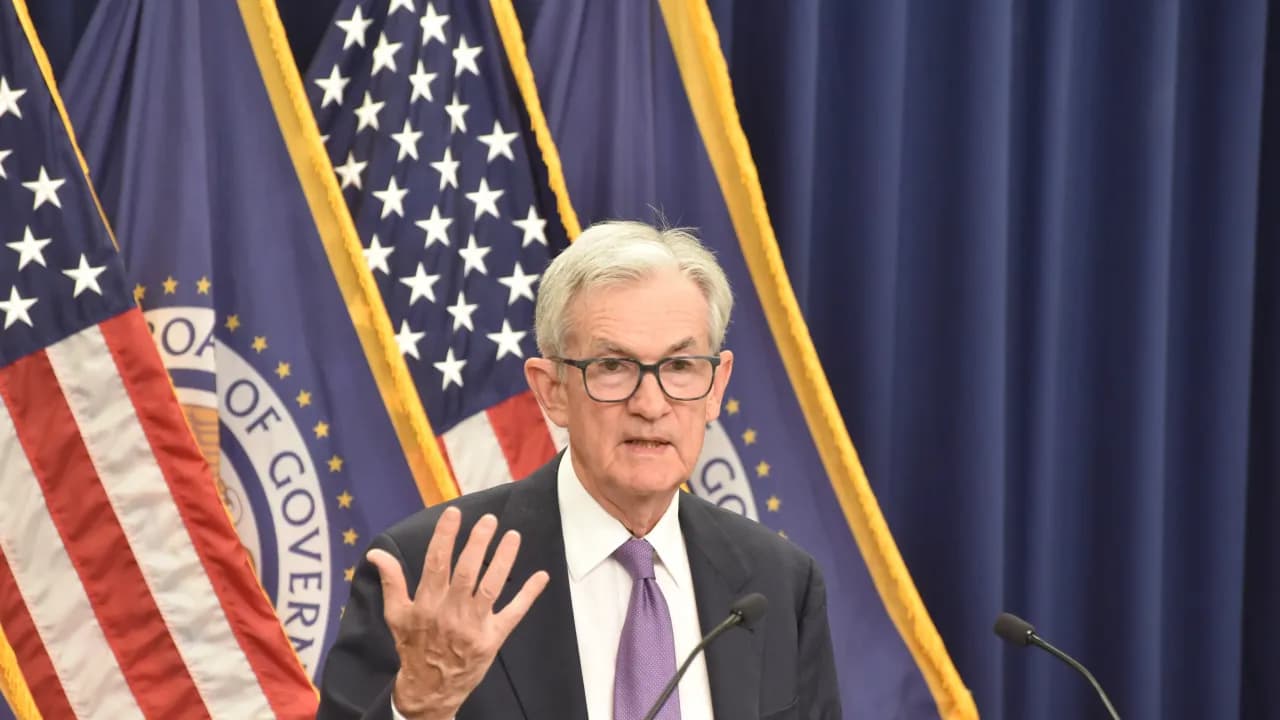
Federal Reserve Chair Jerome Powell is the subject of a U.S. Department of Justice criminal investigation over testimony he gave in June to the Senate Banking Committee concerning the Federal Reserve’s $2.5 billion headquarters renovation. According to reports, Powell sent a four-page letter to senators last July roughly two-and-a-half weeks after that testimony detailing cost overruns on the project. The probe raises governance and legal risk around Fed leadership and could increase market uncertainty about institutional stability, though it does not directly alter monetary policy or immediate economic data.
Market structure: The DOJ probe into the Fed chair is a governance shock that raises policy uncertainty and a modestly higher term premium; expect short-term volatility in Treasuries, FX and equities rather than a steady regime shift. Direct winners are volatility sellers/hedge providers (VIX instruments, cash liquidity like SHY/SHV); losers are long-duration assets (TLT, ARKK-style long-duration growth) if risk premia reprice by ~25–75bp over 1–3 months. Cross-asset transmission will be: 2s10s flatten/steepen swings, DXY jumps on safe-haven flows (±1–2% intraday), and commodity impacts secondary via USD strength.
Risk assessment: Tail risk remains low-probability but high-impact — forced recusal or indictment could shock fed funds futures by 25–75bp within days and trigger a 5–10% S&P drawdown in extreme scenarios. Timeline: immediate (days) = headline-driven spikes; short-term (weeks–months) = elevated term premium and volatility; long-term (quarters) = potential gradual politicization of monetary policy costing 20–50bp higher real yields. Hidden dependencies include congressional reactions (oversight/hearings) and market pricing of a Fed leadership change ahead of FOMC meetings.
Trade implications: Tactical trades should hedge volatility and avoid duration: short 7–10yr exposure (sell IEF) sized 2–4% portfolio with 3-month horizon, target 30–50bp yield move; buy a 30-day VIX 20/30 call spread (1–2% portfolio) as event hedge. Pair trade: long XLF (2–3%) / short QQQ (2–3%) for 3 months to capture relative upside if yields rise; add speculative long TLT only if 10Y yield >50bp above 30-day median (mean-reversion trigger).
Contrarian angles: Markets may overstate permanent damage; if DOJ activity does not lead to leadership change within 60 days, expect a relief rally of 3–6% in equities and a 10–25bp pullback in term premium. Historical precedents show policy credibility shocks often revert; prepare to flip short-duration rate shorts into long-duration buys on failed indictment/closure signals. Key mispricing to watch: implied volatility >30% or DXY move >2% are likely transient and present buying opportunities in beaten-down cyclicals (XLI, XLY) once political news stabilizes.
AI-powered research, real-time alerts, and portfolio analytics for institutional investors.
Request DemoOverall Sentiment
moderately negative
Sentiment Score
-0.50
