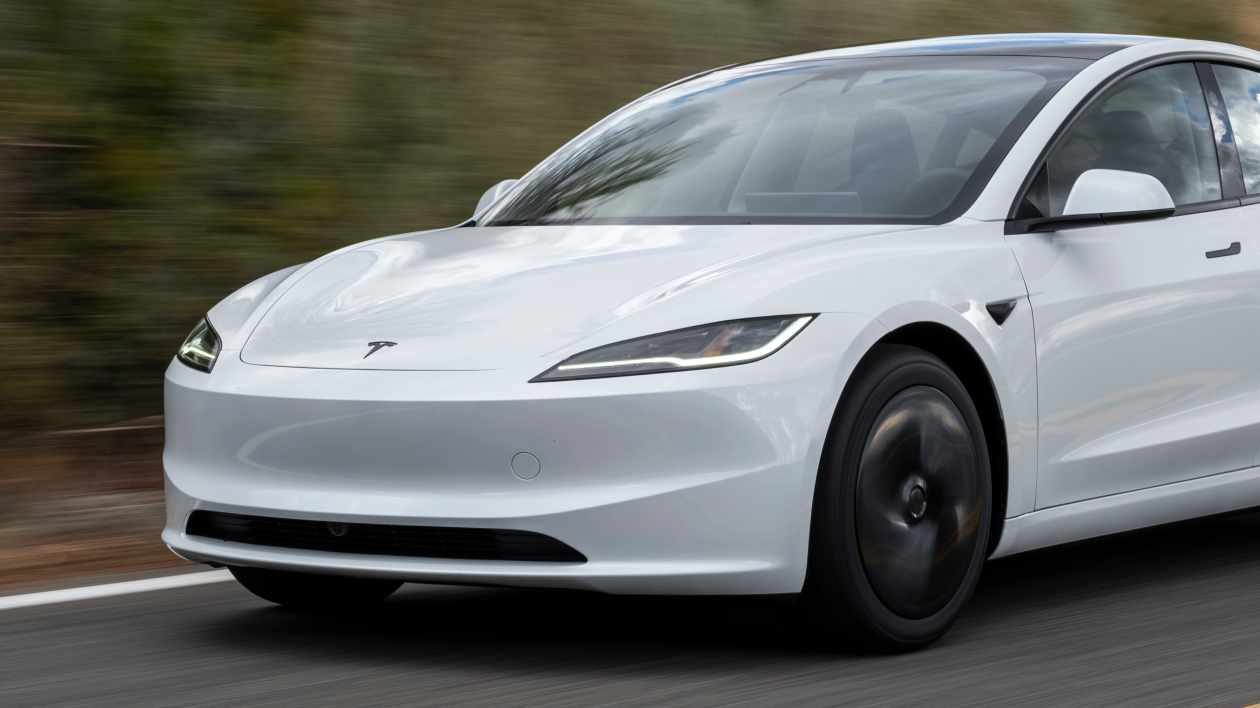
Tesla's stock rebounded on Wednesday, recovering from an initial dip caused by investor disappointment over the unveiling of cheaper Model 3 and Model Y trims rather than new models. The recovery is largely attributed to a renewed Wall Street focus on Tesla's long-term potential in autonomous driving, including a recent Full Self-Driving (FSD) update and the anticipated robotaxi fleet, which is seen as a future profit driver. Analysts at Stifel, for example, raised their price target to $483, citing progress in FSD and robotaxi development, with expectations for significant financial impact from the robotaxi fleet by late 2026.
Tesla is back in the black. Here’s why Wall Street moved beyond disappointment with cheaper models. Tesla’s stock recoups some losses after Tuesday’s disappointing reveal Tesla Inc. shares recovered some ground Wednesday after a rout in the previous session as cheaper Model 3 and Model Y versions disappointed many who hoped for entirely new cars or even more affordable prices. Beyond some investors buying in the dip, there could be a couple of reasons for Wednesday’s turnaround. Many on Wall Street believe that Tesla TSLA is now more about humanoid robots, autonomous driving and a “robotaxi” fleet than electric vehicles, whose sales would merely support a deeper foray into nascent and, they hope, very profitable opportunities around the corner. To that end, the release of a Full Self-Driving update served to cement that bull view. Drivers engaging Full Self-Driving, Tesla’s suite of advanced driver-assistance systems meant for city driving, can expect “overall improvements” in smoothness and confidence, the company said in a post on X.com, which Chief Executive Elon Musk owns. The product also has a new driver profile called “sloth,” which the company says will go at lower speeds and be more conservative with lane changes as compared to other profiles. FSD requires supervision at all times, but the product has been under criticism for implying more capabilities than it has. That system and Autopilot, designed for highway driving, have been under scrutiny from safety regulators. Analysts at Stifel earlier this week bumped their price target on Tesla to $483, from $440, thanks to the company making progress in FSD and its robotaxi network. Tesla has said it is aiming to have Unsupervised FSD, or a system that can operate without a human driver, to be available in the U.S. by the end of the year. That “appears to be a stretch but seems more likely in the medium term,” the Stifel analysts, led by Stephen Gengaro, said in the note. There are also expectation that the robotaxi fleet could grow rapidly in a short period of time, potentially materially impacting Tesla’s financials around the end of 2026, they said. Tesla late Tuesday disappointed investors by unveiling cheaper trims of its most popular vehicles, the Model 3 sedan and the Model Y small SUV, by sacrificing some performance and interior touches. Tesla Inc. shares successfully rebounded on Wednesday, recovering from a previous session's decline triggered by investor disappointment over the unveiling of cheaper Model 3 and Model Y trims, which did not meet expectations for new models or more significant price reductions. This swift recovery indicates a strategic shift in Wall Street's focus beyond immediate EV product cycles towards Tesla's long-term growth catalysts. Analysts are increasingly valuing Tesla on its potential in autonomous driving and the nascent robotaxi network, rather than solely on traditional electric vehicle sales. The recent Full Self-Driving (FSD) update, enhancing user experience with 'overall improvements' in smoothness and confidence, reinforces this bullish narrative, despite ongoing regulatory scrutiny. Stifel analysts significantly raised their price target for Tesla to $483 from $440, citing advancements in FSD development and the anticipated robotaxi network. While Tesla's ambition for Unsupervised FSD in the U.S. by year-end is seen as a stretch, the potential for material financial impact from robotaxi operations around late 2026 is driving a moderately positive sentiment and optimistic outlook for the stock.
AI-powered research, real-time alerts, and portfolio analytics for institutional investors.
Request DemoOverall Sentiment
moderately positive
Sentiment Score
0.50
Ticker Sentiment
