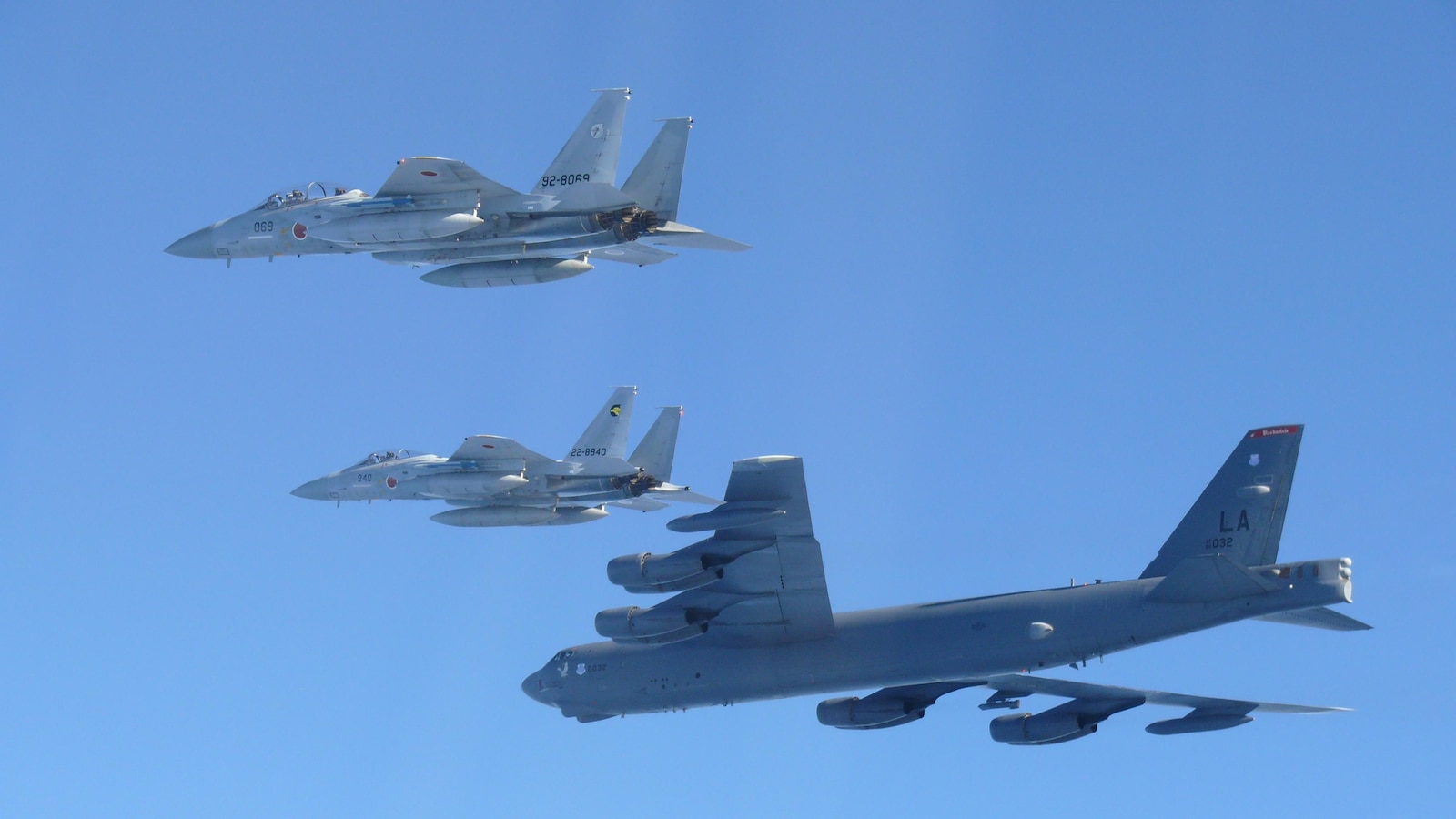
U.S. strategic bombers (two B-52s) joined Japanese fighter jets (three F-35s and three F-15s) in joint flight drills over waters between western Japan and South Korea as Tokyo and Washington sought to signal strengthened deterrence amid a worsening regional security environment; the exercise followed Chinese and Russian long-range bomber flights (two Tu-95s and two H-6s escorted by four J-16s) near western Japan and recent incidents in which Chinese aircraft locked radar on Japanese jets, prompting Tokyo to scramble fighters and file a protest that Beijing denies. Japan’s Joint Staff said the drills reaffirmed allied readiness to prevent unilateral changes to the status quo, while Washington stressed its “unwavering” alliance; tensions have intensified since Prime Minister Sanae Takaichi suggested Japan’s military could act if China moved on Taiwan, highlighting elevated military activity and diplomatic friction around key sea lanes.
U.S. strategic bombers (two B-52s) joined three Japanese F-35s and three F-15s in joint flight drills over waters between western Japan and South Korea, an exercise the Japanese Joint Staff said was intended to reaffirm allied readiness as the security environment “becomes even severer.” The exercise followed a Chinese-Russian long-range bomber sortie — two Russian Tu-95s and two Chinese H-6s escorted by four J-16s — and several incidents in which Chinese aircraft locked radar on Japanese jets, prompting Tokyo to scramble fighters and file a diplomatic protest. Japanese officials deny the drills were a direct response but explicitly cited those incidents as examples of deterioration in regional security.
The operational details and public statements signal sustained elevated military activity around key sea lanes and growing Tokyo-Beijing friction after Prime Minister Sanae Takaichi’s November remarks about Taiwan. Market signals attached to the article show a moderately negative sentiment and a risk-off tone with a modest market impact score (0.35), implying geopolitical risk is likely to raise defence-related risk premia and short-term volatility rather than trigger a broad market shock. Near-term risks center on further air/naval encounters, diplomatic escalation, and potential localized disruptions to shipping or insurance costs that investors should monitor closely.
AI-powered research, real-time alerts, and portfolio analytics for institutional investors.
Request DemoOverall Sentiment
moderately negative
Sentiment Score
-0.45
