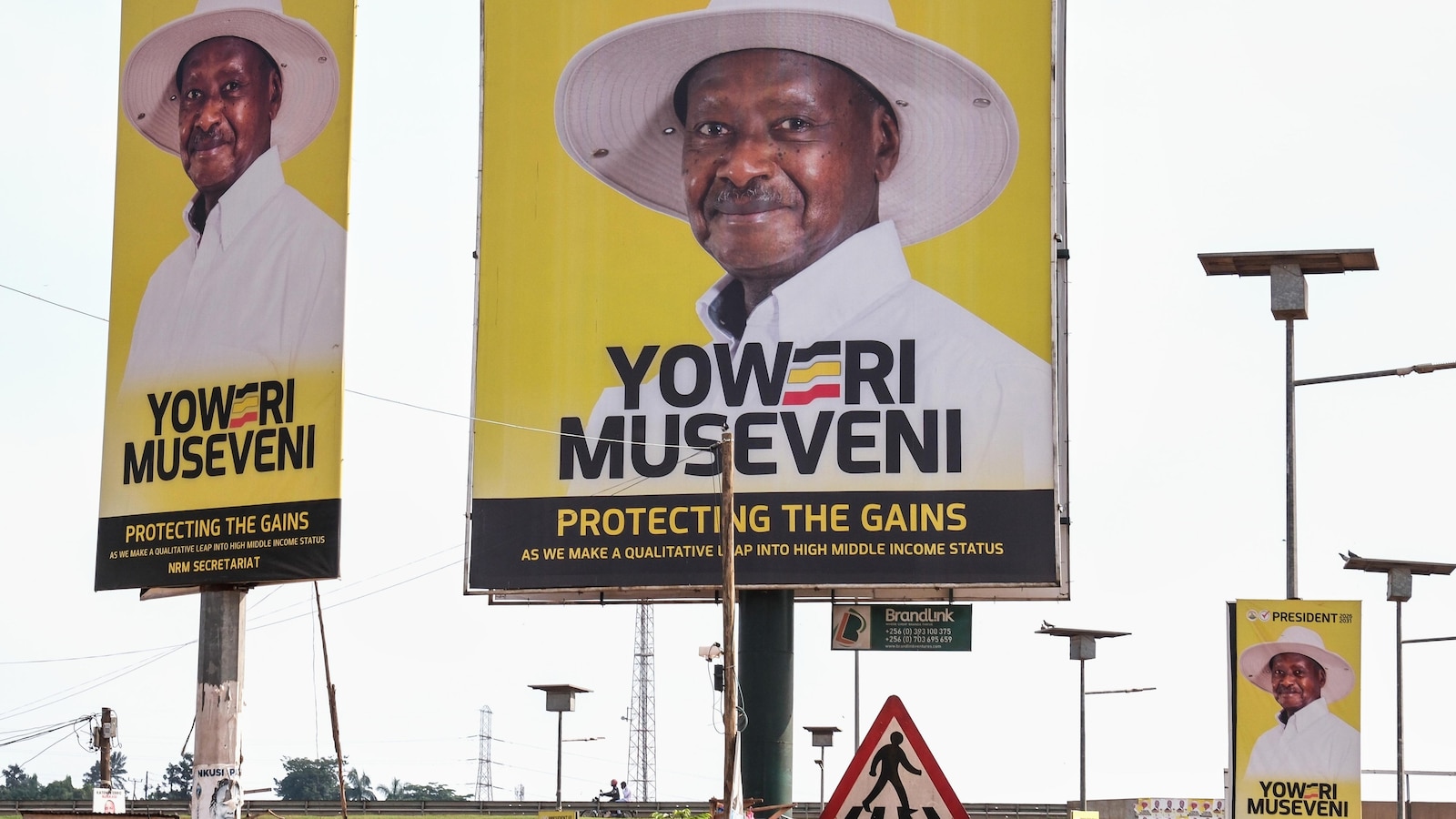
President Yoweri Museveni was declared winner of Uganda's presidential election with 71.6% of the vote versus main challenger Bobi Wine's 24.7%, in a contest marked by 52% turnout — the lowest since 2006 — an internet shutdown and failures of biometric voting machines. The result secures Museveni a seventh term amid removed constitutional term/age limits and heavy security presence, while the opposition rejects the outcome and may mount legal challenges; the credibility concerns and potential unrest raise modest downside risks to sovereign/FX sentiment and investor appetite for Ugandan assets in the near term.
Market structure: Museveni’s re-election preserves regime continuity that benefits state-aligned contractors, security suppliers and progression of long-lead oil projects (positive for large E&P contractors). Conversely expect immediate hits to investor confidence: Uganda sovereign spreads and local-currency assets face pressure as foreign buyers reassess political risk—I model a near-term UGX depreciation of 5–15% and sovereign 5‑yr CDS widening +150–400bps if protests/intimidation persist.
Risk assessment: Tail risks include sustained unrest, targeted Western sanctions or suspension of aid (low-probability, high-impact) that could cut external financing; worst-case (sanctions + violence) could blow out yields by >300bps and force project delays. Time horizons: days (liquidity freezes, internet shutdowns), weeks–months (capital flight, bond price repricing), quarters–years (structural higher risk-premium, lower FDI). Hidden dependencies: Chinese/Emirati lenders and oil contractors could backstop finance — reducing default probability but raising geopolitical dependency.
Trade implications: Near-term trades favor hedging EM exposure and taking directional FX/credit shorts on Uganda while selectively long assets that benefit from regional stability or oil progress. Anticipate cross-asset moves: higher gold/Treasury bids (GLD/TLT), weaker EEM and frontier debt; volatility spikes in local fixed income and FX markets present optionality premium opportunities.
Contrarian angles: Consensus may over-penalize on politics alone—if oil project contracts remain intact and Chinese/host-state financing fills gaps, Uganda Eurobonds yielding >9–12% could offer attractive carry with hedges. Watch for a 30–90 day window where spread overshoot (>200bps) creates asymmetric long-with-protection entry points; conversely, heavy-handed sanctions could push Uganda into alternative financing, creating longer-term strategic credit shifts.
AI-powered research, real-time alerts, and portfolio analytics for institutional investors.
Request DemoOverall Sentiment
moderately negative
Sentiment Score
-0.40
