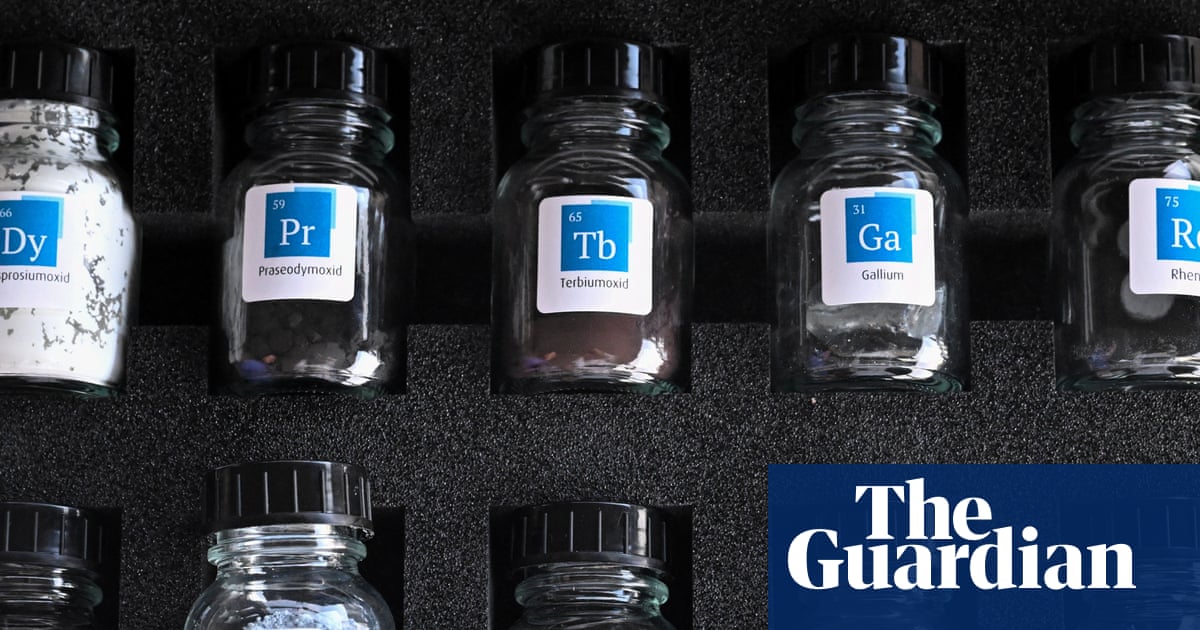
The US is intensifying efforts to reduce its critical dependence on China for rare-earth minerals, which are vital for semiconductors, batteries, defense, and green energy technologies, given China's dominance in over 90% of global processing. Recent initiatives include the opening of eVAC's processing center in South Carolina, marking the first US-made rare-earth magnet in decades, and the Pentagon's investment in MP Materials to establish a domestic 'mine-to-magnet' plant. While the Trump administration has pursued tariffs, trade alliances, and is considering direct investments and a sovereign wealth fund, experts caution that achieving short-term self-reliance remains challenging due to China's entrenched market position and the multi-year timeline required to scale domestic production and processing.
The US is aggressively pursuing rare-earth supply chain independence, highlighted by eVAC's new South Carolina processing center producing the first US-made rare-earth magnet in 25 years. This initiative directly challenges China's near-monopoly, which controls over 90% of global processing capacity and supplied 80% of US rare-earth imports in 2024. These materials are critical for semiconductors, defense applications, and renewable energy technologies, underscoring the strategic importance of domestic production.
Key US efforts include the Pentagon's significant investment in MP Materials, operator of the Mountain Pass mine, to establish a 'mine-to-magnet' plant for defense applications. The Trump administration has also employed tariffs and sought international alliances to diversify supply, with the Interior Department considering direct investments and a sovereign wealth fund to accelerate domestic production. This multi-pronged approach aims to counter China's state-backed capital advantage in the sector.
Despite these advancements, achieving short-term self-reliance remains challenging, as experts like Adam Webb note that scaling mining and refining capacity will take years. Historical attempts to foster domestic rare-earth production have faltered when China strategically lowered prices, rendering US efforts uneconomic. While deposits exist globally, including in the US, the entrenched dominance of China's processing infrastructure presents a significant hurdle to rapid market rebalancing.
AI-powered research, real-time alerts, and portfolio analytics for institutional investors.
Request DemoOverall Sentiment
mixed
Sentiment Score
-0.10
Ticker Sentiment
