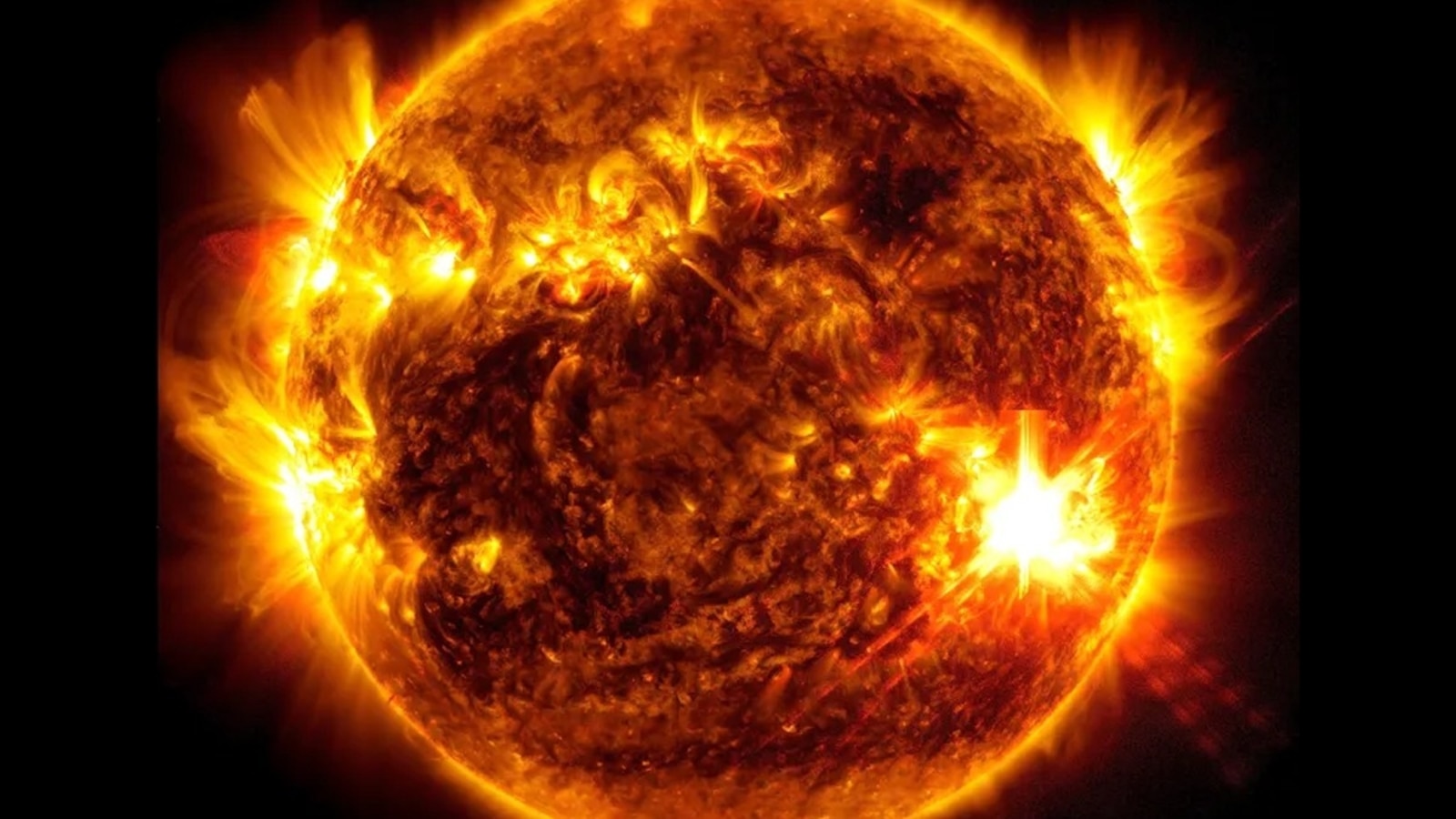
NOAA's Space Weather Prediction Center warns a coronal mass ejection tied to an M8.1 solar flare is expected to hit Earth early to midday Tuesday and could produce a G3 (strong) geomagnetic storm, raising the risk of satellite disruptions, high‑frequency radio blackouts, GPS degradation and minor impacts to power grids while producing unusually widespread auroras across northern U.S. regions and parts of the Midwest to Oregon. The alert follows a period of elevated solar activity since the October 2024 solar maximum and recent disruptive events — including a May 2024 G5 storm that tripped high‑voltage lines, affected transformers and GPS‑guided agriculture, and a recent R3 radio blackout over Australia/SE Asia — underscoring operational vulnerability in satellite services, aviation navigation, utilities and precision‑agriculture. Market participants with exposures to satellite operators, airlines, power utilities and precision‑agriculture/commodities should track updates and contingency guidance from NOAA and NASA given the potential for near‑term operational and financial impacts.
NOAA's Space Weather Prediction Center forecasts a coronal mass ejection tied to an M8.1 solar flare arriving early to midday Tuesday with the potential to generate a G3 (strong) geomagnetic storm, which NOAA warns can cause satellite disruptions, high-frequency radio blackouts, GPS degradation and minor impacts to power grids while producing unusually widespread auroras across northern U.S. regions and parts of the Midwest to Oregon. The forecasted G3 classification places the event in the middle of NOAA's G1–G5 scale and signals elevated operational risk rather than systemic market shock.
Solar activity has remained elevated since the October 2024 solar maximum, and recent precedents include a May 2024 G5 storm that tripped high-voltage lines, overheated transformers, caused GPS-guided tractors to veer off course and forced some trans-Atlantic flight reroutes; an R3 radio blackout earlier this week disrupted Australia and Southeast Asia and Airbus issued a software fix in November after solar-storm data corruption concerns. These incidents demonstrate credible, concentrated exposure in satellite operators, aviation navigation/communications, power utilities and precision-agriculture services.
Market signals show moderately negative sentiment with a modest market impact score (0.35), implying limited broad-market contagion but meaningful idiosyncratic risk for the sectors cited; no specific tickers were identified in the report. The Space Weather Prediction Center's watches/warnings, the planetary Kp index and any escalation to G4/G5 are the immediate indicators that will change operational and financial exposure, so high-frequency monitoring is essential.
AI-powered research, real-time alerts, and portfolio analytics for institutional investors.
Request DemoOverall Sentiment
moderately negative
Sentiment Score
-0.40
