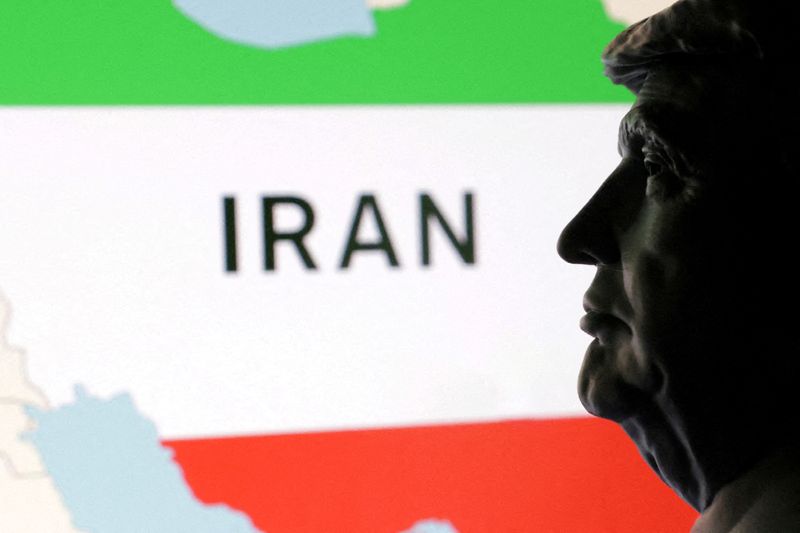
U.S. President Trump set a deadline for Iran to reopen the Strait of Hormuz by 8 P.M. ET Tuesday and has threatened strikes on Iranian power plants and bridges, warning the country could be 'taken out' if it does not comply. The White House remains open to delaying military action if diplomacy produces a deal, but officials are skeptical about extending the deadline and describe Iran's reply as 'tough' yet possibly tactical; some U.S. officials are preparing strike orders as early as Tuesday evening. The situation heightens the risk of disruptions to oil transit through the Strait and could drive significant market volatility and risk-off positioning.
Kinetic risk to Persian Gulf infrastructure has outsized, non-linear effects on seaborne oil flows: rerouting tankers around the Cape of Good Hope adds ~10–15 days per voyage and an equivalent transport premium that can translate to a $1–3/bbl uplift for each 500k bpd effectively displaced. That mechanism disproportionately benefits VLCC/timecharter owners (tightening TCEs) and raises front-month Brent volatility more than backwardation dynamics—short-dated call structures will outperform outright physical longs if disruption is transient.
Defense and dual-use supply chains are a second-order beneficiary: accelerated procurement and surge maintenance flow through prime contractors and their Tier-1 suppliers (engine/avionics, ISR satellites, munitions supply). Conversely, refiners with tight light-sweet intake or without access to alternate crude grades will see refining margins compress as crude-relative spreads and freight-insurance premia diverge, pressuring downstream refiners before upstream cash flows reprice.
Time horizons separate outcomes: oil/shipping shocks play out in days-to-weeks (spot crude, tanker dayrates), procurement and capex repricing in months, and structural sanction/infrastructure damage effects in quarters-to-years. Reversal catalysts that would quickly unwind risk premia are a credible diplomatic breakthrough, coordinated SPR releases or OPEC production response; tail scenarios include broader regional escalation that could add $15–30/bbl for an extended period.
The market consensus is positioned for a simple crude spike; it underweights cross-asset dispersion (tankers vs refiners, defense vs airlines) and the probability that realized volatility will far exceed implied near-term vol. That argues for targeted, capital-efficient exposures to volatility and select cash equities rather than blunt long-commodity bets, and for defined-risk option structures to capture asymmetric payoff if brinkmanship converts into kinetic disruption.
AI-powered research, real-time alerts, and portfolio analytics for institutional investors.
Request DemoOverall Sentiment
strongly negative
Sentiment Score
-0.75
