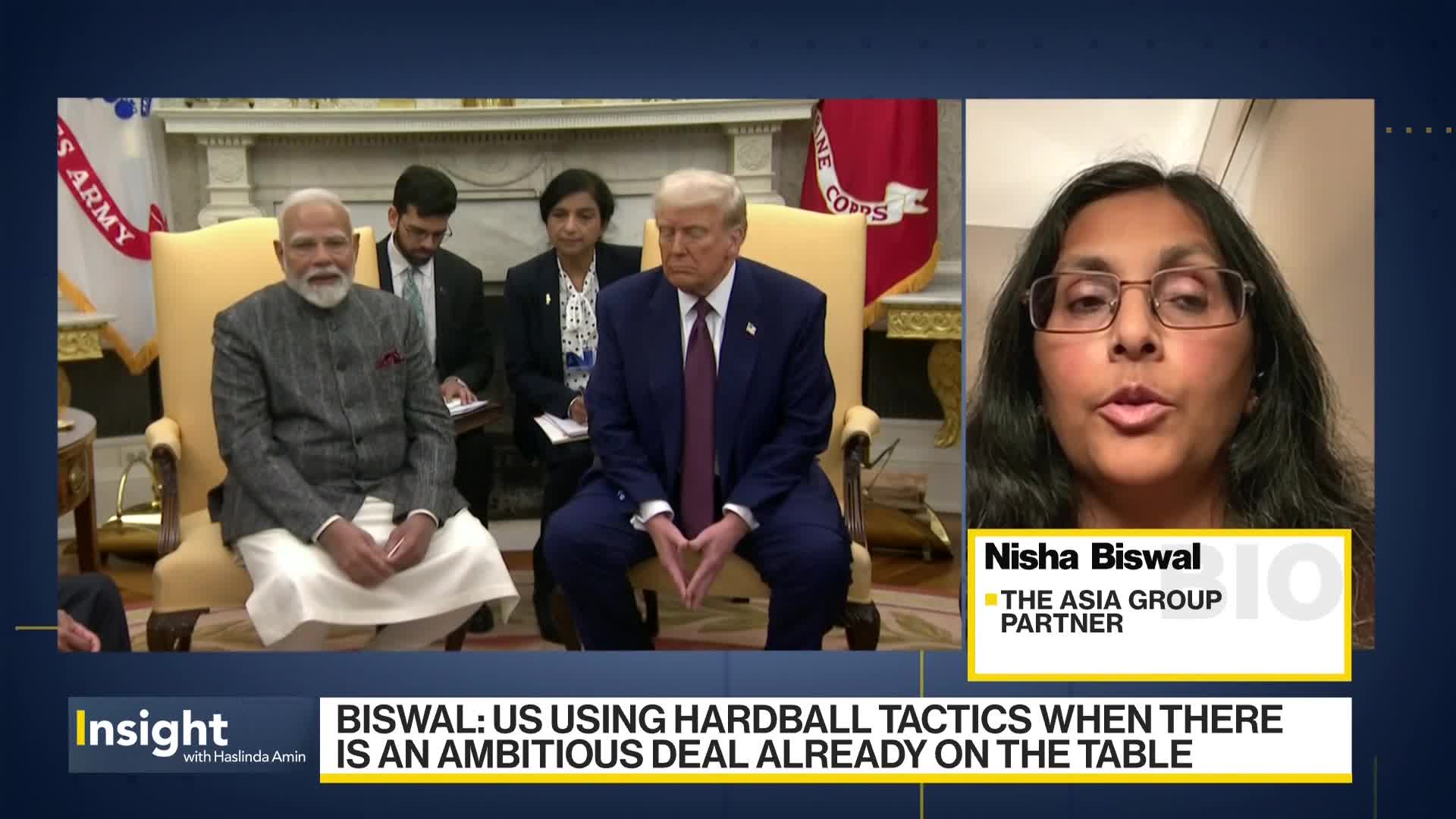
President Donald Trump announced the imposition of tariffs of at least 25% on India’s exports to the US, effective Friday, citing India's high tariffs and trade barriers. This move, viewed by former US International Development Finance Corp. official Nisha Biswal as a disappointment for India, marks a significant escalation in trade friction between the two countries.
The United States is set to impose a significant tariff of at least 25% on Indian exports, a move justified by the Trump administration as a response to India's own high tariffs and trade barriers. This action represents a material escalation in trade friction between the two nations, with the strongly negative sentiment score (-0.7) and pessimistic tone reflecting the market's adverse reaction. The characterization of the development as a "disappointment for India" by a former US official underscores the negative economic implications for the emerging market. The tariff directly threatens the profitability and competitiveness of Indian exporters in the US market, creating substantial uncertainty for industries reliant on this trade corridor. Given the moderate market impact score (0.6), this policy shift is expected to have tangible macroeconomic consequences, disrupting established supply chains and potentially triggering retaliatory measures from India.
AI-powered research, real-time alerts, and portfolio analytics for institutional investors.
Request DemoOverall Sentiment
strongly negative
Sentiment Score
-0.70
