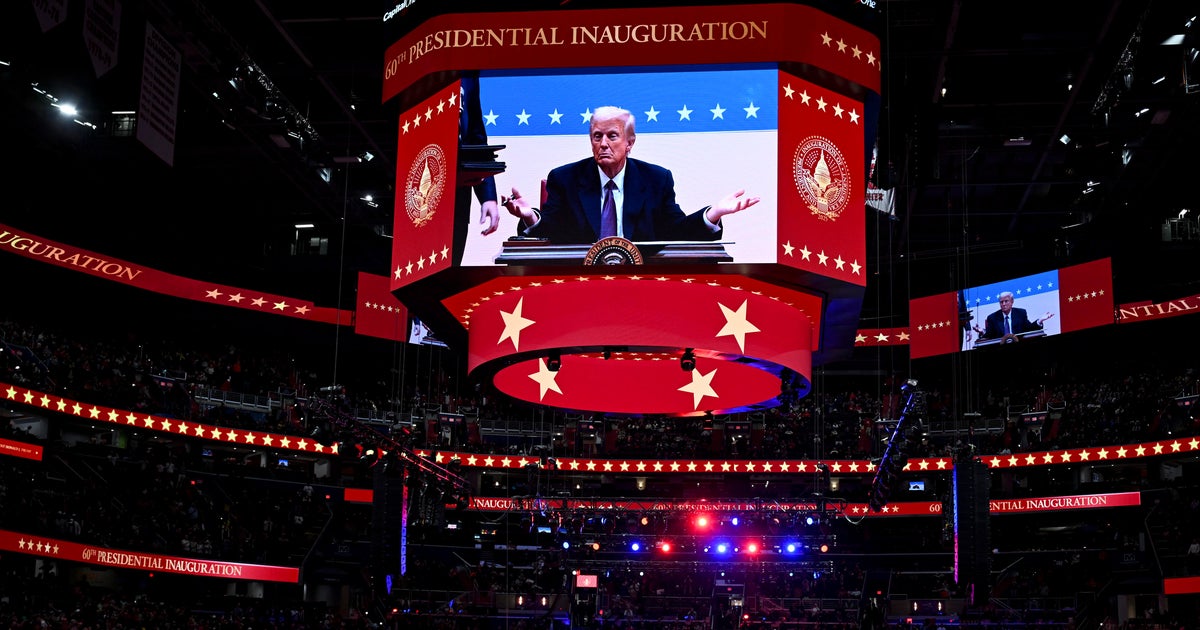
The article chronicles President Trump's return to power in 2025 and a year of disruptive policy moves that materially increased political and economic uncertainty: sweeping executive orders, the passage of H.R. 1 (“One Big Beautiful Bill”) but failure to clear 60 Senate votes on the budget leading to a record 43-day government shutdown, announced tariffs, agency reorganizations (including USAID folded into State) and large HHS layoffs. Coupled with high-profile geopolitical interactions (summits with Putin and Zelenskyy), invocation of extraordinary immigration measures, renaming and reorganization of defense institutions, and release of DOJ files, these developments raise elevated fiscal, regulatory and geopolitical risks for sectors sensitive to government funding, defense, healthcare and trade policy.
Market structure: The political shock (long shutdown, aggressive executive actions, tariffs, DoD rebrand) creates clear winners — large defense primes, domestic energy producers, and conservative media/licensing beneficiaries — and losers — commercial airlines (AAL), civil-service–dependent contractors, and certain biotech/HHS vendors whose cashflows rely on federal reimbursements. Expect procurement to concentrate at top-tier defense contractors (higher pricing power) while commercial OEMs (BA) face order/timing risk and reputational volatility; demand for leisure travel falls 5–15% regionally in acute shutdowns.
Risk assessment: Tail risks include an extended (>30-45 day) repeated shutdown that knocks 0.2–0.5% off quarterly GDP and forces missed guidance, or a military escalation (Venezuela/Iran) that spikes Brent >15% within 30 days. Immediate (days) effects: elevated equity IV, flight cancellations and FAA capacity cuts; short-term (weeks–months): Q4 revenue/earnings hits for AAL and BA; long-term (quarters–years): tariffs/reshoring change capex allocation and supply chains. Hidden dependencies: federal layoffs slow permits/grants, creating second-order hits to construction, infrastructure suppliers and biotech trials.
Trade implications: Tactical trades — short AAL via 3-month 25‑delta put position sized 2–3% portfolio or buy AAL 3‑month put spread (10–20% OTM) to cap carry; buy 3–6 month BA 10/20% OTM put spread (1–1.5%) to express commercial risk while keeping exposure to defense backlog. Pair trade: long LMT (1–2%) vs short BA (1%) for 3–6 months to capture relative defense vs commercial exposure. Rotate 4–6% from travel/discretionary into XLE (or physical oil exposure) and core defense; use options to exploit elevated IV — sell short-dated calls against positions after IV crush. Enter within 7–14 days; trim at +25–35% P/L or after policy resolution.
Contrarian angles: The market may be overpricing permanent demand destruction in airlines — domestic leisure travel typically rebounds 6–10 weeks after funding resolutions, so consider buying AAL 6–9 month call spreads funded by near-term put sales after IV normalizes (small, opportunistic). BA could be oversold on commercial headlines while multi‑year defense contracts provide a floor — consider small, long-dated BA call spreads (9–12 months) sized to 0.5–1% portfolio. GETY (media/licensing) is overlooked: consider a 0.5–1% long in GETY 6–12 month calls to capture licensing spikes from released DOJ files and higher image demand.
AI-powered research, real-time alerts, and portfolio analytics for institutional investors.
Request DemoOverall Sentiment
moderately negative
Sentiment Score
-0.45
Ticker Sentiment
