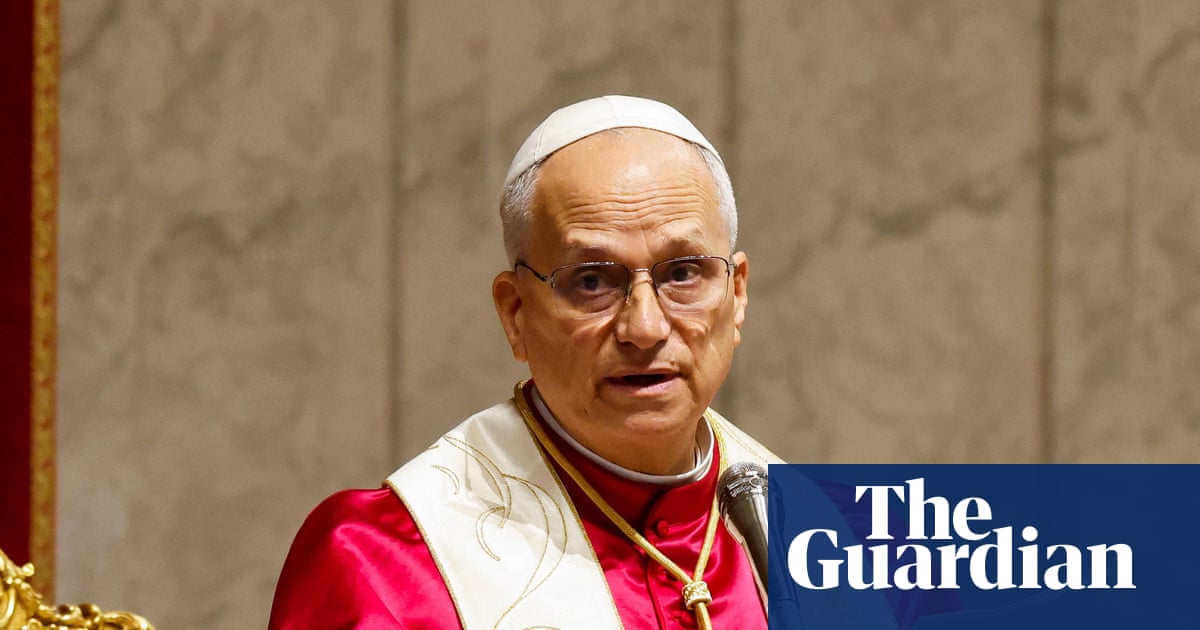
Pope Leo XIV issued his strongest public condemnation of the US-Israeli war with Iran, urging world leaders to stop rearmament and pursue dialogue and mediation instead. His remarks came amid US-Iran talks in Pakistan to preserve a fragile truce, after earlier Vatican criticism reportedly angered Trump administration officials. The article underscores elevated geopolitical risk and heightened rhetoric around the conflict, with potential implications for defense and broader risk sentiment.
This is less a direct market event than a policy-signaling shock to the coalition that has been underwriting the conflict narrative. The useful read-through is that a prominent moral authority is now explicitly pressuring the legitimacy layer around defense escalation, which raises the odds of a faster transition from kinetic posture to negotiated de-escalation. That matters because the market’s current risk premium is not just about bombs and supply disruption; it is about how long political leaders can sustain a “must-win” framing before domestic and institutional fatigue forces a reset.
The first-order beneficiaries are obvious militarys, primes, and select cyber/ISR names if rhetoric hardens into procurement, but the second-order effect is more interesting: any move toward talks reduces the embedded tail premium in energy, shipping insurance, and regional defense names. If the truce holds for 2-6 weeks, the largest relative losers are the politically favored “headline defense” complex and select Middle East conflict hedges that have been trading on persistent escalation optionality rather than fundamentals. Conversely, a failure of talks or a renewed religious-nationalist escalation would extend the duration of that premium and keep commodity volatility bid.
The contrarian point is that moral condemnation from the Vatican can accelerate elite differentiation inside the policy camp: it increases the cost of escalation for moderates while potentially radicalizing hardliners. That means the base case is not linear peace, but a higher-volatility negotiation regime with sharp headline whipsaws. In that setup, the market often overprices permanence in both directions; the better expression is to fade outright directional bets and own volatility or relative value where the imbalance between headline sensitivity and fundamentals is widest.
AI-powered research, real-time alerts, and portfolio analytics for institutional investors.
Request DemoOverall Sentiment
strongly negative
Sentiment Score
-0.55
