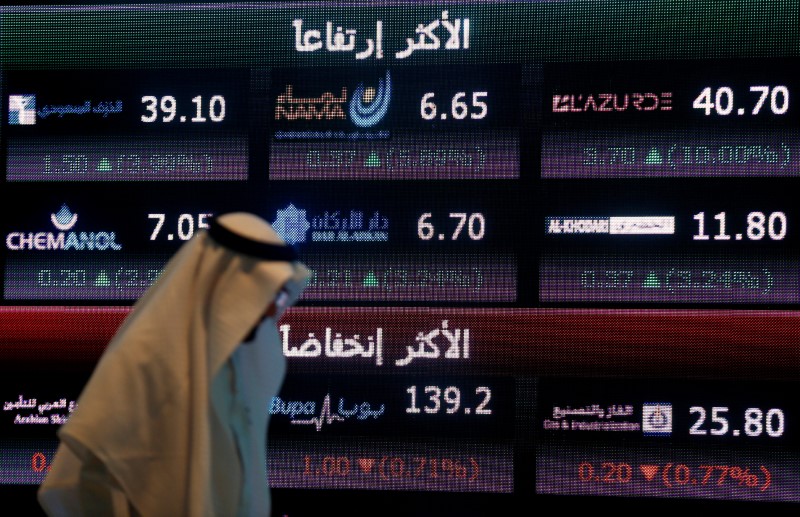
The Tadawul All Share rose 0.74% to a one-month high after the Saudi market close. Top gainers included AFG International +9.95%, Malath Cooperative Insurance +9.93% and Saudi Public Transport +9.92%; worst performers were Theeb Rent a Car -6.87% (hit all-time lows), Saudi Pharmaceutical -6.39% and City Cement -5.33%, with advancers 208 vs decliners 135 and 23 unchanged. Crude (May) was effectively flat at $102.87 (-0.01%), Brent at $107.39 unchanged, and June gold futures jumped 1.13% to $4,609.01; EUR/SAR traded at 4.32 (+0.37%) while USD/SAR was steady at 3.75.
The headline geopolitics (threats around the Strait of Hormuz) is amplifying an existing oil risk premium that is asymmetric: supply disruptions can spike prices within days while re-supply (via SPR releases, OPEC spare capacity or rerouting) takes weeks-to-months. That asymmetry favors liquid, short-dated convex exposures (options, tankers) and large sovereign/captive producers with fiscal buffers that can flex policy and support local markets.
Second-order winners include energy-service names that can quickly scale activity into higher dayrates and shipping insurers/tankers that capture freight rate spikes; losers are cross-border trade-heavy services (tourism, passenger transport) and regional industrials with low pass-through power to consumers. Currency mechanics matter — the SAR/USD peg blunts FX transmission for Saudi-listed corporates but raises hedging costs for foreign investors, making local equity premia more sensitive to headline risk than normal.
Near-term catalysts are binary: an actual chokepoint incident (days) versus diplomatic de-escalation or coordinated SPR release (30–90 days). Positioning should be tactical: exploit headline-driven volatility with defined-risk option structures and pairs that long energy/fiscal beneficiaries while shorting cyclical regional exposures which will underperform if shipping/insurance costs re-rate. Monitor Brent contango/backwardation and sovereign announcements (dividend/subsidy measures) as 1–6 month re-pricing triggers.
AI-powered research, real-time alerts, and portfolio analytics for institutional investors.
Overall Sentiment
mixed
Sentiment Score
0.05
