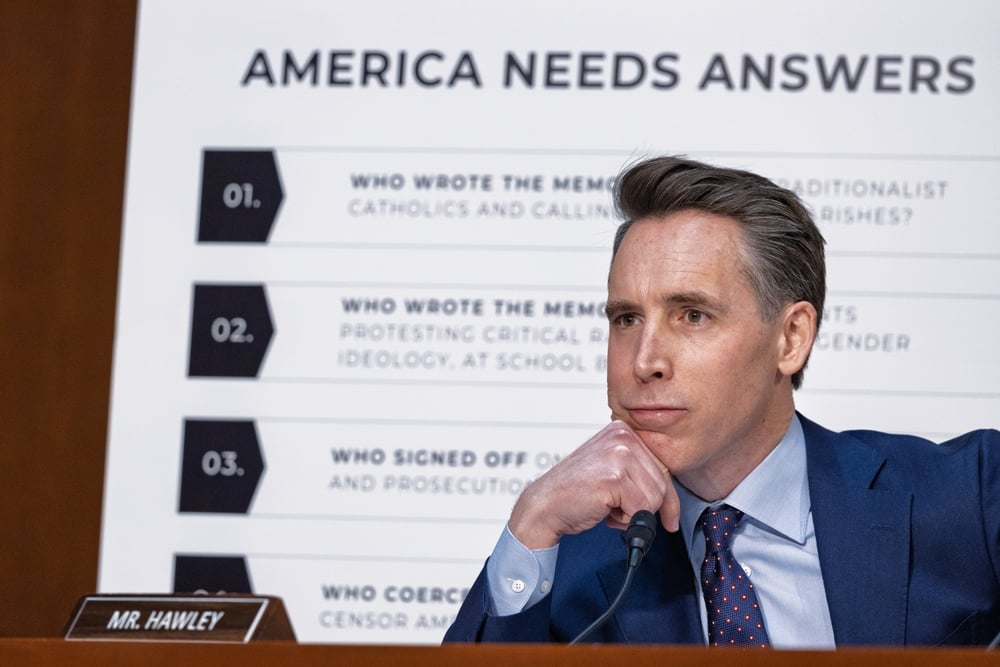
AI companies, including Meta and Anthropic, face escalating legal challenges and accusations of massive intellectual property piracy for allegedly using copyrighted material from illegal sources to train their generative AI models, enabling a multi-billion dollar industry without licensing costs. While these firms assert 'fair use,' recent federal court rulings on this defense have been contradictory, creating significant legal uncertainty and potential liability. This contentious issue also highlights a political schism, with Senator Josh Hawley advocating for strict regulation against what he terms 'piracy,' contrasting with the Trump administration's push for broad fair use to secure a competitive advantage in the global AI race, signaling a complex and evolving regulatory and litigation landscape for the AI sector.
Major AI developers, notably Meta and Anthropic, are confronting escalating legal and political challenges regarding their data acquisition methods for training generative AI models. At a recent Senate Judiciary subcommittee hearing, these firms were accused of engaging in what was termed the 'largest domestic piracy of intellectual property in our nation’s history' by sourcing vast amounts of copyrighted material from illegal websites. Internal documents presented at the hearing suggest Meta's leadership, including Mark Zuckerberg, was directly involved in the decision to use pirated works, and that employees acknowledged the practice as 'piracy'. The primary legal defense of 'fair use' is on precarious ground, underscored by recent conflicting federal court rulings; one judge found Anthropic's use of pirated books did not qualify as fair use, while another in a case against Meta ruled that training on copyrighted content itself is not fair use. This legal ambiguity, coupled with a political schism between figures like Senator Josh Hawley advocating for creators' rights and Trump-aligned figures prioritizing competitive speed against China, creates significant uncertainty and exposes the multi-billion dollar AI industry to substantial litigation risk, potential damages, and a volatile regulatory future.
AI-powered research, real-time alerts, and portfolio analytics for institutional investors.
Overall Sentiment
strongly negative
Sentiment Score
-0.70
Ticker Sentiment
