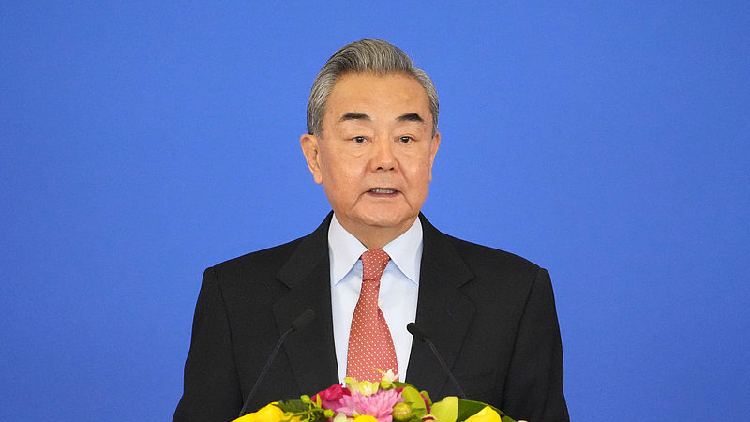
Chinese Foreign Minister Wang Yi will visit Cambodia, Thailand and Myanmar from April 22 to 26, highlighting continued regional diplomacy in Southeast Asia. He will also attend the first China-Cambodia "2+2" strategic dialogue with Defense Minister Dong Jun, underscoring defense and foreign policy coordination. The announcement is largely routine and is unlikely to have material near-term market impact.
This is less a market-moving headline than a signal that Beijing is tightening its regional operating system in mainland Southeast Asia. The notable second-order effect is not a direct asset price reaction, but improved policy coordination around infrastructure, logistics, and border security in a corridor that matters for China’s supply-chain redundancy strategy. That should be modestly supportive for contractors, rail-linked industrials, and state-connected project financiers with exposure to Cambodia, Thailand, and Myanmar, but the bigger near-term read-through is risk compression rather than new demand.
The China-Cambodia defense-diplomatic format is the more important structural tell: it suggests a template China can replicate with other nearby partners to reduce execution friction around ports, roads, energy assets, and cross-border commerce. If this evolves into a repeatable mechanism, the beneficiaries are likely to be Chinese EPC firms, materials suppliers, and logistics operators that can win work on concessionary terms while local rivals face tighter financing and governance scrutiny. Conversely, firms dependent on Western-aligned procurement standards or political neutrality in ASEAN may see margin pressure if Chinese capital deepens its influence over public works and dual-use infrastructure.
The main catalyst risk is geopolitical over-reading. These trips can be mostly ceremonial unless they translate into signed financing, security, or customs agreements within 1-3 months; absent that, any equity re-rating should fade quickly. The contrarian angle is that markets may underprice the persistence of China’s regional hedging: even without headline-grabbing escalation, incremental policy integration can quietly shift competitive bidding outcomes and procurement access over 6-18 months.
AI-powered research, real-time alerts, and portfolio analytics for institutional investors.
Request TrialOverall Sentiment
neutral
Sentiment Score
0.05
