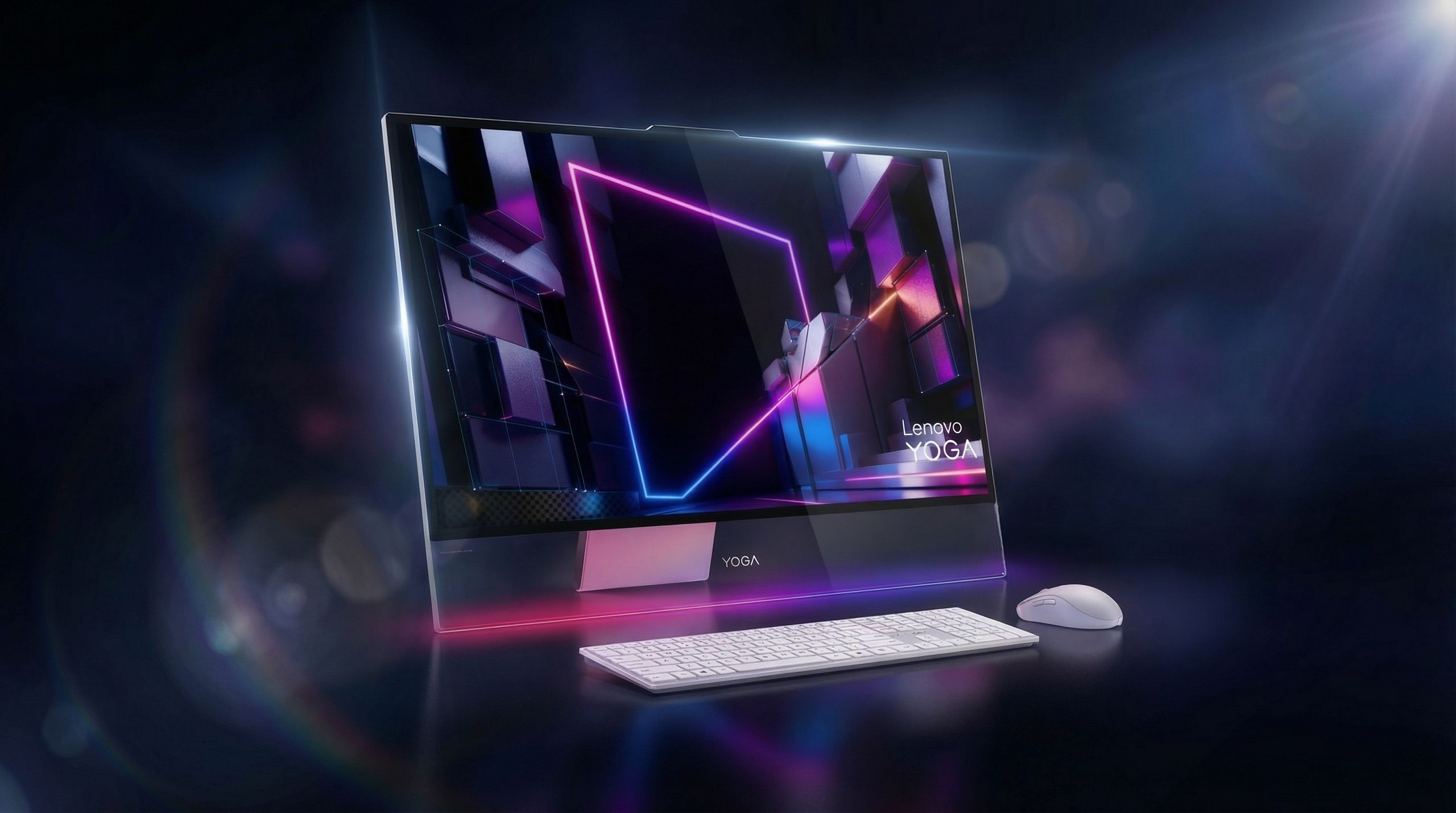
Lenovo unveiled the Yoga AIO i Aura Edition at CES 2026, a 31.5-inch OLED all-in-one targeted at creators with a 3840x2160 UHD 165Hz panel (100% sRGB / 99% DCI-P3), adaptive ambient lighting, Dolby Atmos-certified speakers, and a 16MP IR camera with Windows Hello. Configurations include up to an Intel Core Ultra X7 358H, 32GB LPDDR5x-9600 RAM, a 2TB PCIe 4.0 NVMe SSD, Wi‑Fi 7, Bluetooth 6.0 and extensive I/O (including Thunderbolt 4); pricing starts at $2,399.99 with availability expected in Q2 2026, positioning Lenovo to bolster its premium AIO appeal among creative professionals while representing modest near-term financial impact.
Market structure: Lenovo’s Yoga AIO i Aura is a premium, niche product ($2,400 entry) that directly helps CPU suppliers (INTC), high-end panel and memory vendors, and audio/licensing firms (e.g., Dolby). It will not materially move total PC unit demand but can shift ASPs in premium AIO/designer segments by +10–20% if adoption by creators scales, tightening demand for OLED panels and high-speed LPDDR5x inventory in H2 2026. Cross-asset: expect modest positive skew for semiconductor equities, transient upside ATM call demand (options vol), and incremental capex signals for panel suppliers that could support credit spreads of preferred component makers but minimal FX or commodity disruption outside display-specific inputs.
Risk assessment: Tail risks include OEM execution failure (delayed Q2 ship), OLED burn-in returns, or Intel CPU allocation shortages; any of these could drop incremental revenue by 50%+ for this SKU line in the first two quarters. Immediate (days) effects are PR-driven sentiment; short-term (weeks–months) depends on Q2 availability and reviews; long-term (>=4 quarters) depends on creator adoption and Microsoft Copilot alignment. Hidden dependencies: supply of 31.5" 165Hz OLED panels and LPDDR5x wafer allocations; a bottleneck would push component-cost margin pressure and reorder cycles.
Trade implications: Direct plays — establish a tactical 2–3% long in INTC for exposure to Core Ultra placement tied to OEM refreshes (target +20–30% in 6–12 months, stop -12%). Complement with a 1–2% long in MU (Micron) to capture NAND/LPDDR upside; target +25% in 6–12 months, stop -15%. Options: buy a Sep 2026 INTC 20% OTM call spread (1x/1x) sized to risk 0.5–1% of portfolio to play device momentum while capping premium. Pair trade: long AVGO (1%) vs short DELL (1%) over 3–9 months — AVGO benefits from Wi‑Fi7/IC content, DELL faces competitive pressure in premium consumer AIOs.
Contrarian angles: Consensus overweights headline novelty and underestimates supply constraints — actual market share gain may be <2% of PC units in 12 months, making some component stocks already pricing in too much upside. Historical parallel: Apple’s premium desktop refreshes increased ASPs but not share — margins rose selectively for suppliers with constrained capacity. Unintended consequences include elevated return rates or warranty costs from new hardware features (lighting, OLED) and slower-than-expected enterprise uptake of Copilot integrations, which would compress expected earnings multiples for OEMs and partners.
AI-powered research, real-time alerts, and portfolio analytics for institutional investors.
Request DemoOverall Sentiment
mildly positive
Sentiment Score
0.25
Ticker Sentiment
