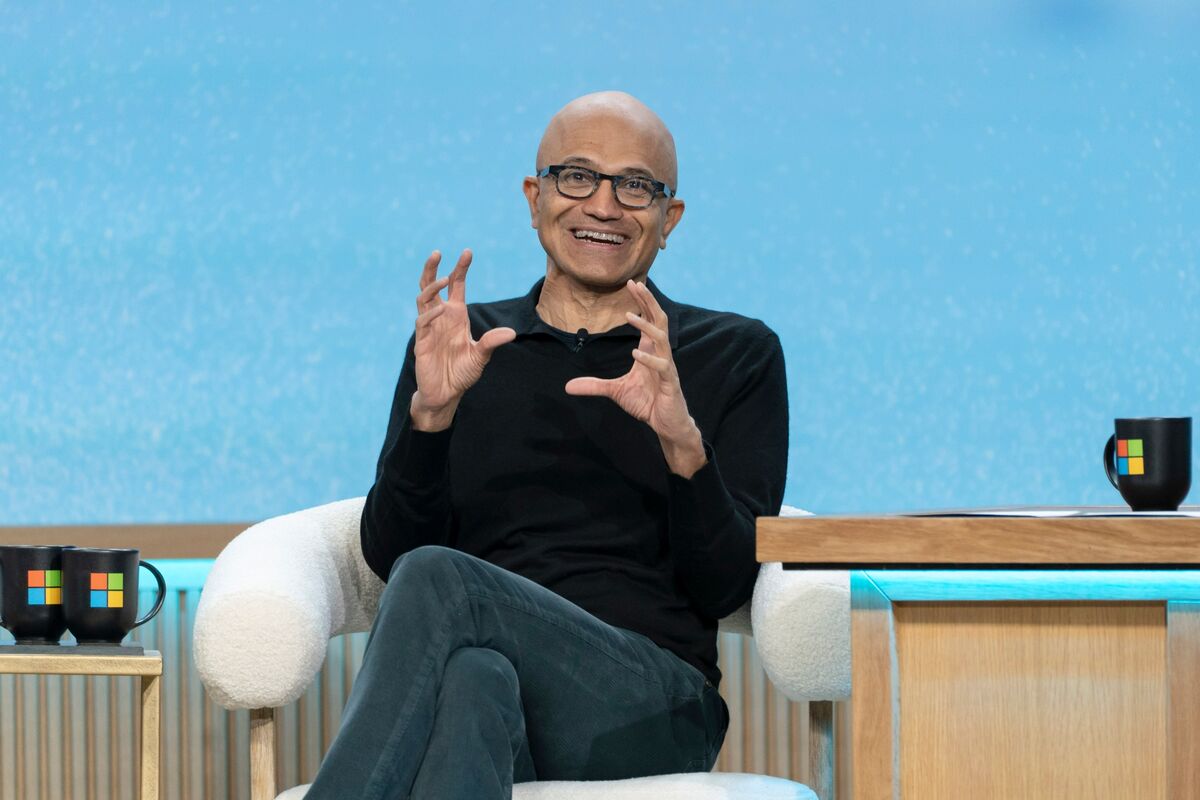
Satya Nadella’s visit underscores Microsoft’s strategic push into India’s AI market as global AI firms jockey for scale, partnerships and market access. The article highlights Mukesh Ambani’s sprawling Reliance ecosystem as a pivotal local player whose control of distribution, telecom and data channels could shape competitive dynamics, partnership opportunities and regulatory outcomes—factors investors should weigh when evaluating cloud, AI services and Indian-market strategies.
Market structure: Microsoft (MSFT) partnering or competing with Mukesh Ambani’s Reliance (RIL/RELIANCE.NS) materially shifts cloud/A.I. addressable market in India toward hyperscalers and telecom-owned platforms. Winners: MSFT, Reliance/Jio, GPU vendors (NVDA) and local data‑center infra names; losers: non-partnered clouds (AMZN, GOOGL) and low‑margin domestic IT integrators. Expect 12–36 month share gains for any exclusive platform and higher effective pricing power for GPU rents, tightening supply/demand for A.I. compute near-term.
Risk assessment: Tail risks include Indian regulatory intervention (data localization, antitrust) that can block exclusivity or impose revenue sharing—probability material within 6–18 months with high impact. Operational risks: GPU shortage or Jio capex overruns could push project timelines 6–24 months and raise cash needs for Reliance. Catalysts: deal announcements, India’s draft data rules, NVIDIA supply cadence; watch next 60–120 days for decisive moves.
Trade implications: Tactical: establish 1–2% long MSFT exposure (6–12 month horizon) via a 10–15% OTM call spread to limit capital while capturing deal upside; add 2–3% long RELIANCE.NS for 12–24 months to play Jio synergy. Relative: pair trade long MSFT / short AMZN (0.5–1% net) to express hyperscaler share shift in India. Hedge: buy 6–12 month protection (puts) sized 0.5–1% notional against Reliance position if regulatory headlines escalate.
Contrarian angles: consensus underestimates India’s regulatory fracturing — exclusivity is hard and benefits may be realized over 2–4 years, not instantly, so short-term overpricing of India‑specific cloud winners is possible. Historical parallel: hyperscaler partnerships often produce long sales cycles and revenue lag (Microsoft-SAP precedent). Unintended consequence: heavy Reliance capex could pressure INR/credit spreads if funded by debt — consider credit sensitivity and FX hedges.
AI-powered research, real-time alerts, and portfolio analytics for institutional investors.
Request DemoOverall Sentiment
neutral
Sentiment Score
0.05
Ticker Sentiment
