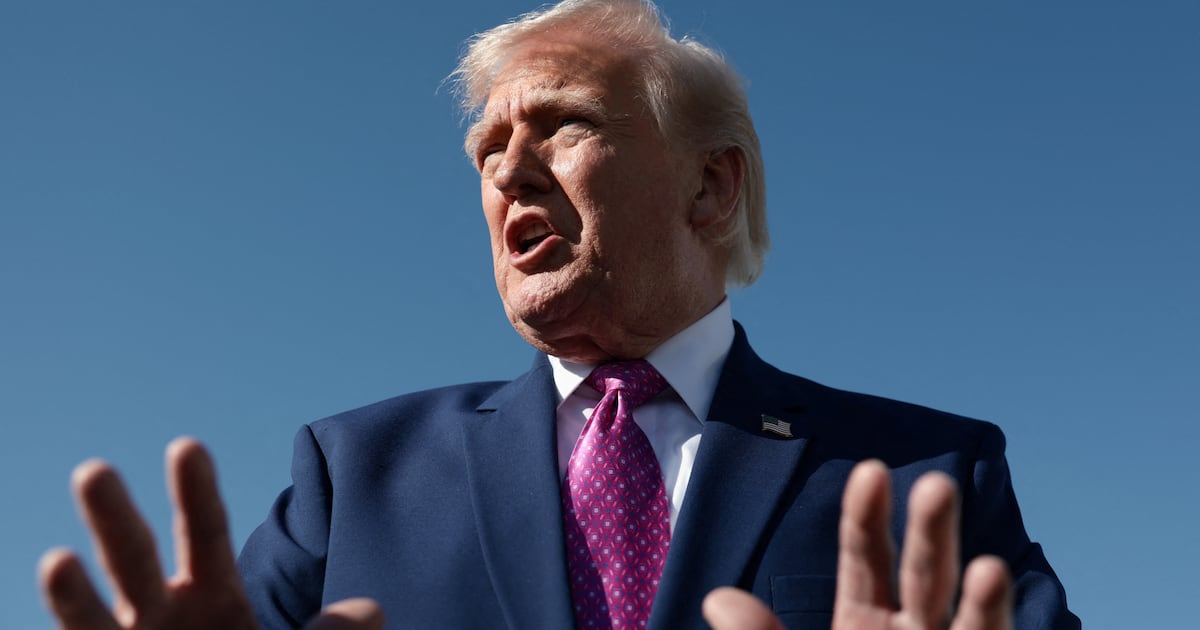
Trump’s war rhetoric and the ongoing U.S.-Iran conflict are escalating geopolitical risk, with talks in Islamabad occurring alongside threats, attacks on Iranian military assets, and pressure to reopen the Strait of Hormuz. The article highlights disruption to global oil shipping and rising U.S. gas prices, with Trump also signaling possible punishment for NATO allies that do not back the campaign. Market implications are broad, spanning energy prices, shipping routes, and risk sentiment across global assets.
The market implication is less about headline geopolitics and more about decision-quality degradation inside the U.S. response function. When the White House broadcasts conflicting objectives in real time, counterparties price a wider band of outcomes: ceasefire durability falls, negotiation timelines elongate, and the energy risk premium becomes sticky rather than event-driven. That tends to benefit physical barrels, shipping insurance, defense logistics, and upstream assets with short-cycle cash flow, while punishing industrials and transport names that rely on stable bunker fuel and freight costs.
The second-order effect is that Strait risk no longer needs a full closure to matter. Even partial harassment or intermittent inspections can keep tanker utilization inefficient for weeks, which tightens delivered supply in Asia and Europe before headline spot prices fully respond. The real squeeze is on refiners and integrated companies with less flexible crude sourcing, because feedstock optionality narrows while product demand remains inelastic in the near term.
There is also a domestic politics layer: if the administration is seen prioritizing messaging over de-escalation, market participants will start assigning a higher probability to policy whiplash—first escalation, then a rushed accommodation, then sanctions relief. That creates a choppy but tradable regime in front-end energy volatility. The contrarian point is that the strongest move may already be in the cash crude complex; the cleaner expression from here is volatility and relative value, not outright directional oil.
AI-powered research, real-time alerts, and portfolio analytics for institutional investors.
Overall Sentiment
strongly negative
Sentiment Score
-0.70
