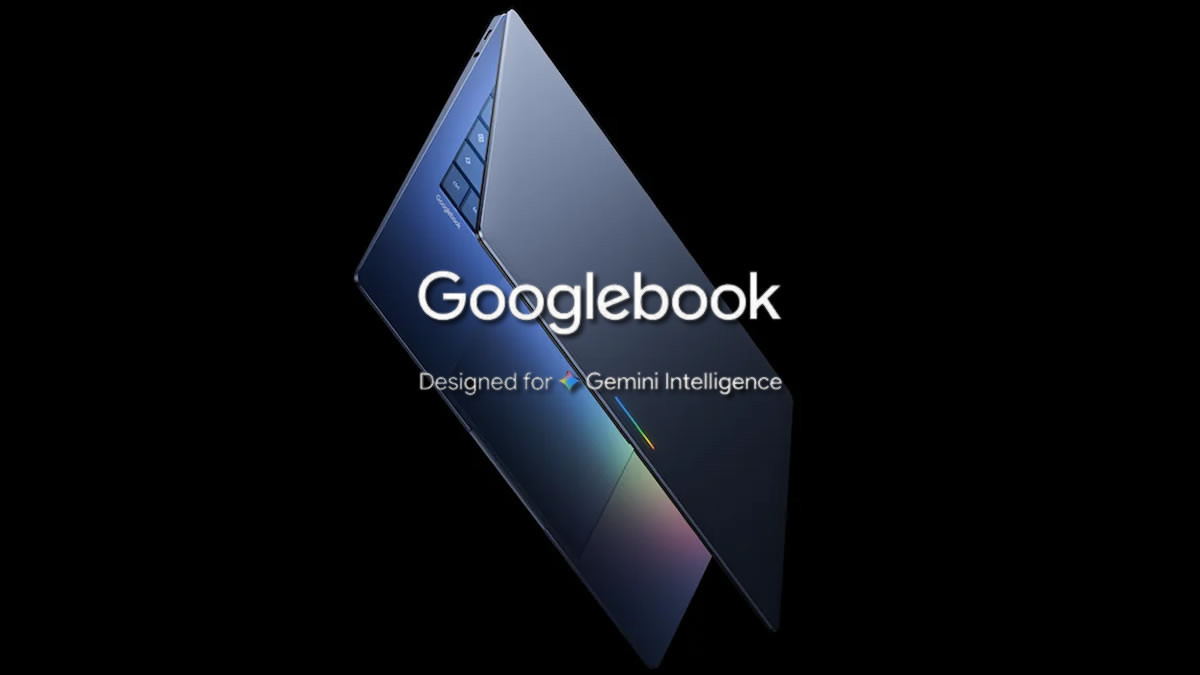
Google’s rumored Android-powered laptop platform, “Googlebook,” is expected to launch this fall with Chrome, the Google Play Store, Gemini AI integration, and launch partners including Acer, ASUS, Dell, HP, and Lenovo. The device line appears positioned as a successor to ChromeOS, with cross-device app casting from Android phones as a key feature. While the article is largely speculative and contains no pricing or shipment data, the launch could be a notable competitive development in the laptop OS market.
The real equity read-through is not “another laptop launch,” but a potential re-anchoring of the low- to mid-end PC stack around Android-native workflows. If Google can make app continuity and phone-to-PC handoff feel seamless, it compresses the value of Windows incumbency in education, consumer, and SMB channels where software lock-in is already weak. That is a direct strategic nuisance for Microsoft over a multi-quarter horizon, while OEMs like Dell and HP could see near-term unit support if the category expands, even if it comes with lower software attach and thinner pricing power. Second-order, the winner may be component vendors and channel partners that benefit from incremental refresh demand without needing a full Windows replacement cycle. A Chromebook-like architecture usually implies tighter BOM discipline and faster design win turnover, which can support ASP-stable demand for Wi-Fi, storage, and certain mobile chip suppliers, but it is mixed for legacy PC margins because the platform tends to commoditize the hardware layer. The biggest unknown is whether this is a niche education/consumer lane or the first step toward a broader client OS migration; the latter would matter for enterprise upgrade budgets, but that is likely a 12-24 month story, not a day-one catalyst. The contrarian view is that investors may be overestimating immediate displacement risk to Windows and underestimating how much of the market still values x86 compatibility, peripheral support, and IT manageability. Google has a history of strong consumer-product launches that stall at the enterprise boundary, so the base case is share gains at the margin rather than a platform shift. For MSFT, the bear case is mostly multiple compression on headline OS competition, not a near-term earnings hit; for DELL/HPQ, the bullish read is modestly better unit demand, but the long-term risk is a lower-value hardware mix if Googlebook becomes the default “good enough” laptop category.
AI-powered research, real-time alerts, and portfolio analytics for institutional investors.
Overall Sentiment
mildly positive
Sentiment Score
0.20
Ticker Sentiment
