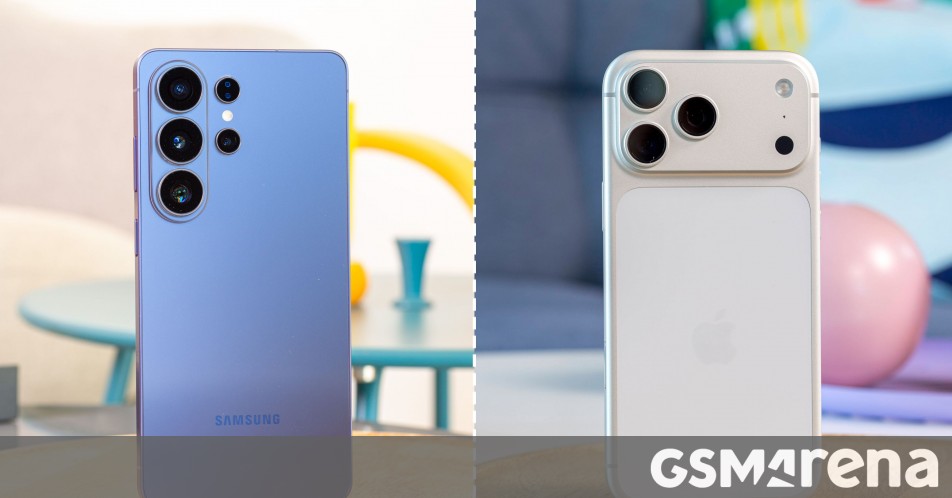
Price gap: Galaxy S26 Ultra is ~$100 more expensive than the iPhone 17 Pro Max in the US, but can be €150–200 cheaper in Europe. Key hardware trade-offs: S26 Ultra supports 60W wired charging vs iPhone's 42W, is thinner/lighter, adds Privacy Display and S Pen, and tops out at 16GB/1TB; iPhone offers longer overall battery life despite a smaller battery, built-in MagSafe/Qi2.1 magnets, nicer speaker tuning and storage options up to 12GB/2TB. Software/AI differences: Samsung guarantees 7 years of OS updates and ships more advanced/available AI features (Bixby/One UI) while Apple offers 5 years and Apple Intelligence features are still rolling out; overall performance and cameras are closely matched, yielding limited near-term market impact but potential influence on unit demand between ecosystems.
The product duel is settling into feature segmentation rather than a zero-sum specs race — which creates asymmetric revenue streams. Samsung’s hardware-led differentiators (niche features, faster charging, accessory fragmentation) should lift adjacent component and accessory vendors’ revenue growth without guaranteeing commensurate loyalty; conversely, Apple’s edge in media quality and ecosystem coherence drives higher-margin services and accessory attach that compound over device lifetimes.
A key second-order effect is on device replacement cadence and trade-in economics: longer software support and perceived parity on core experiences compress the frequency of full-upgrades, shifting OEM profitability toward software, services, and accessory ecosystems. That favors firms with recurring-revenue models (platform owners and certified accessory makers) and hurts high-volume, low-margin channel participants who depend on churn-driven sales to sustain unit growth.
Near-term catalysts to watch are regional pricing moves and carrier promotion windows — these will materially swing unit share in specific markets within the next 1–3 quarters. Risk tail events include rapid adoption of regulatory repair/standardization measures in the EU or a surprise hardware advantage (e.g., dramatically better battery tech) that re-accelerates replacements; on the margin, current market pricing appears to underweight services resilience and overweights a feature-by-feature hardware narrative that may not translate to share gains.
AI-powered research, real-time alerts, and portfolio analytics for institutional investors.
Request DemoOverall Sentiment
mixed
Sentiment Score
0.05
Ticker Sentiment
