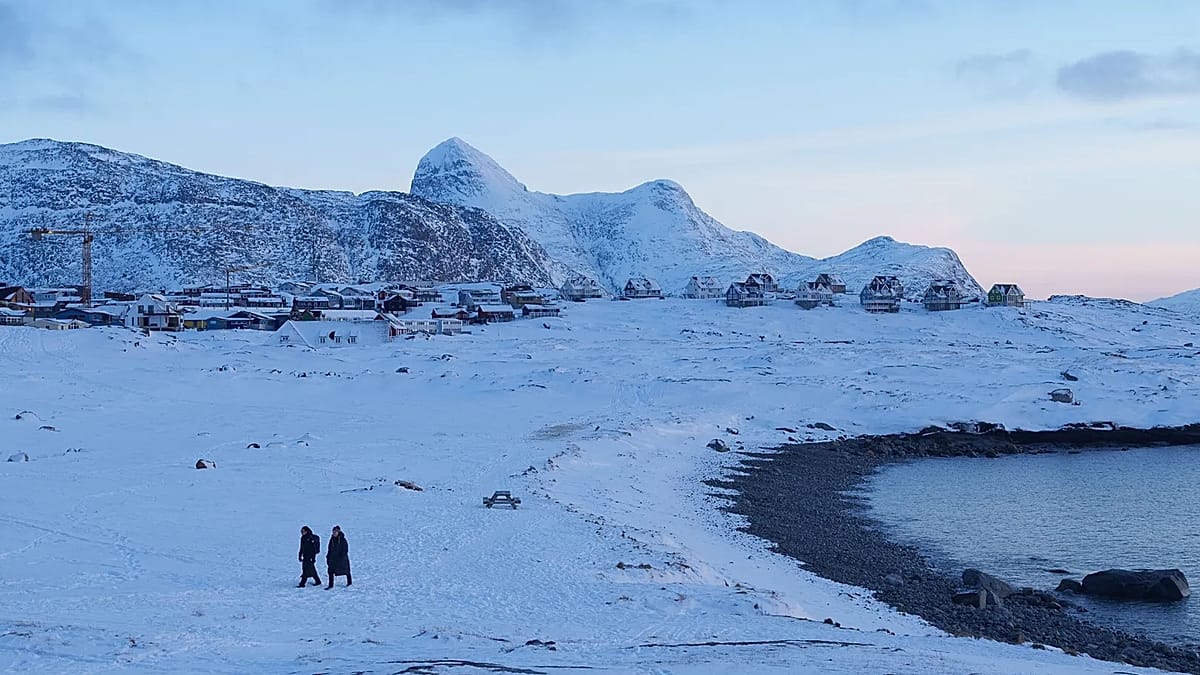
European NATO members, including France, Germany, Sweden, Norway, the Netherlands and Estonia, have begun reconnaissance deployments to Nuuk, Greenland — with Germany sending a 13-strong Bundeswehr team and France committing additional land, air and maritime assets — after talks in Washington between US, Danish and Greenlandic officials failed to resolve a “fundamental disagreement” over control of the mineral-rich island. The White House says European troop movements won't alter President Trump’s stated interest in pursuing control of Greenland, which he frames as a security imperative vis-à-vis Russia and China; Trump signaled a conciliatory tone but did not foreclose options. The episode raises heightened geopolitical and security risk in the Arctic with potential implications for defense posture, strategic mineral access and related policy uncertainty for investors.
Market structure: Immediate winners are large defense primes (Lockheed Martin LMT, Northrop Grumman NOC, RTX) and strategic-minerals plays (REMX, URA) as NATO activity and Arctic security rhetoric increase procurement and exploration budgets; expect a 6–12 month re-rating of +10–20% for defense primes if allocation hearings/funding occur. Losers include Arctic tourism, regional airlines and insurance-heavy shipping routes; expect higher insurance premia and route disruptions that compress margins for carriers servicing North Atlantic routes. Cross-asset: expect a short-lived bond safe-haven bid (2–6 weeks) if diplomatic tensions spike, USD appreciation vs risk currencies, and equity vol (VIX) jumps 20–60% intraday on any escalation headlines.
Risk assessment: Tail scenarios include a US attempt at extraterritorial acquisition (low probability ~10–20%) producing sanctions, NATO political fracturing, or accelerated Chinese/Russian basing in the Arctic (high impact). Time horizons: days—headline-driven vol; weeks–months—procurement moves and funding cycles; years—mineral concessions and infrastructure buildout. Hidden dependencies: Greenlandic domestic politics and Danish veto power are primary constraints; mining capex timelines (2–7 years) mean commodity moves lag geopolitical noise. Key catalysts: US executive action or Congressional appropriations within 30–90 days, Greenland licensing decisions within 6–18 months.
Trade implications: Direct plays—initiate small, staged exposures: 2–3% net long defense via ITA and 1% concentrated long LMT/NOC using 6–12 month call spreads to cap premium; 1–2% allocation to REMX/URA for 12–36 months, add on >20% pullback. Hedge tail-risk with 0.5–1% in 3-month VIX 30/50 call spreads (or VXX structures). Pair trade: long ITA (or LMT) vs short UAL (0.5–1%) over 3–6 months to capture relative defensiveness; scale up only if US funding language appears in 30–90 day windows.
Contrarian angles: Consensus overweights immediate ‘‘land grab’’ risk but underweights durable budget and supply-chain responses; practical outcome likely is increased NATO/European presence and procurement (benefiting European primes like BAES.L) rather than a clean US purchase. Historical precedent: post-2014 Russia-Europe tensions produced multi-year defense contractor outperformance — expect a similar multi-quarter alpha window. Unintended consequence: more European involvement could redirect contracts to non-US suppliers; watch procurement RFP language (EU content rules) as a 3–12 month reversal trigger.
AI-powered research, real-time alerts, and portfolio analytics for institutional investors.
Request DemoOverall Sentiment
mildly negative
Sentiment Score
-0.25
