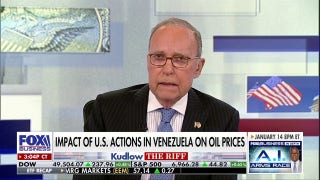
President Trump announced that major U.S. oil companies will spend at least $100 billion to rebuild Venezuela's energy infrastructure following the capture of Nicolás Maduro, and said his administration will decide which firms may operate there. He also stated the United States will immediately begin refining and selling up to 30–50 million barrels of Venezuelan crude, with proceeds controlled by the U.S. presidency to benefit both countries; Chevron is currently the only U.S. operator in Venezuela. If implemented, the plan could materially increase global crude supply and put downward pressure on gasoline prices, but it carries significant legal, sanctions and operational uncertainty for energy-sector investors.
Market structure: Immediate winners are service providers and refiners with existing Venezuela capability (Chevron/CVX, Halliburton/HAL, trading houses) that can secure preferential contracts; U.S. refiners see feedstock cost tailwinds if 30–50M barrels hit U.S. docks in days–weeks. Losers include high-cost U.S. shale and long-cycle E&P with exposure to oil prices falling >5–10%; pricing power for OPEC+ could be eroded if Venezuelan supply sustainably rises to even +500kbd over 12–36 months, but that requires multi‑year capex.
Risk assessment: Tail risks include rapid policy reversal (sanctions reinstated), guerrilla/sabotage to Venezuelan fields, or legal disputes over asset control — each could wipe out projected volumes and cause repricing within days. Time horizons: days–weeks for inventory-driven oil price dips (50M bbl ≈ 0.5 day global demand but material to U.S. stocks), months for contract/work mobilization, years for >500kbd production recovery; hidden dependency is access to diluent/refining capacity for heavy Venezuelan crude.
Trade implications: Tactical trades should overweight CVX and HAL for likely contract wins (size positions 1–3% portfolio) while hedging crude directional risk via short-duration WTI put spreads sized to risk 1–3% to capture a 5–15% price move in 30–90 days. Pair trade: long HAL (services revenue) vs short COP (limited re-entry upside) over 3–12 months. Rotate modestly out of small-cap shale/MLPs into integrated majors/refiners.
Contrarian angles: Consensus underestimates implementation friction — $100B pledge is headline not committed capital; ramp to material production is 18–36+ months and likely <50% of headlines. Market may be overpricing immediate supply; initial oil price drop could reverse if OPEC+ cuts to defend price or if infrastructure spend disappoints. Historical parallel: post‑regime change Iraq — large headline production targets but multi‑year shortfalls.
AI-powered research, real-time alerts, and portfolio analytics for institutional investors.
Request DemoOverall Sentiment
mildly positive
Sentiment Score
0.30
Ticker Sentiment
