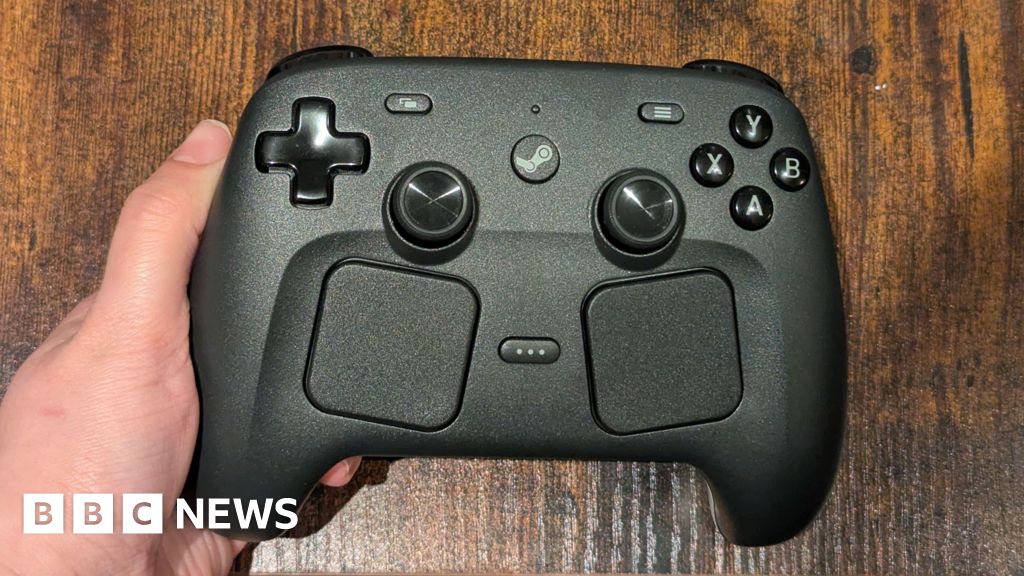
Valve's second-generation Steam Controller will go on sale on 4 May at £85 in the UK and $99 in the US, roughly double the launch price of the first model in 2015. Early reviews are broadly positive on its haptic trackpads and Steam Deck/Steam PC compatibility, but social-media reaction has been mixed, with some gamers balking at the premium price and lack of customization. The discussion is more relevant as a product and positioning update for Valve than as a market-moving event.
The immediate market signal is not about unit volume; it’s about whether Valve is trying to reprice the PC input layer into a premium accessory market rather than a commoditized controller market. If that positioning sticks, it supports a narrower but higher-margin ecosystem strategy: sell a “good enough” controller to enthusiasts and use the installed base to pull through Steam software engagement, accessory sales, and eventual living-room hardware adoption. The second-order issue is that premium pricing can widen the gap between enthusiast PC gamers and the broader console crossover audience, limiting TAM but improving mix. For Sony and Microsoft, the negative read-through is modest but not zero. A successful premium PC controller validates consumer willingness to pay for differentiated input hardware, which slightly strengthens the argument for their own high-end accessories and can normalize elevated controller ASPs over time. The bigger risk is indirect: if Valve succeeds in creating a sticky Steam-native hardware layer, it improves platform gravity around PC gaming and can marginally erode the appeal of console ecosystems at the margin, especially among core users who value mouse-like precision. The stock implication is more about sentiment than near-term fundamentals. The debate around pricing is a useful tell: if the early adopter community absorbs the product, that suggests demand elasticity is less sensitive in the enthusiast segment than assumed, which would be constructive for future Valve hardware launches. If pushback persists, the read-through shifts bearish on the Steam Machine launch sequence because the controller is effectively the wedge product; weak attachment rates would imply a tougher sell for the broader hardware bundle. Contrarian view: the market may be over-focusing on sticker shock and underestimating how much premium peripherals are already normalized in gaming. The more important variable is not whether the controller is expensive, but whether it meaningfully improves utility enough to justify a small but high-value user cohort. In that scenario, low unit counts can still be a win if they increase Steam engagement and create a high-margin niche with minimal support burden.
AI-powered research, real-time alerts, and portfolio analytics for institutional investors.
Request DemoOverall Sentiment
neutral
Sentiment Score
-0.05
Ticker Sentiment
