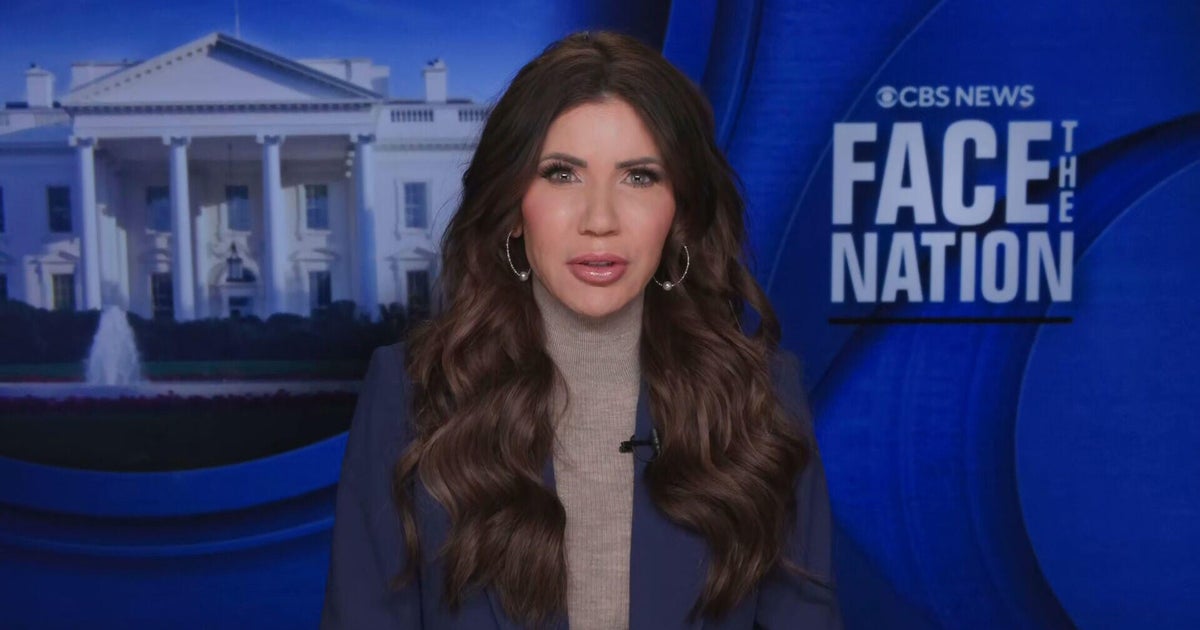
Homeland Security Secretary Kristi Noem defended what DHS calls its largest operation—nearly 3,000 federal agents deployed to Minneapolis—arguing the effort is removing dangerous individuals and asserting 70% of detainees face violent-crime charges, a figure disputed by a CBS review of DHS data showing roughly 47% (about 34,000) of ICE detainees had criminal charges or convictions. The interview highlights operational tensions with local officials over crowd control, use-of-force incidents (including the ICE agent shooting of Renee Good), ongoing internal reviews and legal constraints (a judge's order on chemical agents), and broader political rhetoric on immigration that could amplify governance and policy risk in affected jurisdictions.
Market Structure: The DHS deployment and hardline rhetoric create a measurable, near-term revenue tailwind for government-facing security suppliers—private detention operators (CXW, GEO), surveillance/analytics (PLTR), and defense primes with domestic law‑enforcement product lines (LHX, KBR). Expect a mid-single-digit % revenue uplift across exposed names over 6–18 months as demand for detention beds, training, vehicle/non‑lethal gear, and data analytics rises while local service providers (rideshare, downtown retail) see micro‑disruption.
Risk Assessment: Tail risks include adverse court rulings or federal injunctions that could curtail operations (high‑impact, ~10–30% EPS shock for operators), large negative PR leading to contract cancellations, and state-level bans. Time horizons: immediate (days) for headline volatility; 1–3 months for RFP/contract flow; 6–24 months for budget re‑appropriations. Hidden dependency: many contracts hinge on state cooperation—loss of state cooperation can reverse revenue quickly.
Trade Implications: Direct plays: selectively long CXW and GEO for 6–12 months (revenue readthrough +12–25% potential) with options to cap downside; add tactical 1–2% exposure in PLTR and LHX as optionality on analytics/surveillance awards. Use 3–6 month call spreads to express upside and buy short‑dated VIX calls (2–3 months) as hedge against escalation. Monitor DHS appropriations and public‑sector RFP activity as execution catalysts.
Contrarian Angles: Consensus underestimates legal/regulatory friction—markets may underprice the probability of contract cancellations, so outright leveraged longs are risky. Conversely, if Congress increases DHS enforcement funding by >$3–5B in the next 90 days, expect a rapid re‑rating of contractors similar to post‑2016 supply cycles (historical alpha 15–30%). The mispricing window is narrow: act on RFP/budget catalysts or hedge rigorously.
AI-powered research, real-time alerts, and portfolio analytics for institutional investors.
Request DemoOverall Sentiment
neutral
Sentiment Score
0.00
