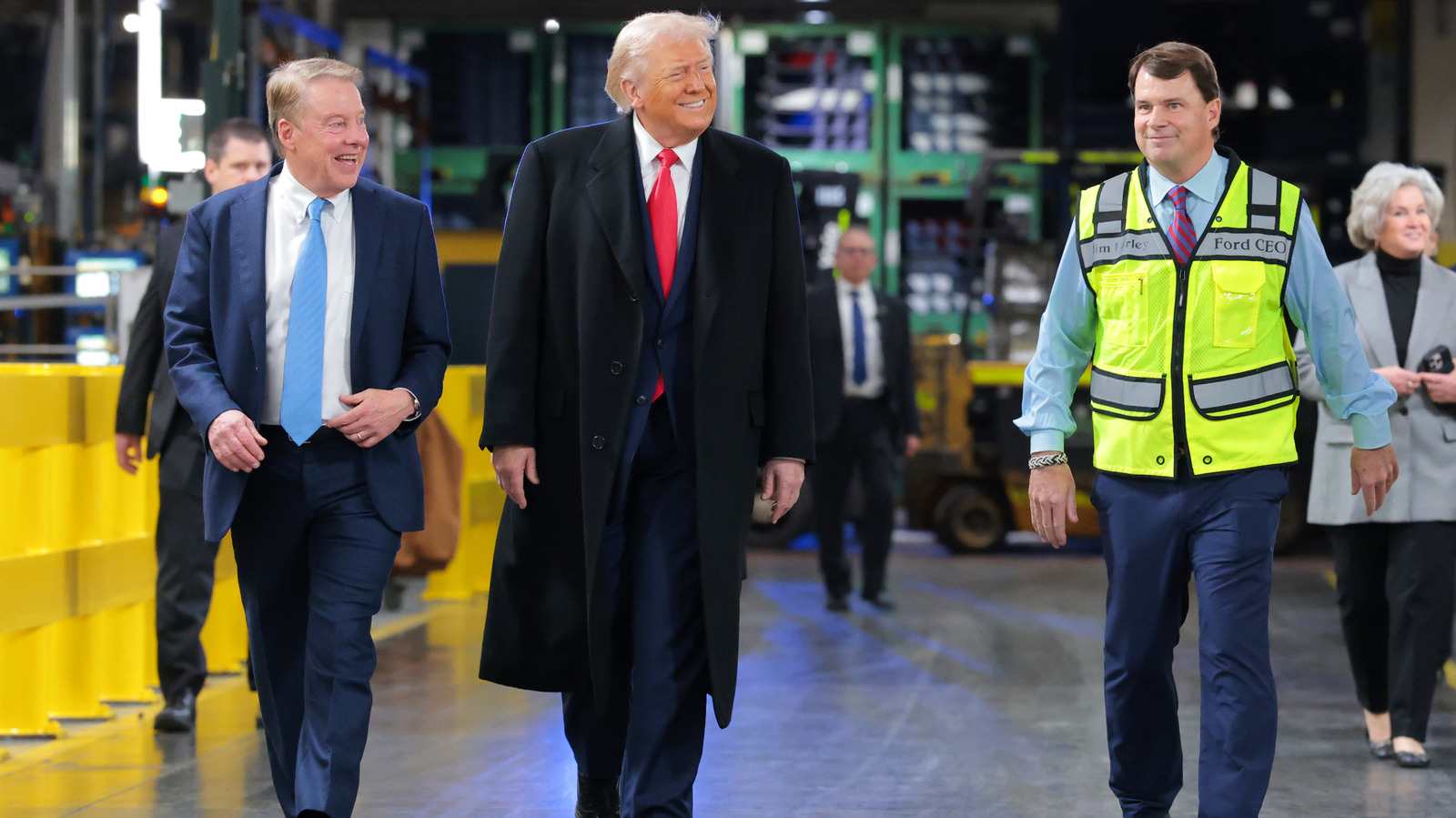
A Ford line worker, T.J. Sabula, who heckled President Trump during a January plant visit has been reinstated with no disciplinary record after UAW intervention and substantial union support, including a large GoFundMe. The piece notes that Ford recently discontinued the F‑150 Lightning program and recorded roughly $19.5 billion in EV write-downs, and reports a 29% reduction in profit over the referenced nine‑month period, underscoring ongoing profitability and strategic challenges for the automaker amid heightened political and labor scrutiny.
Market structure: Direct losers are Ford (F) and legacy OEM EV projects—Ford’s $19.5B EV write-down and reported 29% profit pressure signal margin compression and capital reallocation. Winners are non-unionized EV leaders (e.g., TSLA) and independent after-market/supply-chain providers who can capture share if Ford slows EV rollouts. Expect pricing power erosion of 150–300bps on Ford’s EBIT margin if wage/headcount pressures or production interruptions materialize over 6–18 months.
Risk assessment: Tail risks include a UAW-coordinated strike that halts production (low probability, high impact — >$1bn weekly revenue hit possible across plants) and policy whipsaws around EV incentives that could flip demand in 12–36 months. Immediate (days) market moves should be shallow; short-term (1–6 months) risk centers on contract talks and Q updates; long-term (1–3 years) hinge on Ford’s capital allocation between ICE and EV. Hidden dependencies: dealer network resilience, pension/cash-flow covenants, and state-level manufacturing subsidies.
Trade implications: Favor protective/short exposure to F via 6–12 month put spreads and consider a relative-value long in TSLA vs short F to play union/EV divergence. Credit-sensitive instruments (Ford bond spreads or CDS proxies) are actionable if IG spreads widen >50–100bps. Rotate 3–5% tactical allocation from cyclical OEMs into defensive industrial suppliers and commodity names supporting ICE manufacturing for 3–12 months.
Contrarian view: The market may overprice union rhetoric vs fundamentals; if F equity falls >20% or credit spreads widen >100bps without a strike, the downside could be overdone — opportunistic buy on weakness. Historical parallels (post-2008 labor disruptions) show OEMs regain footing within 12–24 months when cash flow remains positive. Watch for subsidy reversals or dealer incentives that could blunt downside and create short-squeeze risk.
AI-powered research, real-time alerts, and portfolio analytics for institutional investors.
Request DemoOverall Sentiment
moderately negative
Sentiment Score
-0.25
Ticker Sentiment
