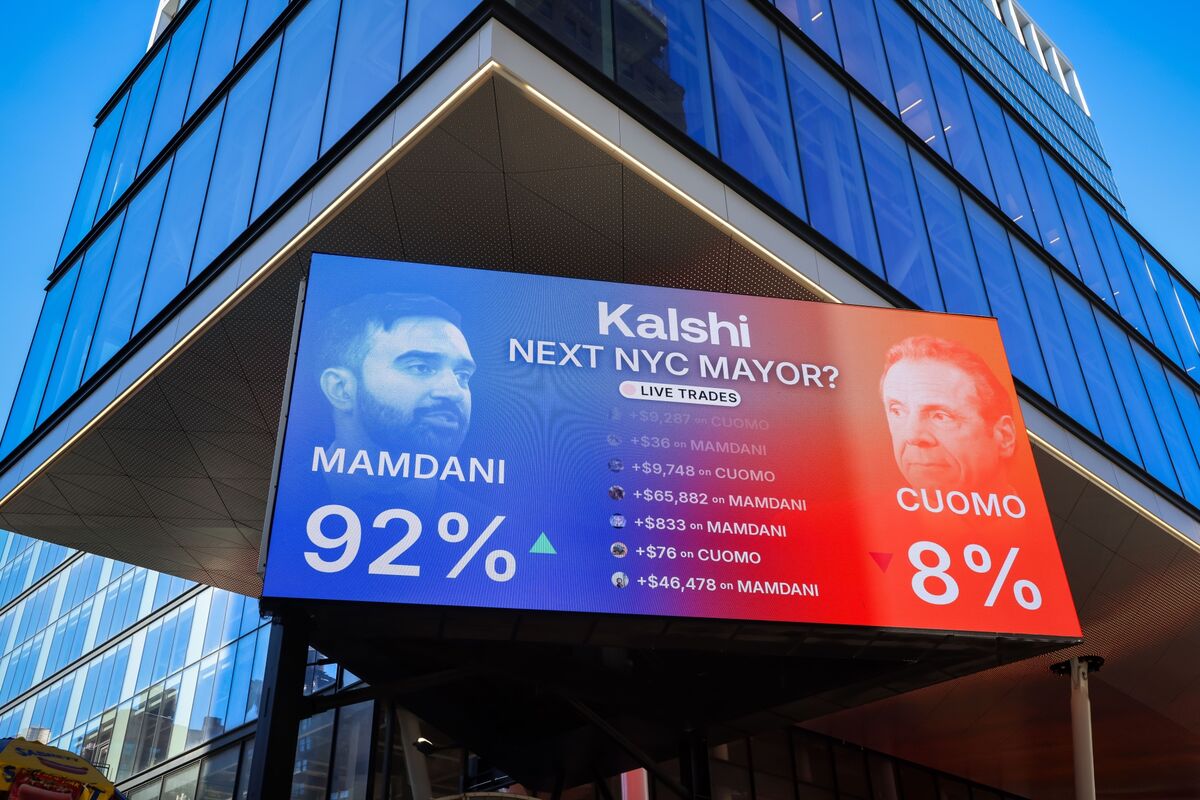
Kalshi and another upstart prediction-markets firm have attracted a surge of private capital, rapidly re-rating their valuations and creating new billionaire founders. Kalshi, which had raised roughly $100 million over six years, saw its valuation jump 450% since June and has raised nearly $1.5 billion in outside equity this year, including a $1 billion round this week that valued the company at $11 billion. The funding spike underscores robust investor appetite for novel fintech trading platforms and signals a significant private‑market re-pricing in the prediction‑markets niche.
Market structure: Large private raises for prediction markets (Kalshi-style) principally benefit derivatives venues, market‑makers and clearinghouses by creating new fee pools and intraday flow; targeted winners are CME (CME), CBOE (CBOE) and liquidity providers like Virtu (VIRT). Losers include incumbents in retail gambling (DraftKings DKNG) and small fintechs that can't scale customer acquisition; expect pricing power to shift toward platforms that control settlement/clearing and regulatory approvals.
Risk assessment: Key tail risks are regulatory/legal (CFTC/SEC or state gambling suits) that could wipe 30–70% of private valuations within 6–12 months, operational/manipulation events that trigger exchange halts, or market‑maker withdrawal that spikes spreads. Near term (days–weeks) expect PR-driven retail flows; short term (3–9 months) sees volume and fee tailwinds; long term (1–3 years) consolidation is likely as winners monetize or fail to meet revenue multiples.
Trade implications: Favor public flow beneficiaries: take directional exposure to CME/CBOE and VIRT via 9–15 month call spreads (10–20% OTM) sized 1–3% portfolio each; consider 6–12% portfolio tilt into payment/rail stocks (PYPL, SQ) via equity or call spreads to capture microtransaction volume. Hedge regulatory tail risk with puts on speculative fintech exposure (ARKF or DKNG) and keep stop-loss at 20% to protect capital.
Contrarian angles: Consensus understates mean reversion—private rounds (450% revaluation spike) often precede public multiple compression; historical parallels include 2017 ICO mania and 2000s betting exchange cycles where few players captured economics. Monitor hard metrics (daily active traders, average stake, clearing margin growth); if user growth decelerates to <25% QoQ, reduce exposure quickly.
AI-powered research, real-time alerts, and portfolio analytics for institutional investors.
Request DemoOverall Sentiment
moderately positive
Sentiment Score
0.50
