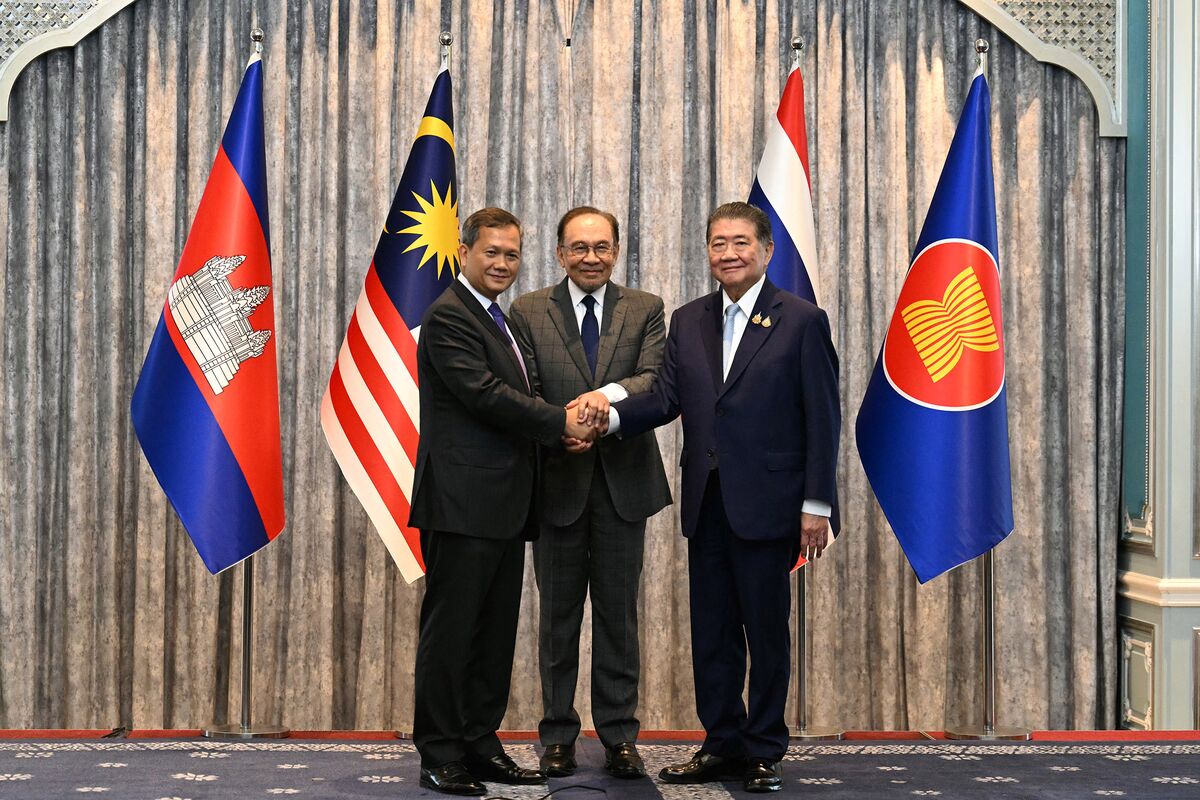
The U.S. has imposed a 19% tariff on imports from Thailand, Cambodia, and Malaysia, a significant reduction from the initial 36% levy threatened against Thailand and Cambodia. This decision follows President Trump's earlier demands for an end to a border conflict, with Malaysia having brokered a ceasefire, and aligns these new rates with those previously set for Indonesia and the Philippines.
The United States has imposed a 19% tariff on imports from Thailand and Cambodia, representing a significant de-escalation from an initially threatened 36% levy. This policy adjustment is a direct result of a ceasefire brokered by Malaysia, which itself was also assigned a 19% tariff rate, following President Trump's use of trade threats to compel an end to a border conflict between the two nations. The new 19% rate standardizes the tariff level with that of neighboring ASEAN countries Indonesia and the Philippines, suggesting a broader regional trade policy alignment rather than a purely punitive measure. While the resolution averts a worst-case trade scenario for Thailand and Cambodia, the imposition of a material tariff still introduces new cost pressures for supply chains reliant on these economies, reflecting the mixed sentiment surrounding the event.
AI-powered research, real-time alerts, and portfolio analytics for institutional investors.
Request DemoOverall Sentiment
mixed
Sentiment Score
-0.15
