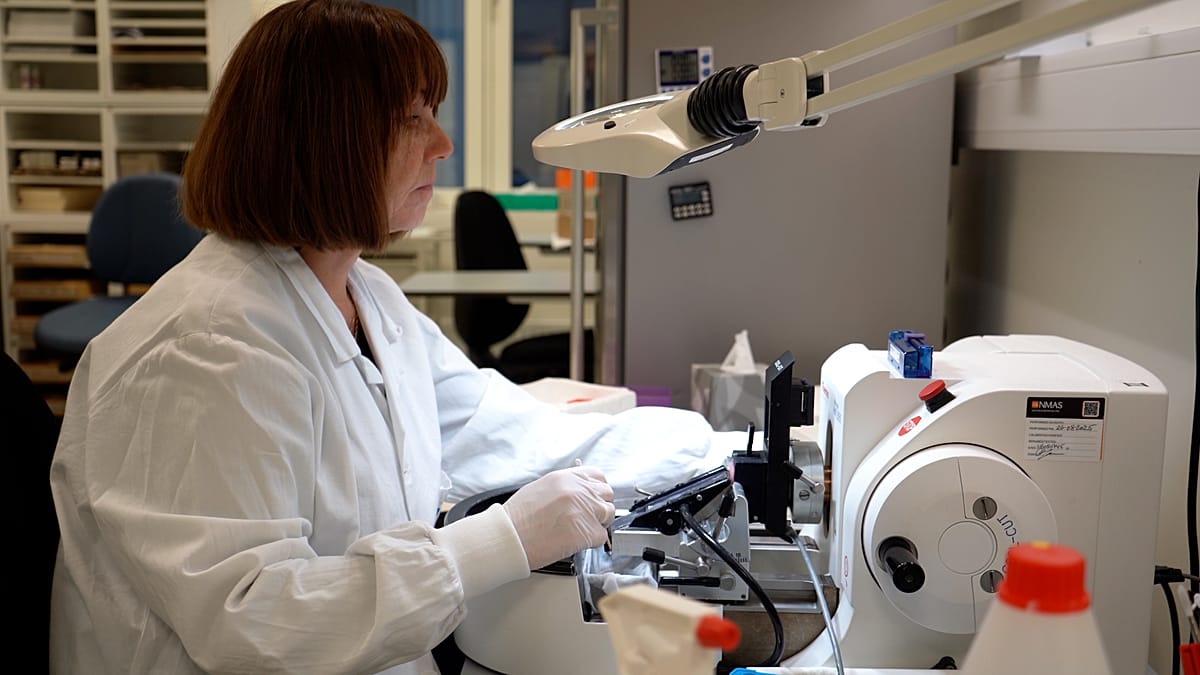
Norwegian start-up DoMore Diagnostics has developed an AI-based histopathology tool—spun out of research with Oxford, Oslo University Hospital and UCL—that it says predicts colorectal cancer prognosis more accurately than human pathologists by training on thousands of tissue-slide images linked to long-term patient outcomes rather than pathologist labels. The company argues the technology can better identify which patients face high risk of metastasis and who can safely avoid adjuvant chemotherapy, claiming current practice subjects 96–98% of stage II and 80% of stage III patients to short- and long-term side effects without benefit. The test is already being used to validate prognostic analyses at hospitals in Europe, the U.S., Japan and Mexico, suggesting potential to materially reduce overtreatment and reshape post-surgical care decisions if broader clinical validation and adoption follow.
DoMore Diagnostics, a Norwegian start-up spun out of research with Oxford, Oslo University Hospital and UCL, is commercialising an AI-based histopathology prognostic tool for colorectal cancer that it says is trained on thousands of tissue-slide images linked to long-term patient outcomes. The company claims the algorithm predicts patient prognosis more accurately than human pathologists by learning directly from outcomes rather than pathologist labels, and it is currently used to validate prognostic analyses at hospitals in Europe, the United States, Japan and Mexico.
The firm argues this precision could materially reduce overtreatment: it cites that 96–98% of stage II and 80% of stage III patients are exposed to chemotherapy side effects without benefit under current practice, implying significant clinical and cost implications if the tool reliably stratifies risk. Implementation after surgery to distinguish low-risk from high-risk patients is the stated use case and could change adjuvant chemotherapy decisions.
Key uncertainties include the algorithm’s opacity—researchers state “we don't really know what the AI is looking for”—and the need for broader clinical validation, regulatory clearance and clinician acceptance before widespread adoption. Market signals are moderately positive but the reported market impact score is low (0.28), indicating limited immediate disruption until independent, reproducible outcome superiority and commercial pathways are demonstrated.
AI-powered research, real-time alerts, and portfolio analytics for institutional investors.
Request DemoOverall Sentiment
moderately positive
Sentiment Score
0.40
