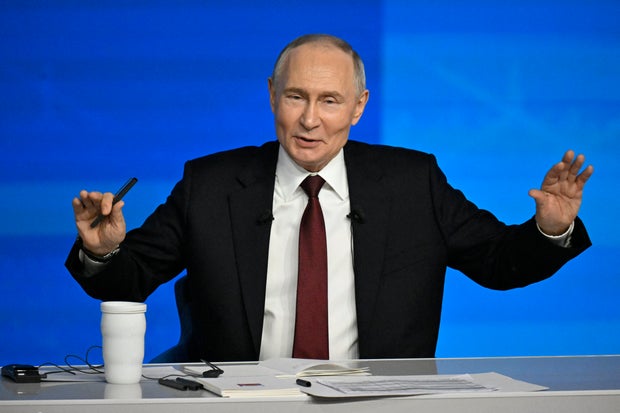
Russian President Vladimir Putin said Russia is not seeing Ukrainian willingness to negotiate and claimed his forces hold the strategic initiative along a roughly 600-mile front, promising further advances before year-end. Ukraine's SBU said it used aerial drones to disable the Oman-flagged tanker Qendil in neutral eastern Mediterranean waters — about 2,000 km from Ukraine — calling it part of Russia's sanctions-evasion 'shadow fleet'; MarineTraffic placed the vessel en route from Sikka to Ust-Luga. The European Union agreed an interest-free loan package of more than $100 billion from its budget to fund Ukraine for two years after failing to use frozen Russian assets, a decision that prompted warnings from Putin about consequences. Market implications include elevated geopolitical risk to energy shipments and insurance costs, continued pressure on sanctions enforcement and shipping routes, and potential escalation risk that could affect energy prices and investor risk premia.
Market structure: Energy and maritime-risk premia are rising — attacks on tankers and threats from Moscow raise the marginal supply-risk for seaborne crude (manifesting as a potential 0.2–0.5 mb/d seasonal risk premium). Winners: defense primes (RTX, LMT, NOC), reinsurers/reinsurance brokers that can reprice marine war risk, and liquid macro hedges (gold, long-duration Treasuries). Losers: opaque “shadow fleet” tanker owners, specialized shipping equities, European cyclicals and travel/ports exposure given insurance/route re-routing costs.
Risk assessment: Tail risks include NATO-adjacent escalation or a major maritime choke-point incident (probability 5–15% in 12 months) that could push Brent >$100/bbl and insurance rates +20–50%. Near term (days-weeks) expect elevated realized and implied vol; medium-term (3–12 months) expect higher defense budgets and structural rerouting of flows; long-term (>12 months) geopolitically-driven reconfiguration of energy trade partners and greater sanction transparency.
Trade implications: Tilt portfolios to defense and macro hedges: buy selective long-dated call exposure on RTX/LMT while keeping defined-risk spreads; add 1–3% allocations to GLD/TLT as alt-beta. Avoid/add hedges on tanker owners with opaque ownership (STNG, NAT) and reduce European travel/port names; prefer commodity call spreads over outright oil futures to limit blow-ups.
Contrarian angles: Consensus prices an ever-rising, persistent oil shock — that’s likely overdone absent an actual closure of key routes. The EU interest-free loan reduces immediate fiscal contagion risk in Europe (less sovereign stress), so avoid blanket short-Europe trades; instead, underweight idiosyncratic insurers/shippers until sanctions ownership trees and insurance repricing clear (30–90 days).
AI-powered research, real-time alerts, and portfolio analytics for institutional investors.
Request DemoOverall Sentiment
moderately negative
Sentiment Score
-0.50
