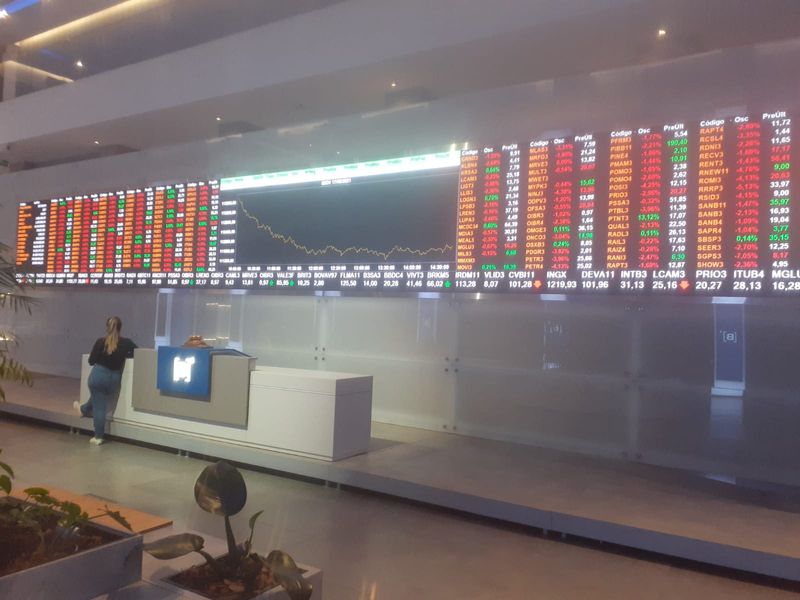
Brazil’s Bovespa fell 0.70% to a new 3-month low, with decliners outnumbering advancers 645 to 301. Totvs dropped 7.02% to a 52-week low, Magazine Luiza fell 6.74% to a 52-week low, and the CBOE Brazil ETF Volatility Index eased 2.62% to 31.97. Broader risk sentiment was pressured by a chip sell-off and geopolitical tensions, while commodities were mixed: gold August futures fell 4.33% to $4,100.70, crude oil July rose 3.22% to $91.04, and USD/BRL was flat at 5.17.
This looks less like a Brazil-specific fundamental rerating and more like a global factor shock: higher oil, firmer USD, and rising geopolitical tail risk are tightening financial conditions into a market already sensitive to duration and crowded defensives. In that regime, the first-order winners are still commodity-linked cash generators, but the second-order effects matter more: transportation, retail, and software names with limited pricing power get hit from both margin pressure and multiple compression as local rates stay sticky. The sharp drawdown in high-beta domestic consumer and software names suggests investors are de-risking anything with weak near-term earnings visibility. That usually creates a short window where quality balance-sheet names trade with the junk, which is useful for pairs: the market is not discriminating on business model yet, only on liquidity preference and valuation duration. If crude holds elevated for even 2-4 weeks, expect analysts to trim FY margin assumptions across Brazil consumer and industrials, with the greatest pressure on firms reliant on discretionary spending and imported inputs. The commodity move also changes the FX backdrop: Brazil’s terms-of-trade may get a near-term lift, but a stronger dollar and risk-off flows can easily dominate and keep BRL range-bound rather than trending stronger. That matters because a flat FX with rising imported energy costs is the worst mix for domestic margins. The contrarian point is that the equity selloff may be overdone in some local names if geopolitical headlines fade quickly; the market is pricing an oil shock, not yet a confirmed supply disruption cycle. The biggest tail risk is that this becomes a self-reinforcing volatility event: higher oil lifts inflation breakevens, which delays rate cuts, which further pressures long-duration equities. If that loop takes hold, the downside in consumer and software could persist for months, not days. But if crude retraces and implied volatility stays contained, the current move should partially mean-revert because positioning appears to be driven more by risk control than by revised Brazil earnings power.
AI-powered research, real-time alerts, and portfolio analytics for institutional investors.
Request DemoOverall Sentiment
moderately negative
Sentiment Score
-0.35
