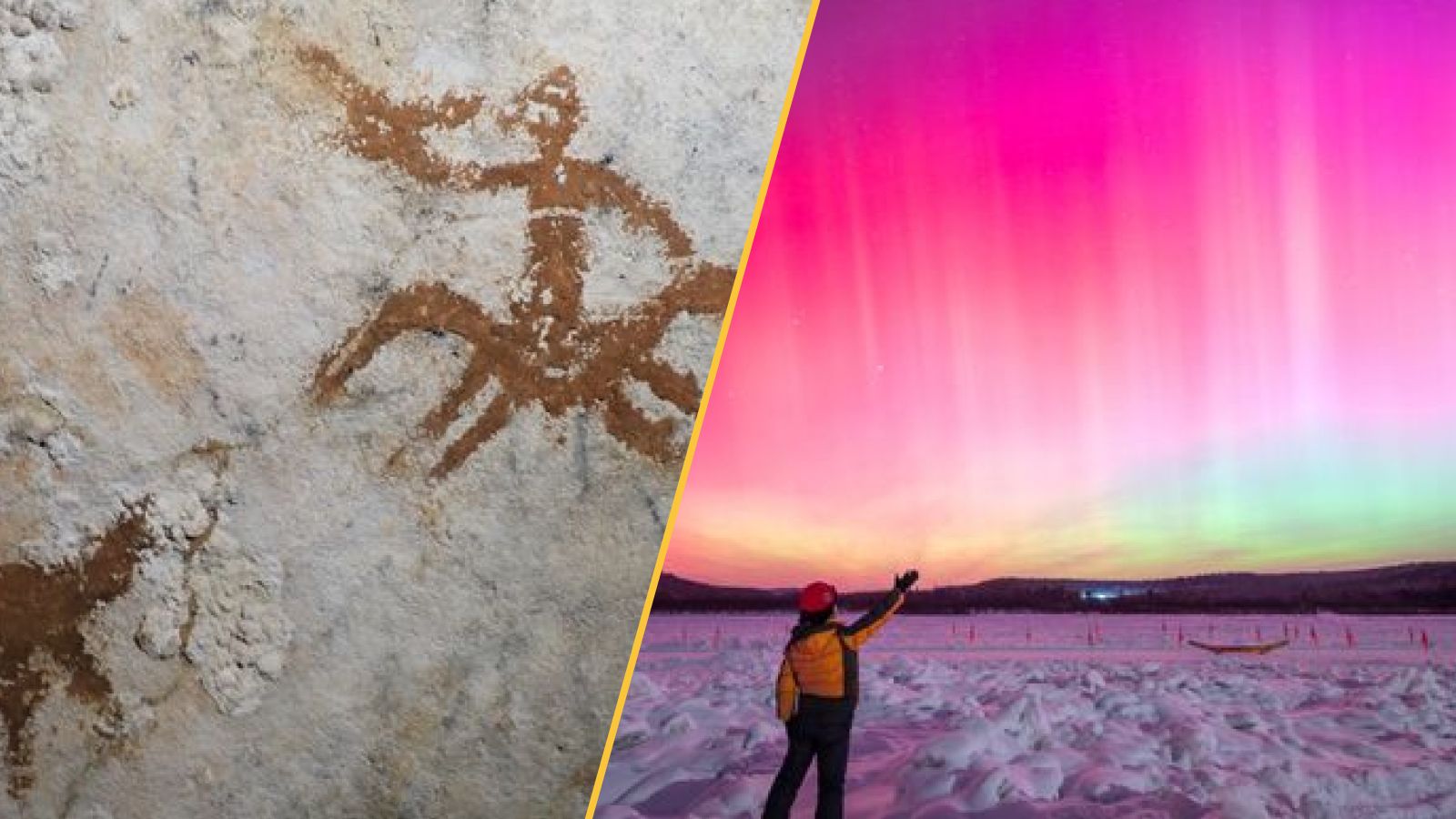
An expedition confirmed a giant sub-seafloor freshwater reservoir stretching from offshore New Jersey to Maine that may have formed ~20,000 years ago and is estimated large enough to supply New York City for roughly 800 years, though analyses of composition and extraction feasibility are pending. The bulletin also highlights major science developments — a ~70,000-year-old hand-stencil rock art in Sulawesi, a 2.6-million-year-old Paranthropus jaw found far north of previous sites, archaeological finds across Europe, the strongest solar radiation storm in 23 years producing auroras as far south as Southern California, and new astrophysical data from JWST and ESA’s Proba-3 mission that are reshaping space-weather and black-hole science.
Market Structure: The offshore freshwater discovery is a potential structural positive for water-infrastructure engineering, subsea drilling/installation services, and industrial pump/treatment suppliers (Jacobs, AECOM, Xylem) because commercializing a large reservoir requires multi-year capex in drilling, pipelines and treatment. Desalination specialists and near-shore bottled-water plays face a multi-year demand headwind if extraction proves technically and legally feasible; impact on commodities is muted short-term but could reduce desalination energy demand over 5–15 years. The solar-radiation event increases short-term tail risk for satellite operators and power-grid hardware vendors, raising near-term implied volatility for related equities and options.
Risk Assessment: Tail risks include microbial/mineral contamination making water uneconomic, state/federal legal fights over offshore freshwater rights, and high CAPEX that could leave projects uneconomic — realistic probability 20–40% that commercial extraction is delayed >5 years. For solar storms, low-probability high-impact geomagnetic events (<1–2%/year) could damage transformers and satellites causing outsized insured losses; expect insurer/reinsurer repricing within 0–12 months if claims emerge. Hidden dependencies: energy source for pumping, BOEM/USGS permitting timelines, and local environmental litigation.
Trade Implications: Tactical winners are engineering and water-tech names with existing municipal & offshore contracts (J, ACM, XYL); expect visible contract announcements within 6–24 months if pilots proceed. Short-term (0–3 months) trade: hedge satellite/sensor exposure via puts on MAXR or IRDM after elevated geomagnetic activity; longer-term rotate from desalination-equipment small caps into municipal water-revenue bonds (5–15y). Monitor BOEM/USGS technical reports (next 3–12 months) as primary catalysts.
Contrarian Angles: Consensus will overestimate near-term exploitable supply — history (North Slope oil, Arctic resources) shows discovery → 10+ year development cycles when coastal infrastructure, regulation, and environmental opposition exist. The market may underprice regulatory/legal delay risk and microbiological contamination risk; a contrarian play is modestly long muni water bonds and service contractors while avoiding large-capex developers until a pilot permit and water-quality assays (bacterial/mineral thresholds) are published.
AI-powered research, real-time alerts, and portfolio analytics for institutional investors.
Request DemoOverall Sentiment
neutral
Sentiment Score
0.00
