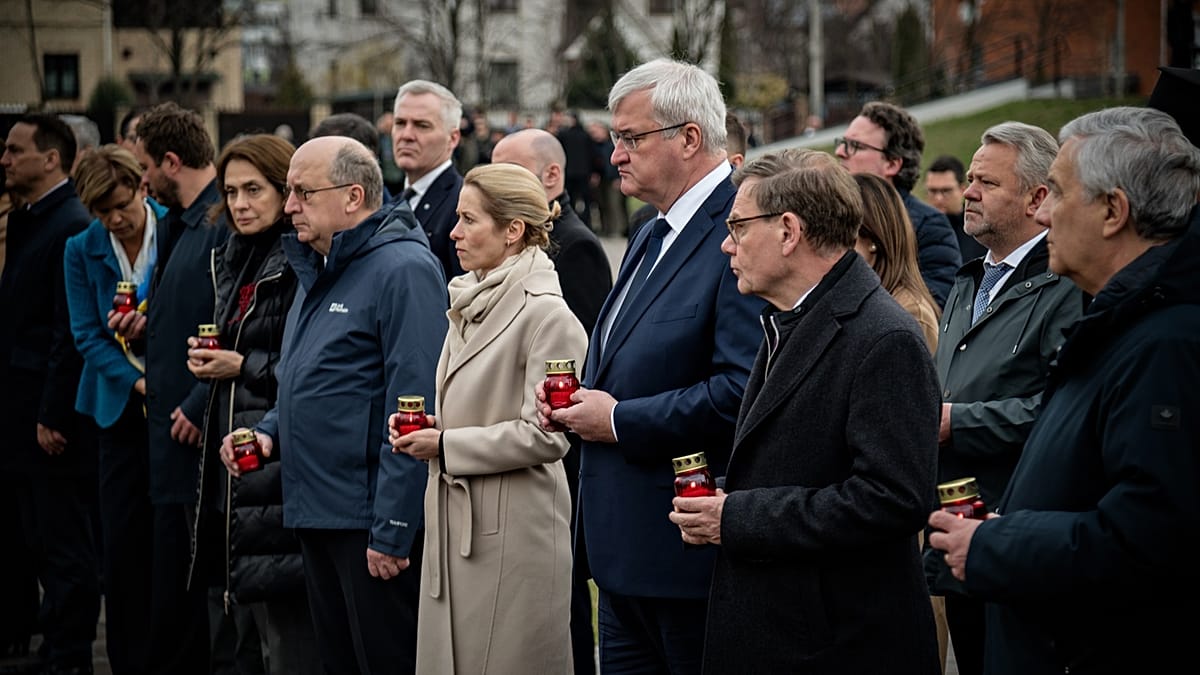
€90 billion EU loan to Kyiv is paralysed by a Hungary-Ukraine dispute over the Druzhba oil pipeline, even as 26 EU states (all except Hungary) pledged 'full accountability' for alleged Russian war crimes. High Representative Kaja Kallas marked four years since the Bucha massacre (about 400 civilians killed) and EU/Ukraine-backed efforts are advancing a Council of Europe-based special tribunal to prosecute the crime of aggression, potentially allowing trials in absentia for senior leaders after they leave office. Around ten countries intend to join the treaty underpinning the tribunal and several (Ukraine, Estonia, Lithuania, Luxembourg) have completed parliamentary procedures, but negotiations on territorial issues and controversial amnesty proposals keep diplomatic talks stalled, posing downside political risk to settlement progress.
The immediate second-order market effect is a durable political risk premium on European energy and defence flows rather than a one-off headline move. Hungary’s leverage over the €90bn loan process highlights a structural fragility: a single member-state veto can delay sovereign financing and force ad-hoc workarounds (EU guarantees, ESM-style SPVs) that increase execution risk and financing costs for Kyiv over the next 3–12 months. That raises near-term demand for alternative liquid fuels (LNG) and for contracted shipping capacity, supporting spot and contracted LNG prices and shipping dayrates into the next winter cycle if the Druzhba dispute persists or escalates.
Legal escalations (special tribunal + expanded war-crime documentation) increase the likelihood of protracted asset freezes and contested ownership claims on Russian-linked assets; expect higher legal/transaction costs for counterparties holding or monetising those assets for 12–36 months. This lifts pricing power for specialist insurers/reinsurers and legal-advisory franchises while making any bank or investment vehicle with concentrated exposure to frozen assets a tactical short or avoid. Conversely, a negotiated settlement with amnesty language (the underlying tail risk) would unwind much of the legal-risk premium quickly — a 1–3 month catalyst that could compress spreads and reduce defence/energy upside.
Where consensus underprices optionality is in the mechanics of EU workaround finance: expect the Commission and coalition partners to employ layered guarantees and market issuance rather than full unanimity, which will create bond issuance windows for European banks and primary dealers (40–60bps issuance premium vs sovereigns) and fee pools for capital markets desks. The market should therefore treat the Hungary impasse as a timing and execution risk, not a structural halt to support — tradeable in bank flow and primary market staging over the next 6–18 months.
AI-powered research, real-time alerts, and portfolio analytics for institutional investors.
Request DemoOverall Sentiment
neutral
Sentiment Score
0.00
