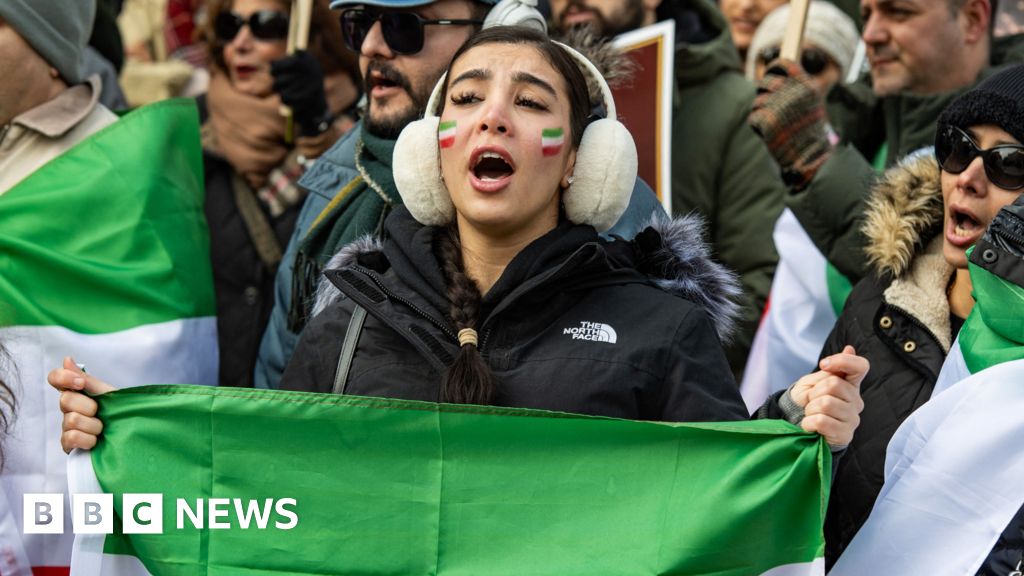
Mass demonstrations called by exiled prince Reza Pahlavi drew hundreds of thousands worldwide (notably ~250,000 in Munich and ~350,000 in Toronto) after Iranian protests that began on 28 December over economic hardship spread to 100+ cities. Human Rights Activists News Agency reports 6,872 deaths (Iranian authorities acknowledge at least 3,000), and the unrest has elevated political uncertainty as Pahlavi seeks a leadership role while US commentary and pressure on nuclear talks could influence sanction policy. The scale and severity of state repression increase geopolitical risk, with potential knock-on effects for regional asset prices, EM risk premia and energy market sentiment if instability persists or prompts policy shifts.
Market structure: Large global protests in support of anti-regime sentiment increase political risk premium on Iran and the wider Gulf; expect an immediate oil risk premium of $5–$15/bbl on headline volatility and insurance spreads (LRFs) rising for Persian Gulf tonnage. Winners: global integrated E&P (XOM, CVX), defense names (LMT, RTX) and safe-havens (GLD, UUP); losers: Iran assets, EM sovereign credit and travel/airlines exposed to ME routes. Cross-asset: USD and US Treasuries will see safe-haven inflows near-term; implied volatility in oil (OVX) and equity VIX should spike 20–50% intraday on escalatory headlines.
Risk assessment: Tail risk—Strait of Hormuz closure or targeted strikes on export infrastructure—remains low probability (<=10% in next 3 months) but high impact (Brent +50–150%, regional equities down 20–40%). Immediate (days): headline-driven volatility and risk-off flows; short-term (weeks–months): sanctions, insurance premium pass-through and tactical supply responses from KSA/US; long-term (quarters+): potential re-rating of EM risk premia and higher capex into energy security. Hidden dependencies include spare OPEC+ capacity, US SPR releases, and China's crude import cadence which can mute price spikes.
Trade implications: Tactical long-energy and precious-metals with caps on risk; prioritized instruments are direct producer equities (XOM/CVX at 1–3% sizes), Brent/WTI call spreads to limit premium, and GLD for asymmetric tail hedges. Short/underweight EM equity (EEM) and travel/airline names (AAL, UAL) as demand and route-risk reprice; deploy options to size exposure and set objective exit triggers (e.g., take 50% profits if Brent +$15 within 6 weeks).
Contrarian angles: Consensus may overpay for a full regional war; spare capacity + SPR coordination can cap spikes and create mean-reversion trades once headlines cool. Historical parallels (2019-20 proxy escalations) show 10–20% oil moves that reversed after diplomatic/market responses; if Brent fails to sustain >$95 for 4 weeks, volatility premium will be overpriced—opportunity to sell premium or close longs. Unintended consequence: sustained higher oil improves US shale cashflow, adding supply after ~6–12 months and limiting long-term upside.
AI-powered research, real-time alerts, and portfolio analytics for institutional investors.
Request DemoOverall Sentiment
moderately negative
Sentiment Score
-0.45
