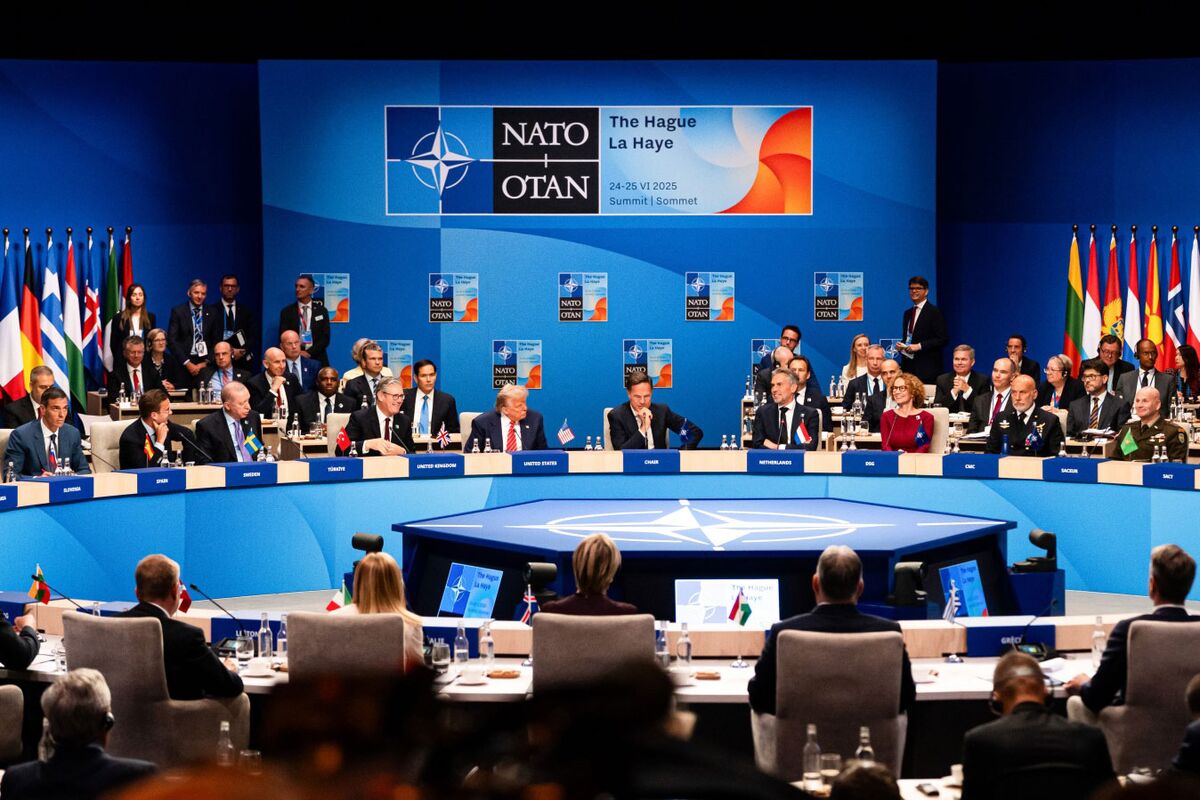
NATO leaders have historically agreed to boost defense spending to 5% of GDP, a significant increase driven by rising Russian belligerence and representing a major political victory for Donald Trump, who has consistently pushed for greater allied contributions. This commitment by the 32-member alliance, despite recent questioning of Article 5, signals a substantial shift in defense sector investment and geopolitical strategy.
NATO's landmark agreement for its 32 members to increase defense spending to 5% of GDP represents a substantial and historic fiscal policy shift with significant market implications. This decision is driven by dual catalysts: heightened geopolitical tension with an 'increasingly belligerent Russia' and persistent political pressure from the United States, marking a major policy victory for President Trump. The commitment signals a massive redirection of capital towards the defense sector across member nations, creating a structural, long-term tailwind for the industry. However, the context is not unequivocally positive; the mention of the U.S. president questioning the alliance's core Article 5 mutual defense tenet introduces an element of political uncertainty. This dichotomy is reflected in the mixed sentiment score (0.1) and high market impact rating (0.6), highlighting a market environment where increased defense investment is directly tied to elevated geopolitical risk.
AI-powered research, real-time alerts, and portfolio analytics for institutional investors.
Request DemoOverall Sentiment
mixed
Sentiment Score
0.10
