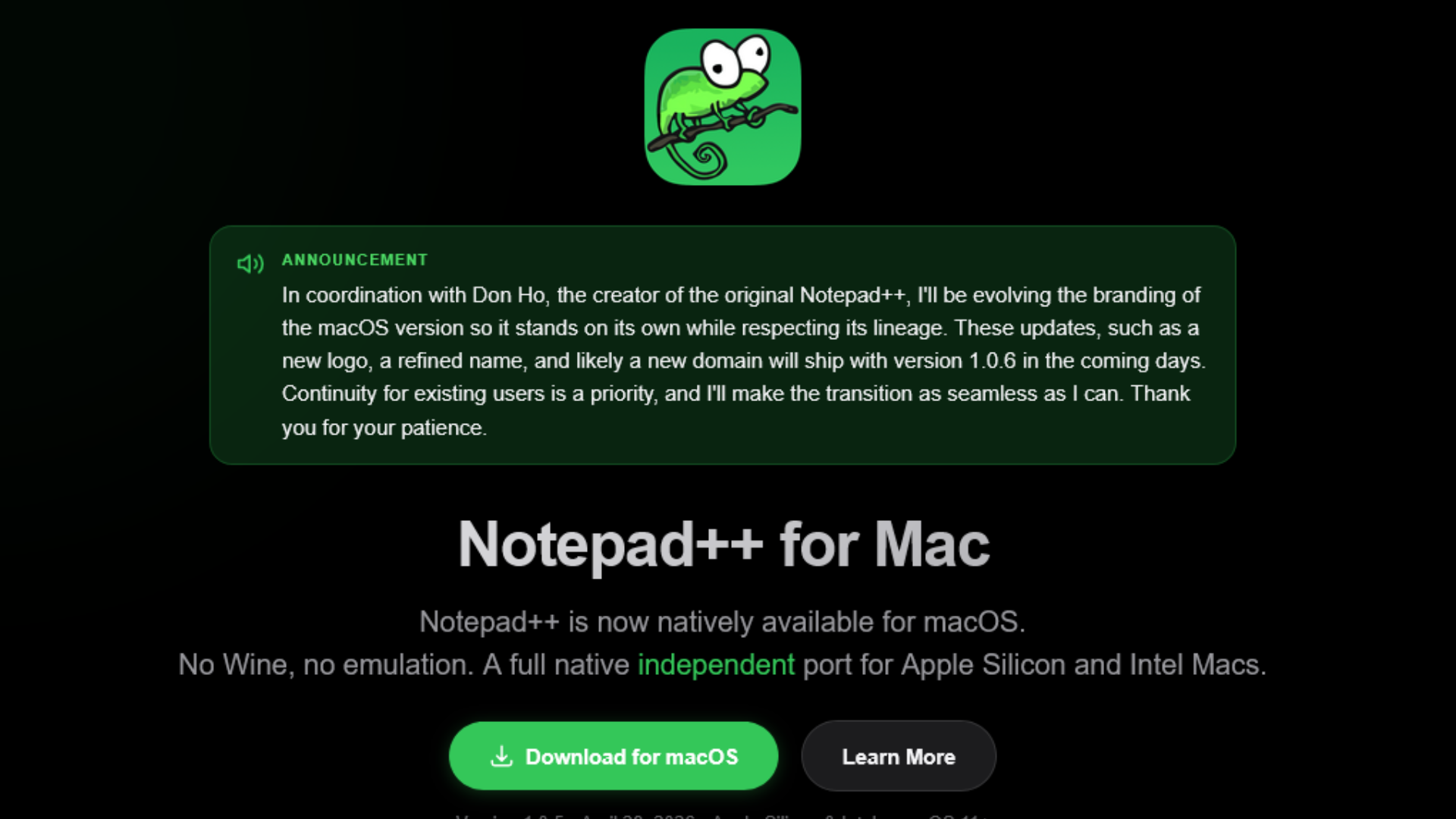
Notepad++ creator Don Ho has filed a trademark complaint and threatened legal action over a macOS port that used the Notepad++ name, logo, and his biography without permission. Ho says he supports the port itself under GPLv3, but not the branding, and has asked the developer to take the site down immediately while the project transitions to new branding. The dispute is primarily an IP and reputation issue rather than a direct operating or financial event, limiting likely market impact.
The immediate market read-through is not on the software itself but on brand-control economics: this is a reminder that open-source distribution can still be monetized defensively through trademark enforcement, while the underlying code remains permissively forkable. That distinction matters for platforms like NET because the incident reinforces how quickly a small authenticity lapse can escalate into a trust and routing problem—users, media, and security tools all need to distinguish “official” from “look-alike” assets in real time. The second-order effect is reputational asymmetry after a supply-chain scare: once a software brand has already been associated with hijacked updates, any clone—even a benign one—has a much higher probability of being treated as hostile. That increases the value of verification layers, origin validation, and anti-phishing controls over the next 6–12 months, especially for developer-tool ecosystems where users are more likely to sideload or self-update. In practice, this is a modest tailwind for security vendors and content-delivery platforms that can help prove provenance. The legal angle is a slow-burn catalyst, not an immediate revenue event. The likely path is a rebrand, takedown pressure, and possibly a precedent-setting dispute about how far AI-assisted porting can go before it becomes a trademark violation rather than a legitimate fork. The key risk is not damages; it is friction—if confusion persists for weeks, users may defer installs, suppressing adoption of the macOS port and reinforcing the incumbent’s control of the brand moat. Contrarian view: the market may be underestimating how much AI tooling lowers the cost of producing credible, cross-platform lookalikes. That means brand policing becomes more important, not less, for software firms with strong open-source adoption. Over time, this benefits companies whose trust model is explicit and machine-verifiable, while punishing projects that rely on community recognition alone.
AI-powered research, real-time alerts, and portfolio analytics for institutional investors.
Overall Sentiment
mildly negative
Sentiment Score
-0.20
Ticker Sentiment
