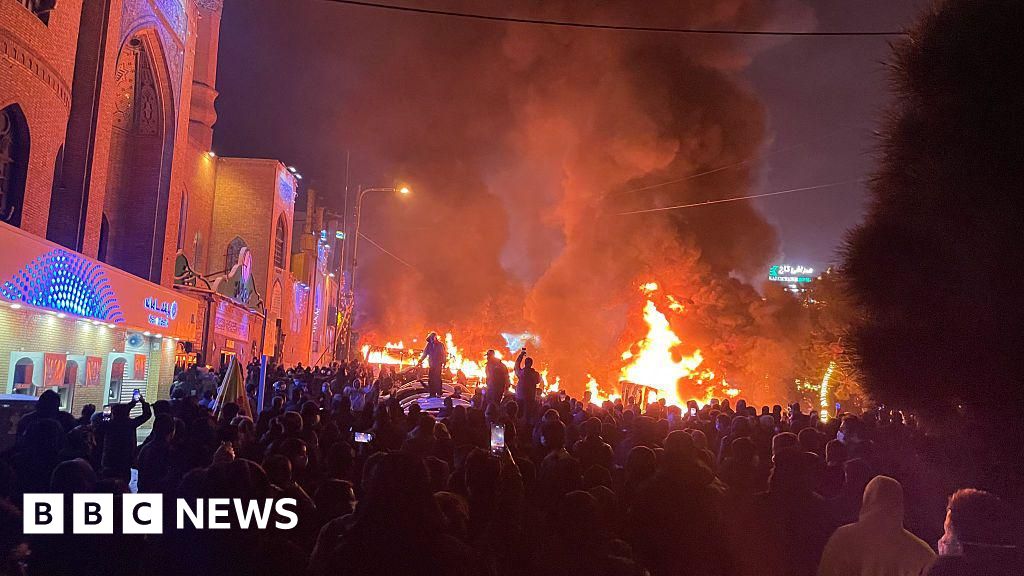
Widespread anti-government protests in Iran have escalated into deadly crackdowns amid an internet blackout and a collapsing currency, with casualty estimates ranging from Iranian authorities' 3,117 to activist groups' tallies of several thousand to potentially over 25,000 and at least 40,000 arrests reported. Debate among Iranians at home and abroad centers on whether US intervention — from targeted strikes on state infrastructure to other forms of pressure — could alter the balance, while communications blackouts and political uncertainty create a risk-off backdrop that could pressure emerging-market assets and regional risk-sensitive markets such as oil and EM currencies.
Market structure: Near-term winners are defense contractors (aerospace, ISR, munitions), energy producers and strategic communications providers; losers are regional EM assets, airlines and insurers exposed to Mideast shipping. Expect immediate bid for Brent/WTI (+10-25% on supply-choke headlines) and gold (+5-12%) as flight-to-safety; baseline USD strength and EM FX weakness will pressure EM equities by mid-teens if instability persists >1 month.
Risk assessment: Tail scenarios include (A) targeted US strikes or Iran retaliation that cuts 0.5–1.5 mb/d of crude leading to Brent >$100 within weeks, (B) a major cyberattack on shipping/energy infrastructure disrupting supply chains for 2–4 weeks, or (C) swift international sanctions that reroute tanker flows raising insurance by 20–50%. Immediate horizon (0–14 days) = volatility and safe-haven flows; 1–3 months = supply adjustments and fiscal/defense ripples; 3–12 months = structural shifts in energy sourcing and regional capital allocation.
Trade implications: Tactical plays favor short-dated energy call spreads and selective long defense equities; hedge EM exposure with USD and short EEM. Volatility strategies: buy 3-month XLE 5–15% OTM call spreads (cost-limited) and 3-month GLD calls for convexity. Entry triggers: Brent breach of $85 or VIX>25; exit on 15% retracement or normalization of tanker flows.
Contrarian angles: The market may overprice prolonged supply loss — spare OPEC+ capacity and US shale can cap spikes within 2–3 months; prefer pairs that capture relative winners (integrated majors vs small-cap E&P) because majors absorb margin shocks. Watch for rapid re-pricing if diplomatic de-escalation occurs — set explicit stop-losses (15–25%) and size defensively.
AI-powered research, real-time alerts, and portfolio analytics for institutional investors.
Request DemoOverall Sentiment
moderately negative
Sentiment Score
-0.45
