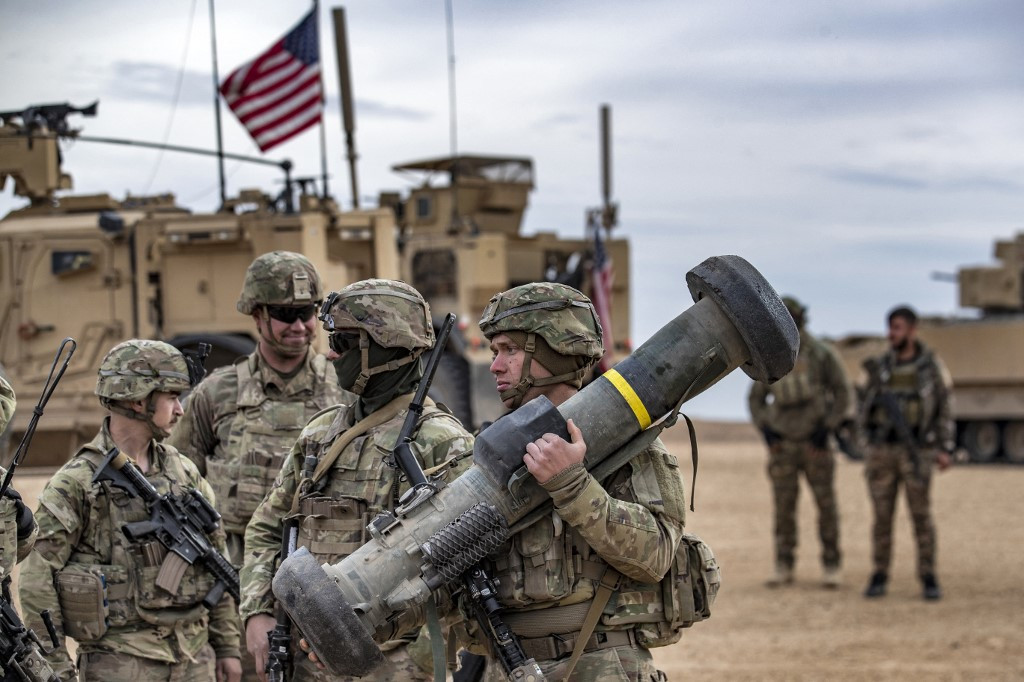
Trump announced a reduction in the US military footprint in Germany, with 5,000 troops initially specified for withdrawal and the president later saying the total would be much higher. The move follows Chancellor Friedrich Merz's criticism of Washington's Iran-war strategy and raises concerns about NATO cohesion, European deterrence, and possible shifts in US force posture across Europe. The article frames the development as a meaningful defense and geopolitical risk, though not an immediate market-wide shock.
The immediate market implication is not a simple Europe-negative / US-positive rotation; it is a repricing of the credibility of the US security backstop. That raises the option value of European rearmament, but more importantly it compresses timelines for procurement, munitions, air defense, ISR, and logistics investments that had been planned as gradual 3-5 year programs. The second-order winner is not necessarily the primes already crowded in investor portfolios, but the mid-cap supply chain: electronics, propulsion, radar, secure comms, and industrial capacity names that can actually scale output when inventories are thin and delivery lead times are long. The biggest near-term loser is European fiscal flexibility. If governments have to bridge deterrence gaps faster than budget cycles allow, expect more off-balance-sheet vehicles, joint procurement, and emergency appropriations, which tends to favor contractors with NATO-standard products and recurring maintenance revenue over bespoke national champions. A less obvious beneficiary is US-based infrastructure around forward deployment and logistics: even if troop levels fall, the remaining posture becomes more valuable per head, pushing spend into pre-positioning, transport, base hardening, and missile defense rather than personnel. The tail risk is a misread by Moscow of the transition window. Markets are underestimating the chance that the first real move is not a troop withdrawal but a signal to test European response via cyber, energy sabotage, or airspace probing over the next 1-6 months. That would create a fast bid in defense, aerospace, and cyber, while punishing European cyclicals and transports. The contrarian point: a partial drawdown may accelerate, not weaken, European deterrence because it finally forces procurement discipline and industrial consolidation that investors have expected for years. The main reversal catalyst is political: a congressional constraint, a NATO clarification, or a symbolic backtrack after allied pushback. If that happens, the trade likely mean-reverts in days, not months, because positioning in European defense is already crowded and headline-driven. The better expression is to own the second-order enablers and avoid chasing the highest-multiple primes after a spike.
AI-powered research, real-time alerts, and portfolio analytics for institutional investors.
Request DemoOverall Sentiment
moderately negative
Sentiment Score
-0.45
